Donald Trump did not spend his Sunday evening reflecting on the quietude of Orthodox Easter. Instead, the President ignited a theological and diplomatic firestorm by sharing an AI-generated image of himself draped in a white robe and red sash, hands glowing with "divine" light as he healed a hospital patient. By Monday, the post was gone, scrubbed from Truth Social after a rare wave of condemnation from his own religious base. Vice President JD Vance, the administration’s most prominent Catholic convert, was left to perform the cleanup, dismissing the messianic imagery as a simple "joke" that the public failed to get.
The explanation from the Oval Office was even more surreal. Trump told reporters he believed the image—which featured him as a miracle-worker backlit by the Statue of Liberty and military jets—depicted him as a "doctor" or a "Red Cross worker." It is a pivot that strains even the most flexible imagination. This isn't just about a deleted post. It is the latest tremor in a deepening schism between the White House and the Holy See, one that threatens to alienate the very Catholic-evangelical coalition that anchored Trump’s return to power.
The Anatomy of a Blasphemy Crisis
The image in question wasn't just a flattering filter. It was a digital icon of the "Trump as Christ" variety that has circulated in the darker corners of the internet for years. In this specific iteration, a horned demonic figure loomed in the background, a detail that transformed the post from mere ego-stroking into something many believers found genuinely sinister.
The backlash was swift and came from the inside. Riley Gaines and other conservative fixtures, who usually serve as the President’s most reliable shields, called the post "disgusting" and "outrageous blasphemy." They didn't see a doctor. They saw a man mocking God.
A Coalition Under Pressure
For decades, the alliance between conservative Catholics and evangelicals was built on a shared platform regarding social issues. That bridge is currently buckling under the weight of the administration's foreign policy. While Defense Secretary Pete Hegseth frames the current conflict in Iran as a "divine" necessity, Pope Leo XIV has been vocal in his opposition, citing the Gospel of peace.
When the Pope suggested that a "delusion of omnipotence" was driving U.S. actions, Trump didn't turn the other cheek. He called the Pontiff "weak on crime" and "terrible for foreign policy." This creates a crisis of conscience for millions of voters. Do they follow their Commander-in-Chief or their Vicar of Christ?
The Vance Doctrine of Selective Faith
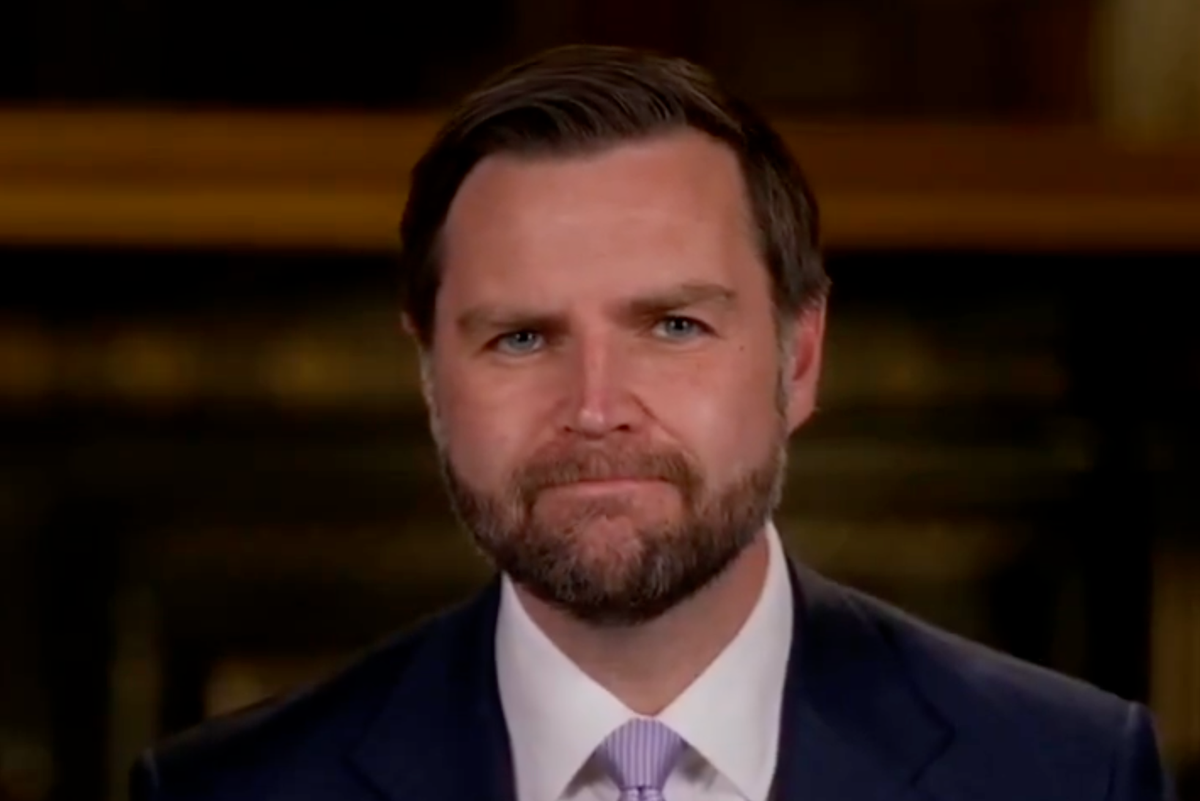
JD Vance finds himself in an impossible position. As a Catholic who often speaks of his faith as his guiding North Star, he is now tasked with telling the Pope to "stick to morality" and stay out of politics. During his appearance on Fox News, Vance argued that it is "totally reasonable" for the President to have substantive disagreements with the Vatican.
Vance is attempting to bifurcate the faith. He wants the religious benefits of the Catholic brand—the tradition, the moral weight—without the inconvenience of the Church’s stance on global conflict. By labeling the Christ-like imagery a "joke," Vance isn't just defending a post; he is attempting to domesticate the sacred. He is telling the American Catholic that their faith should be a private comfort, while their political loyalty must remain absolute and unquestioned.
The Humor Defense
The "it was just a joke" defense is a veteran political tactic, but it hits differently when applied to religious iconography. To the administration, the AI image was "unfiltered" communication. To the critics, it was a manifestation of a messiah complex that has finally crossed a line.
- The Intent: Trump claims he saw a medical professional in a red sash.
- The Reality: The image utilized traditional "Christ the Healer" tropes.
- The Result: The post was deleted, but the digital footprint remains a weapon for his detractors.
Global Fallout and the Italian Reaction
The ripples of this social media broadside reached far beyond the Potomac. In Italy, the reaction was one of unified defense of the Pope. Prime Minister Giorgia Meloni, typically an ally of the American right, called Trump’s words toward the Holy Father "unacceptable." Deputy Premier Matteo Salvini echoed the sentiment, noting that attacking a spiritual guide for billions is neither "useful nor intelligent."
This international friction reveals a growing isolation. If the Trump administration continues to frame its geopolitical moves as divinely sanctioned while simultaneously mocking the world’s most prominent religious leaders, it risks losing the moral high ground it claims to occupy.
The Silence of the Evangelicals
While some high-profile commentators have spoken out, a significant portion of the evangelical leadership remains silent. This silence is a gamble. They have spent years arguing that character and reverence matter in a leader. Now, they must decide if the policy wins—the judges, the deregulation, the military stance—are worth the price of a President who views himself as a miracle-worker in a red sash.
The "doctor" explanation will likely satisfy those already looking for a reason to forgive. But for the "Revival" movement currently sweeping through American pews, the image is a stark reminder of the dangers of conflating a political movement with a divine mandate.
The administration might hope that deleting the post ends the conversation. It won't. This isn't a glitch in the social media strategy. It is a revealing look at the internal logic of a White House that views even the most sacred symbols as mere tools for the next "mix it up" moment on Truth Social. When the Vice President asks the Vatican to stay in its lane, he is effectively asking the Church to stop being the Church. That is a request that no amount of "unfiltered humor" can make palatable to the faithful.
The true test for the administration isn't whether they can scrub an image from a website. It's whether they can repair the damage done to a coalition that is beginning to realize their political savior might not share their respect for the actual one.