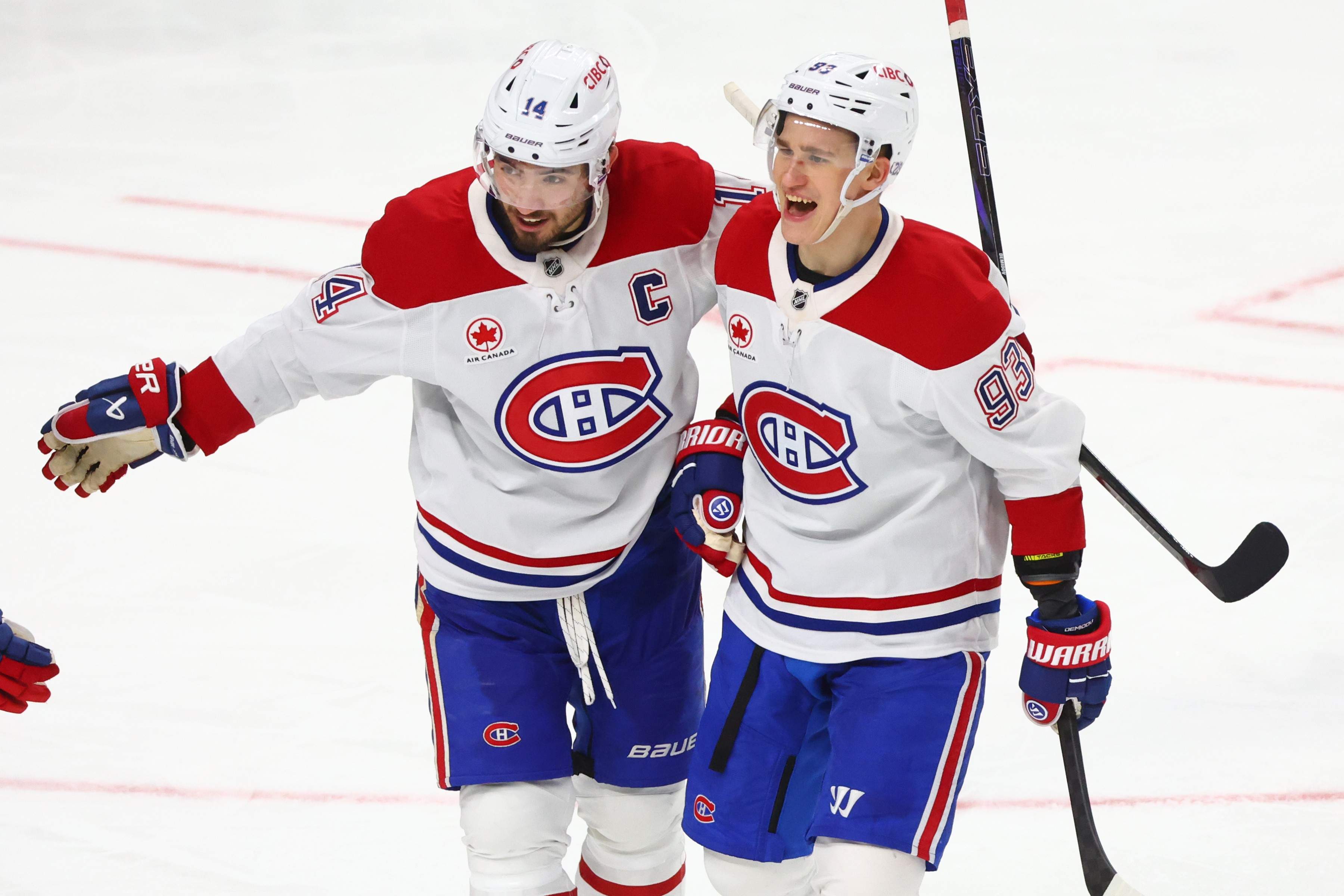
The air inside the Bell Centre doesn't just sit there. It vibrates. It carries the scent of expensive beer, cold zinc from the ice, and the collective anxiety of twenty thousand people who treat a hockey game like a high-stakes liturgical service. When the Montreal Canadiens are winning, the building feels like it might lift off its foundations and float over the Saint Lawrence River. When they are losing, it feels like an ancestral tomb.
Tonight, it was a forge.
The Buffalo Sabres arrived with the arrogance of the young. They have the legs, the draft pedigree, and the kind of speed that makes veteran defensemen look like they are skating in work boots. But the scoreboard doesn't care about potential. It cares about the puck crossing a red line. By the time the final siren echoed through the rafters, the scoreboard read 6-3. A doubling. A statement. A demolition disguised as a hockey game.
People see a score like that and think of a blowout. They think it was easy. They weren't watching the way David Savard blocked a shot in the second period, his face contorted in a mask of pure, unadulterated pain as the rubber disc whistled off his shin bone. They didn't see the desperation in the eyes of the Sabres' goaltender, a man who looked like he was trying to stop a landslide with a wicker shield.
The Weight of the Sweater
There is a specific kind of pressure that comes with wearing the "CH." It is a heavy garment. It carries the ghosts of Rocket Richard and Jean Béliveau, men who didn't just play; they conquered. For this current iteration of the Habs, the narrative has been one of rebuilding, of "trusting the process," a phrase that usually serves as a polite euphemism for losing.
But tonight, the process grew teeth.
The game started with a frantic energy that favored Buffalo. You could see it in their transitions—quick, surgical strikes that forced Montreal into a defensive crouch. If you were a betting person, you would have put your money on the blue and gold. They looked like the future. Montreal looked like the past, clinging to the boards and praying for a whistle.
Then, the shift happened. It wasn't a single goal. It was a hit. A shoulder-to-chest collision along the sideboards that sent a message through the plexiglass. The sound was like a car door slamming in a quiet neighborhood. Suddenly, the Sabres weren't skating into open space anymore. They were skating into a thicket of sticks and bodies.
The Mathematics of Momentum
In hockey, 2-1 is a contest. 4-2 is a crisis. 6-3 is an autopsy.
Montreal didn't just outscore Buffalo; they outworked their own limitations. Every time the Sabres clawed back, every time the Buffalo bench started to find their rhythm, the Canadiens answered with a relentless, grinding pressure. It wasn't always pretty. It was often ugly, desperate hockey played in the corners where the cameras struggle to focus.
Consider the anatomy of the fourth goal. It wasn't a highlight-reel dangle or a 100-mile-per-hour slap shot. It was a rebound. A greasy, miserable little puck that sat in the crease for a millisecond too long. In that moment, the Montreal forward didn't think about his contract or his stats. He threw his entire frame into the blue paint, taking a cross-check to the kidneys just to poke that frozen piece of rubber an extra six inches.
That is the difference. The Sabres wanted to play a game of chess. Montreal wanted to start a riot.
The statistical sheet will tell you about the power play percentage. It will highlight the saves and the shots on goal. What it won't tell you is the psychological collapse that happens to a team when they realize that no matter how fast they run, the other guy is willing to bleed more. The Sabres are a fast team, maybe the fastest in the league on a good night. But speed is useless when you're being chased by a pack of wolves who haven't eaten in a week.
The Invisible Stakes
For the fans in the 300-level seats, those who saved up for a month just to sit in the nosebleeds, this wasn't just a mid-season series lead. It was a validation of faith. In a city where the weather is a personal insult for six months of the year, the Canadiens are the only thing that makes the dark tolerable.
When the lead grew to three, the atmosphere shifted from tension to celebration. The "Ole, Ole, Ole" chant started—a low rumble at first, then a roar. It is a sound that gets under the skin of opposing players. It tells them they are no longer in a sports arena. They are in a theater where the ending has already been written, and they are the villains about to be dispatched.
The Sabres' bench grew quiet. You could see the slumped shoulders, the way the players avoided eye contact with their coach. They were young men realizing that talent is a prerequisite, not a guarantee. They had been outmuscled by a team that, on paper, they should have handled.
The Cost of Victory
By the time the players shuffled off the ice, the Bell Centre was a sea of red jerseys and grinning faces. But the locker room tells a different story. Hockey is a sport of attrition. There will be ice packs on knees. There will be stitches in lips. There will be the kind of bone-deep exhaustion that makes your hands shake when you try to untie your skates.
Winning 6-3 looks dominant. In reality, it was a series of narrow escapes and brutal sacrifices.
The Canadiens now hold the series lead, a numerical advantage that serves as a temporary shield against the critics. But the real victory wasn't the three-goal margin. It was the way they reclaimed their own identity. For one night, they weren't a rebuilding project or a collection of assets. They were the Montreal Canadiens.
As the lights dim in the arena and the Zamboni clears the scarred ice, the ghosts of the forum seem a little more satisfied. The Sabres will go back to the drawing board, looking at tape, trying to figure out where the speed went. They will find that they didn't lose because of a tactical error or a bad bounce.
They lost because they ran into a wall made of red wool and historical pride.
The scoreboard eventually goes dark. The fans spill out into the cold Montreal night, their breath visible in the streetlamps, still buzzing from the energy of the forge. The 6-3 victory will be recorded in the books, a dry statistic for future historians. But for those who were there, the score was secondary to the feeling of a giant waking up, stretching its limbs, and reminding the world that some sweaters are simply heavier than others.
The puck drops again tomorrow, but tonight, the city sleeps with the warmth of a lead that feels like it might actually last.