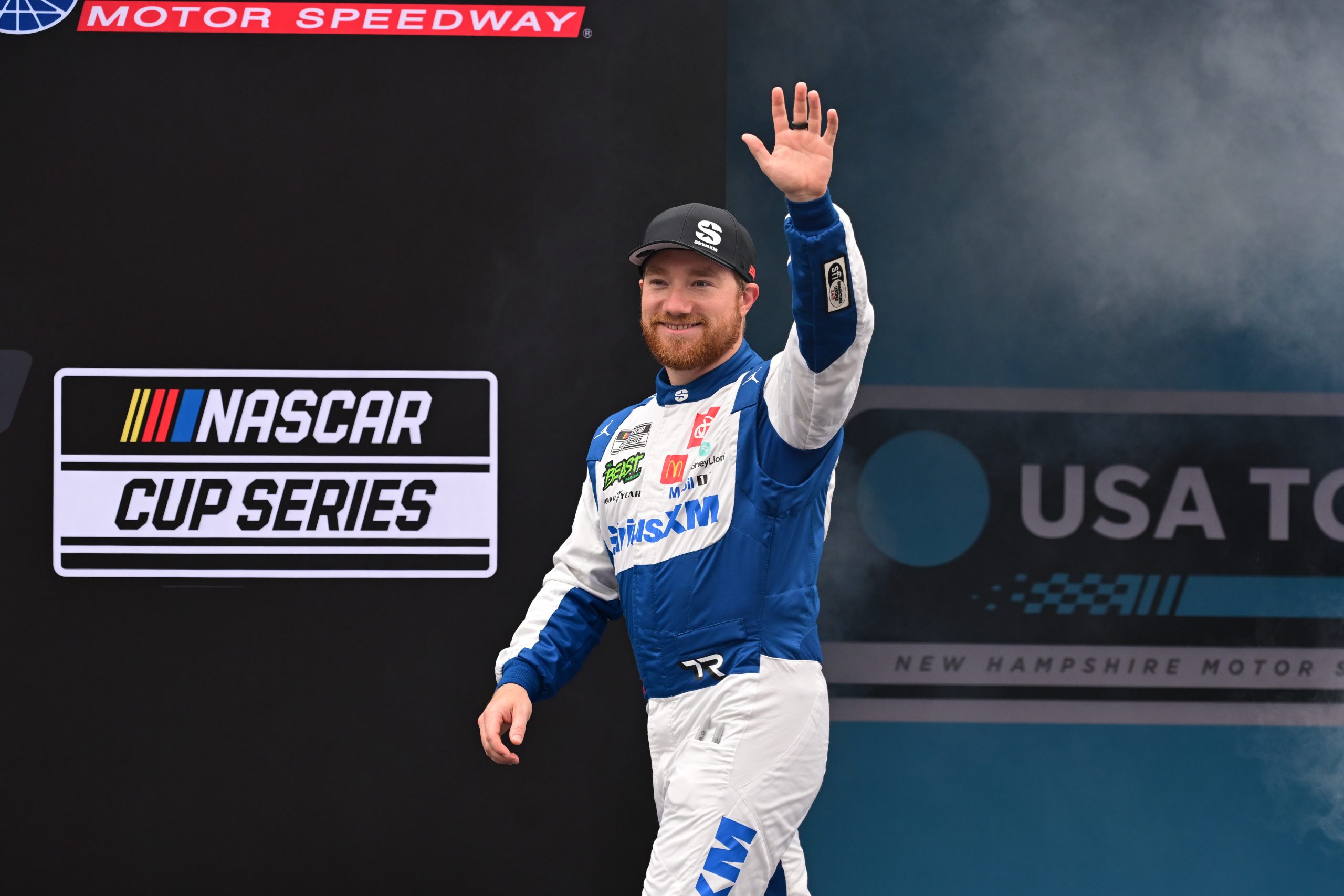
The Three Peat Delusion
The racing world is currently obsessed with the "3 Peat Baby" headline. They see Tyler Reddick grinning next to Michael Jordan and think they are witnessing a transcendent moment of sporting greatness. They see a driver sweeping three consecutive events or dominating a specific early-season stretch and call it a dynasty in the making.
They are wrong.
What you are actually seeing is the triumph of the spec-car squeeze. In the current Next Gen era, the margin for actual driver talent has been compressed into a microscopic window. When a team like 23XI Racing hits a hot streak, it isn't because they’ve unlocked some hidden reservoir of "His Airness" competitive spirit. It is because they’ve optimized a data set that every other team has access to, but hasn't yet copied.
The celebration of Reddick’s "historic start" ignores the uncomfortable truth: NASCAR has become a game of high-stakes slot machines where the house—in this case, the wind tunnel and the simulation software—always wins. If you think Reddick is out-driving the field, you haven't been paying attention to the telemetry.
The Michael Jordan Effect is a Marketing Gimmick
Let’s talk about the GOAT in the room. The media loves the Jordan-NASCAR marriage. It’s "historic." It’s "elevating the sport."
I’ve spent fifteen years in the garages of North Carolina. I’ve watched billionaire owners come and go with the regularity of a caution flag. Michael Jordan isn't there because he’s a racing mastermind. He’s there because it’s a brilliant tax-advantaged vehicle for his brand and a way to diversify a portfolio that was already overflowing.
The "Jordan mentality" is a myth when applied to a car that is 95% identical to every other car on the starting grid. You can’t "will" a car to go faster when the rev-limiters and aerodynamic profiles are strictly mandated by a central office in Daytona.
Why the 23XI Success Story is Actually a Toyota Story
If you want to know why Reddick is winning, look at the TRD (Toyota Racing Development) engine shop. 23XI is effectively a satellite team for Joe Gibbs Racing. To suggest that 23XI is some independent upstart defying the odds is a lie. They are part of an $800 million ecosystem.
- Toyota's Data Monopoly: They share every ounce of telemetry between JGR and 23XI.
- The Wind Tunnel Advantage: 23XI has access to the most advanced sim tools in the world.
- The Driver-as-Input-Variable: Tyler Reddick is a world-class athlete, but in this system, he is an input variable. He is the person hired to execute the simulation's findings.
Stop Romanticizing the "Historic" Start
The competitor articles are gushing about how Reddick is "rewriting the history books."
Let’s look at the numbers they won't tell you. In the 1990s, a "dominant" driver like Jeff Gordon could win by 10 seconds. He was out-driving the equipment. He was finding lines on the track that didn't exist for anyone else.
In the Next Gen car, the field is often separated by less than a tenth of a second in qualifying. A "3 Peat" in 2026 isn't the same as a 3 Peat in 1998. It’s a statistical anomaly caused by a specific setup window that hasn't been closed by the competition yet.
The Downside of Parity
NASCAR wanted parity. They got it. Now, every race is a lottery where the winner is the one who didn't get caught in a multi-car pileup or a pit road penalty. When a driver like Reddick wins several in a row, the media screams "greatness." In reality, it's just a run of good luck meeting a well-funded data set.
If you want real greatness, look at the drivers who are consistently finishing in the top 10 with half the budget of 23XI. Those are the people actually driving. Reddick is just navigating.
The Talent Vacuum: Why We Don't Have Superstars Anymore
The reason we are so desperate to celebrate this Reddick/Jordan partnership is that the sport has a talent vacuum. We have replaced "outlaw" personalities with corporate-approved athletes who are terrified of losing their primary sponsors.
- The Sponsor Stranglehold: You cannot be a contrarian in a NASCAR firesuit. Your sponsor—be it a telecommunications giant or a fast-food chain—demands a sterile, "team player" persona.
- The Engineering Trap: Drivers are now told how to take a corner by engineers who have never sat in a race car. If a driver tries something intuitive and it fails, they are reprimanded for deviating from the sim data.
Tyler Reddick is the perfect driver for this era because he is technically proficient and emotionally neutral. He is the human component of a machine. Celebrating this as a "historic celebration" is like celebrating a particularly efficient spreadsheet.
What People Always Ask (and Why They're Wrong)
Q: "Doesn't Michael Jordan's involvement bring new fans to the sport?"
No. It brings temporary eyeballs that disappear the moment Jordan isn't in the frame. These aren't racing fans; they’re celebrity watchers. When Jordan eventually sells his stake—and he will—those fans will follow him to whatever venture comes next. NASCAR is left with a hollowed-out fan base that never learned to love the roar of the engines or the strategy of the long game.
Q: "Is Tyler Reddick the best driver in NASCAR right now?"
He’s the driver with the best current alignment of equipment, data, and manufacturer support. Put him in a Spire Motorsports car or a Front Row Motorsports car, and he’s fighting for 15th. In the 80s, Dale Earnhardt could take a junk car and drag it to the front through sheer force of will. That is impossible now.
Q: "Why can't other teams just copy 23XI's success?"
They are. That’s the problem. By the time the playoffs roll around, everyone will have the 23XI data. The "dominance" will evaporate, and we’ll have a different "historic" winner next month. It’s a cycle of planned obsolescence masquerading as competition.
The Brutal Reality of the Modern Garage
I’ve walked through the hauler areas when the cameras aren't rolling. The mood isn't one of "historic celebration." It’s one of quiet desperation. Every crew chief is looking at the same SMT data. Every tire changer is chasing a thousandth of a second.
When Tyler Reddick wins, the 23XI team doesn't think they’ve achieved something for the ages. They think they’ve survived another week of the spec-car grind. They know that a single lug nut, a slight gust of wind, or a random debris caution can wipe out their "greatness" in a heartbeat.
The Problem with 23XI’s Branding
The team is trying to sell you a dream of "disrupting" the sport. They use phrases like "change the game" (though they’d never admit it’s a cliché). But they aren't disrupting anything. They are the ultimate insiders. They are the apex of the corporate, manufacturer-driven model that is making racing predictable and—dare I say it—boring.
How to Actually Fix the Sport
If we want "historic" starts to actually mean something, we have to stop this obsession with parity.
- Open the Rulebook: Let the engineers actually build things again. If one team finds a way to be two seconds faster, let them be two seconds faster. That is true competition.
- Kill the Sim Data: Ban the sharing of live telemetry during the race. Force the driver to communicate with the crew chief using words, not digital graphs.
- End the Playoff Gimmicks: A "3 Peat" early in the season should matter more than it does now. Under the current "points reset" system, these early wins are mostly just ego-boosts that provide a small buffer for the inevitable chaos of the elimination rounds.
We are currently rewarding the most obedient drivers and the most well-funded data teams. We are ignoring the raw, visceral element of man against machine.
Tyler Reddick and Michael Jordan are the faces of a very successful, very expensive, and very sanitized version of racing. They are winning because they are playing the current game better than anyone else. But don't mistake playing a rigged game well for "making history."
The history books used to be written in grease and blood. Now they are written in binary code and press releases.
You can cheer for the 3-peat if you want. I’ll be over here waiting for a driver who doesn't need a billionaire's brand or a manufacturer's server farm to prove they’re the best on the track. until then, it’s just another Sunday at the office.
Build a car that the driver actually has to fight. Then, and only then, will a winning streak be worth the ink we’re wasting on it.


