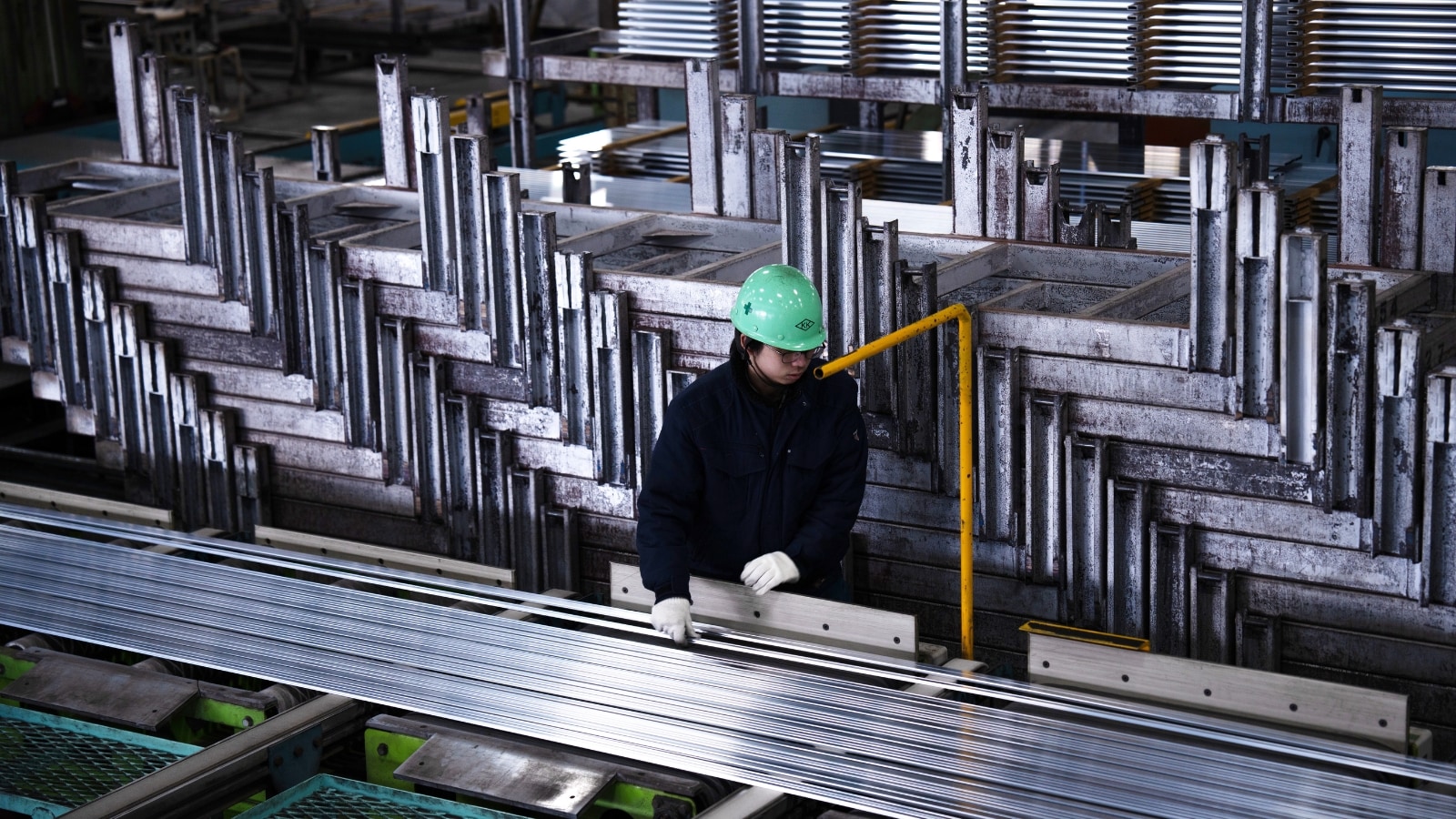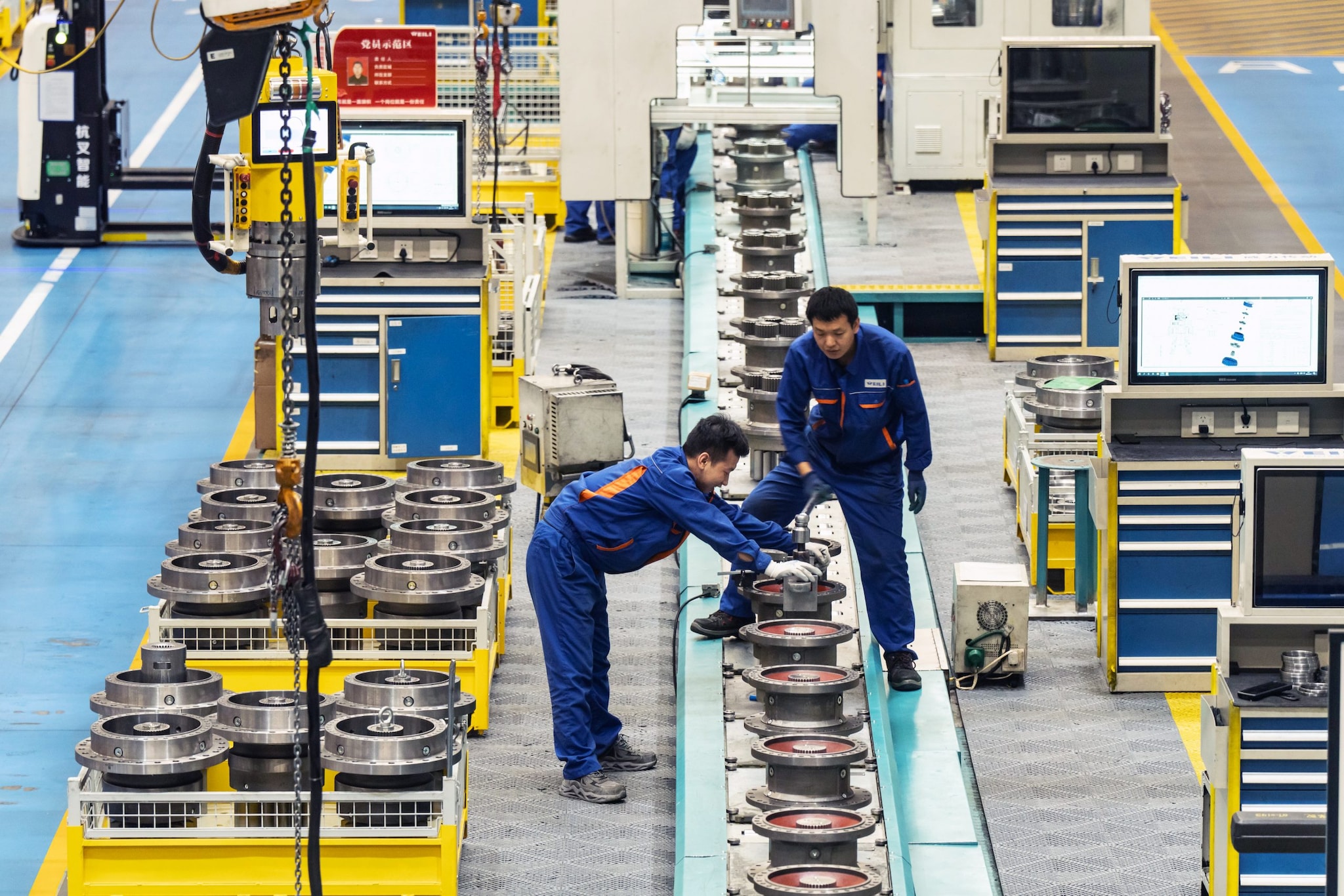
The expansion of China’s manufacturing sector during a period of active kinetic conflict in West Asia is not a statistical anomaly but the predictable result of deep-tier supply chain insulation and a strategic shift toward domestic "New Three" industries. While traditional market analysis focuses on immediate inflationary pressures from energy volatility, a structural decomposition of China’s Purchasing Managers’ Index (PMI) reveals that internal policy cycles and state-led capital allocation are currently decoupling industrial output from external geopolitical shocks. The growth observed is a function of counter-cyclical fiscal stimulus and a deliberate front-loading of production to hedge against looming tariff escalations.
The Triad of Industrial Momentum
Three distinct variables explain why factory activity is accelerating despite the risk of global energy disruptions and shipping bottlenecks.
- State-Led Demand Injection: The "trade-in" policy for industrial equipment and consumer durables has created a synthetic floor for domestic demand. By subsidizing the replacement of aging machinery, the state has effectively forced a CAPEX cycle that offsets the decline in private sector confidence.
- Inventory Front-Loading: Manufacturers are currently operating under a "pre-emptive production" logic. Anticipating further trade barriers from the EU and North America, firms are maximizing throughput to build offshore inventories while trade routes remain viable, even if congested.
- High-Tech Substitution: The contraction in low-end assembly is being eclipsed by the explosive growth in electric vehicles (EVs), lithium-ion batteries, and photovoltaic cells. These sectors operate on a different cost-curve than traditional manufacturing, benefiting from high levels of vertical integration that minimize the impact of imported component inflation.
The Energy Arbitrage Framework
The primary risk associated with the Iran conflict is the disruption of the Strait of Hormuz, a chokepoint through which approximately 20% of the world’s liquid petroleum passes. However, China’s industrial sector has developed a multi-layered buffer that mitigates this "energy tax" on manufacturing.
The first layer is the Strategic Petroleum Reserve (SPR). Estimates suggest China maintains a reserve sufficient to cover over 90 days of net imports. This allows the state to stabilize internal fuel prices for industrial logistics even as Brent crude spikes. The second layer is the Diversification of Feedstock. Through the expansion of the Power of Siberia pipeline and increased overland imports from Central Asia, China has reduced its marginal dependency on maritime oil shipments.
The third and most critical layer is the Electrification of the Industrial Base. As the Chinese grid shifts toward a higher percentage of renewables and nuclear power, the "energy-intensity-of-GDP" metric is becoming less sensitive to oil price volatility. A factory powered by coal-fired electricity or a local solar microgrid is fundamentally insulated from a tanker blockade in the Persian Gulf.
Deconstructing the PMI Divergence
Standard economic commentary often misses the divergence between the official NBS PMI and the Caixin PMI. The official data focuses on large, state-owned enterprises (SOEs), while the Caixin index tracks smaller, private, export-oriented firms.
- SOE Stability: Large-scale industrial players are currently benefiting from the "Dual Carbon" strategy, receiving preferential credit to upgrade to "Green Factories." This capital inflow ensures that headline PMI remains in expansionary territory ($>50$) regardless of the immediate export environment.
- SME Agility: Smaller manufacturers are pivoting to the "Global South." While conflict in West Asia complicates logistics, it also creates a vacuum in regional markets that Chinese firms are aggressive in filling. This "Pivot to the Periphery" allows for volume growth even as Western markets tighten.
The Cost Function of Geopolitical Friction
To understand the long-term viability of this expansion, one must analyze the cost function ($C$) of a Chinese manufacturing firm in the current environment:
$$C = L + M + E + (R \times f)$$
Where:
- $L$ = Labor (Stable or slightly declining due to automation)
- $M$ = Materials (Increasing due to supply chain friction)
- $E$ = Energy (High volatility, mitigated by state subsidies)
- $R$ = Risk (Geopolitical premium)
- $f$ = Friction (Logistics delays and insurance hikes)
The current expansion is maintained because the reduction in $L$ (through aggressive robotics integration) and the subsidization of $E$ are currently outpacing the increases in $M$ and $R$. The "factory of the world" is essentially trading margin for market share, utilizing its deep capital reserves to outlast competitors who face higher borrowing costs and less state support.
Supply Chain Elasticity and The Middle East Bottleneck
The war involving Iran introduces a "Logistics Surcharge" that manifests in two ways: increased freight rates and extended lead times. As vessels avoid the Red Sea, the transit time to Europe increases by 10 to 14 days.
This delay acts as a hidden interest rate hike on manufacturers. Capital is locked in "goods-in-transit" for longer periods, straining cash flow. Large Chinese exporters are counteracting this through Supply Chain Financialization. By using state-backed credit lines to provide liquidity to their suppliers, they ensure that the "bullwhip effect"—where small fluctuations in demand cause massive swings in upstream production—is dampened.
Furthermore, the "China-Europe Railway Express" provides a high-capacity overland alternative. While it cannot match the volume of ocean freight, it serves as a pressure valve for high-value components, ensuring that the assembly of complex goods (like semiconductors or precision electronics) is not halted by maritime insecurity.
Structural Vulnerabilities in the Expansion Model
Despite the current expansion, the model faces two hard limits. The first is the Diminishing Marginal Utility of Credit. Much of the current factory activity is fueled by debt. If the global demand for Chinese exports does not recover to match the increased capacity, the result will be systemic overcapacity and a deflationary spiral that could erode the very industrial base the state is trying to protect.
The second limit is the Technological Ceiling. While China has mastered the mass production of mid-tech goods, the manufacturing sector remains dependent on high-end Western and Japanese machinery for the most advanced processes. Geopolitical tension increases the risk of "de-tooling," where sanctions prevent the maintenance or upgrade of the precision instruments required for next-generation manufacturing.
Strategic Capital Allocation for Global Competitors
For international firms competing with or sourcing from this industrial complex, the expansion signal should not be interpreted as "business as usual." It is a signal of a structural pivot.
Immediate Tactical Shifts:
- Inventory Buffering: The 10-14 day shipping delay must be treated as a permanent structural change. Rebalancing to a "Just-in-Case" inventory model for critical Chinese components is mandatory to avoid line-down situations.
- Regional Hedging: The expansion in China is increasingly localized. Firms should look to source from "China Plus One" hubs (Vietnam, Mexico, India) that utilize Chinese sub-assemblies but offer shorter, more secure logistics paths to final markets.
- Energy-Intensity Auditing: Assess the oil-sensitivity of your supply chain. Suppliers who are integrated into the Chinese "Green Grid" will provide more price stability over the next 24 months than those dependent on regional diesel-generated power or long-haul maritime logistics.
The expansion of China’s factory activity amidst a regional war is a testament to the country's transition from a "low-cost provider" to a "high-resilience provider." The strategic priority is no longer just the lowest unit cost, but the most reliable delivery of volume under conditions of global instability. Organizations that fail to account for this shift in the "Cost of Resilience" will find themselves increasingly marginalized by a manufacturing base that has successfully weaponized its scale and state integration.