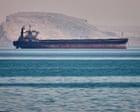
The security architecture proposed for the Strait of Hormuz fails because it treats a non-linear geopolitical risk as a linear logistical problem. While state-led initiatives focus on visible naval presence, the shipping industry operates on a calculus of insurance premiums, hull integrity, and crew liability. The fundamental disconnect lies in the difference between territorial deterrence—which the proposed plans prioritize—and operational insulation, which the industry requires. Until the disparity between military signaling and commercial risk mitigation is closed, the Strait remains an uninsurable bottleneck regardless of the number of hulls in the water.
The Triad of Maritime Risk Factors
To understand why shipping firms remain skeptical of the current security proposals, one must deconstruct the risk into three distinct operational pillars. Each pillar creates a specific cost burden that a simple naval escort cannot fully offset.
1. The Kinetic Threat Profile
The primary concern for a VLCC (Very Large Crude Carrier) operator is not a full-scale naval engagement, but asymmetrical interference. This includes limpet mines, Unmanned Aerial Vehicles (UAVs), and fast-attack craft harassment. Naval vessels are designed for high-intensity conflict; they are less effective at preventing low-intensity, "grey zone" activities that occur beneath the threshold of a declaration of war. A single explosive device attached to a hull does not just damage a ship; it triggers a force majeure event that ripples through the entire supply chain.
2. The Insurance Premium Escalation
The maritime industry functions on a base rate plus a "War Risk" surcharge. When a region is designated a high-risk area by the Joint War Committee (JWC), premiums can spike by 500% to 1,000% within a 24-hour window. Current security plans do not provide the actuarial certainty required to lower these rates. Insurers value historical data and predictable state behavior over temporary military surges. Without a long-term diplomatic stabilization or a state-backed insurance guarantee, the "Trump plan" or similar initiatives remain a subsidized escort for an unsubsidizable risk.
3. Legal and Jurisdictional Ambiguity
A significant portion of the skepticism stems from the "Right of Innocent Passage" under the United Nations Convention on the Law of the Sea (UNCLOS). If a commercial vessel is intercepted within territorial waters, the rules of engagement for a foreign naval escort are legally murky. Shipping firms fear that a heavy-handed military presence increases the likelihood of a miscalculation, turning a routine transit into a geopolitical flashpoint. In this scenario, the merchant vessel becomes the "collateral asset" in a dispute it cannot control.
The Failure of Symmetrical Deterrence
The proposed security model relies on the logic of symmetrical deterrence: the idea that more firepower will discourage interference. This logic is flawed when applied to the Strait of Hormuz for several structural reasons.
The Bottleneck Constraint
The Strait is approximately 21 miles wide at its narrowest point, with shipping lanes only two miles wide in each direction. This density creates a target-rich environment where maneuverability is non-existent. A naval escort provides a "shield," but in a two-mile lane, the shield is easily bypassed by sub-surface or aerial threats. The geography favors the disruptor, not the protector.
The Attribution Gap
Modern maritime disruption often utilizes deniable assets. When a tanker is struck by a drone or a mine in the dark of night, immediate military retaliation is difficult because the "who" and "from where" are masked. Shipping companies realize that a naval fleet is a reactive tool, whereas their primary need is proactive prevention.
Cost-Benefit Divergence
For a state, the cost of deploying a carrier strike group is a sunk cost of defense spending. For a shipping firm, every hour of delay caused by "protected convoys" or "security checks" is an overhead expense. If a secure transit takes 18 hours instead of 10 due to naval coordination, the firm loses thousands of dollars in fuel and labor costs. The security plan effectively taxes the industry it claims to protect.
Quantifying the Maritime Cost Function
To evaluate the efficacy of any security plan, we must look at the Cost of Transit ($C_t$). A functional security plan should theoretically lower $C_t$, but the current proposals often increase it.
The equation for $C_t$ is defined as:
$$C_t = O_f + I_w + (R_p \times L_a)$$
Where:
- $O_f$: Fixed operational costs (fuel, crew, maintenance).
- $I_w$: War risk insurance premiums.
- $R_p$: Probability of a disruptive event.
- $L_a$: Total value of the asset and cargo.
Under the proposed military frameworks, $O_f$ increases due to slower convoy speeds. $I_w$ remains stagnant or rises because the presence of more warships increases the perceived "probability of conflict" in the eyes of insurers. Therefore, even if $R_p$ (the probability of a strike) marginally decreases, the overall cost of transit for the firm often goes up. This is why firms "question safety"—they are actually questioning the economic viability of the security model.
The Strategic Shift from Escort to Intelligence
The shipping industry’s move away from state-led military plans is not a lack of desire for safety, but a pivot toward private intelligence and technology-led mitigation. Leading firms are investing in:
- Independent AIS (Automatic Identification System) Management: Encrypting or selectively disabling tracking data to reduce the visibility of high-value assets to non-state actors.
- Private Security Detachments (PSDs): Utilizing on-board security teams that can respond to boarding attempts more rapidly than a distant naval vessel.
- Alternative Route Analysis: Calculating the "Long-Way Discount"—the point at which it becomes cheaper to sail around the Cape of Good Hope rather than risk the Strait, despite the massive increase in fuel and time.
This privatization of security suggests that the industry no longer views state-led naval protection as a primary solution. It is viewed as a background condition, whereas the actual operational safety is managed internally.
The Structural Bottleneck of Crude Oil Elasticity
A deeper layer of the problem is the inelastic nature of the global oil market. Because 20% of the world’s petroleum passes through the Strait, any disruption creates an immediate price spike. This spike, ironically, can benefit certain stakeholders while punishing the carriers.
If a shipping firm loses a vessel, the subsequent price rise in oil may offset the global market loss for producers, but the individual carrier faces total asset loss. This creates a misalignment of interests. The carrier wants zero risk; the state wants "managed risk" that keeps the oil flowing. When the "Trump plan" emphasizes "keeping the lanes open," it is a macro-economic goal. The shipping firm’s goal is micro-economic: "don't lose my ship."
The Limits of External Security Mandates
History demonstrates that maritime security is most effective when it is invisible and integrated, not overt and escalatory. The 1980s "Tanker War" showed that reflagging ships and providing direct escorts only invited more sophisticated attacks. The current situation is an evolution of that failure.
The core limitation of the current strategy is the Assumption of Rationality. The security plan assumes that the threat-actor will see a warship and retreat. However, if the threat-actor's goal is not to win a naval battle, but to create enough chaos to drive up insurance prices and humiliate a superpower, then the arrival of more warships actually fulfills the threat-actor's objective.
Strategic Recommendation for Maritime Operators
For a shipping firm to navigate this environment, the move is to transition from a reactive stance (relying on naval protection) to a resilient stance.
- Diversify Flagging Jurisdictions: Move assets to flags of convenience that have high diplomatic neutrality to reduce the likelihood of being targeted in a state-on-state dispute.
- Hedge Insurance via Captives: Larger firms should consider forming "captive" insurance entities or mutual protection and indemnity (P&I) clubs to bypass the volatility of the commercial war-risk market.
- Invest in Hardened Hull Tech: Implement non-kinetic defense systems (e.g., long-range acoustic devices, high-pressure water cannons, and improved sensor arrays) to manage the "grey zone" threats that naval escorts frequently overlook.
The final strategic play is to decouple commercial transit from political signaling. Firms that wait for a "perfect" government security plan will remain at the mercy of geopolitical volatility. The most successful operators will be those who treat the Strait not as a protected corridor, but as a high-friction environment requiring localized, autonomous risk management. Security in the Strait of Hormuz is not a service that can be provided by a third-party state; it is a variable that must be priced, hedged, and managed at the hull level.