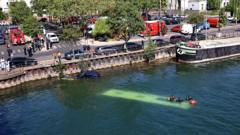
A trainee bus driver recently lost control of a vehicle and plunged into the River Seine near Paris, an incident that has exposed the frayed nerves and systemic gaps in the region's public transportation network. While local authorities initially focused on the mechanical recovery of the bus, the real story lies in the aggressive acceleration of recruitment programs designed to fix chronic labor shortages across the Île-de-France Mobilités system. This crash is not a freak accident. It is a predictable outcome of a transit authority struggling to balance safety with the desperate need for more boots on the ground.
Crisis Behind the Wheel
The incident occurred during a supervised training session. As the vehicle veered off the road and broke through the barrier into the water, it signaled more than just a momentary lapse in judgment. It highlighted the immense pressure placed on instructors and recruits alike. For years, the Paris transport sector has been bleeding veteran drivers to retirement and burnout. The replacement strategy relies on fast-tracking new hires, often individuals with limited experience in handling heavy machinery in dense urban environments. Expanding on this theme, you can find more in: The Unspoken Protocol of Two Men and a Bomb.
Training a driver for the narrow, high-traffic corridors of the Paris suburbs requires time. It requires a specific kind of situational awareness that cannot be synthesized in a six-week crash course. When we look at the data surrounding regional transit, we see a pattern of "vacancy desperation." To meet service quotas and avoid hefty fines from regional regulators, operators are forced to keep their training pipelines flowing at maximum velocity.
The Mechanics of a Miscalculation
Witnesses described the bus as accelerating unexpectedly before the plunge. While investigators examine the black box and mechanical components, industry veterans point to the "stress-response" failure often seen in high-pressure training environments. In a modern electric or hybrid bus, the torque is immediate. A novice driver who panics and hits the wrong pedal doesn't just make a mistake; they launch a multi-ton projectile. Observers at The Guardian have also weighed in on this trend.
Instructors are supposed to be the fail-safe. However, the ratio of trainees to experienced mentors has shifted. We are seeing a dilution of expertise. The veteran drivers who used to spend months mentoring a single recruit are now being cycled through dozens of new hires, often while working overtime themselves to cover vacant shifts. This exhaustion creates a feedback loop where the safety net is as thin as the training manual.
Labor Shortages and the Privatization Push
The backdrop of this crash is the looming privatization of the Paris bus network. This transition has triggered a wave of strikes and mass resignations as drivers face the prospect of changing contracts, longer hours, and reduced benefits. When the workforce is demoralized, the quality of mentorship drops.
Operators are currently scrambling to fill thousands of positions. To do this, they have lowered the barrier to entry, offering signing bonuses and simplified certification processes. While this looks good on a spreadsheet, it ignores the physical reality of driving a bus through the Seine-et-Marne or Hauts-de-Seine. The streets are unforgiving. The river is even more so.
A Systemic Blind Spot
There is a tendency in French bureaucracy to treat these events as isolated technical failures. They will check the brakes. They will check the trainee’s blood alcohol levels. They might even check the weather conditions. What they rarely check is the logbook of the instructor to see how many hours of rest they had in the preceding 72 hours.
The "human factor" is often cited in accident reports, but it is rarely scrutinized as a business cost. If an operator can save money by shortening the training cycle by ten percent, they will. If that leads to one crash every five years, the bean counters often view that as an acceptable risk. Until, of course, a bus ends up in the Seine and the international press starts asking questions about the competence of the entire network.
The Equipment Variable
The shift toward zero-emission fleets adds another layer of complexity. Electric buses handle differently than their diesel predecessors. The weight distribution is different due to heavy battery packs, often stored in the roof or the chassis, which alters the center of gravity. For a trainee, the lack of traditional engine noise can also be disorienting, removing an auditory cue for speed and acceleration.
Standardizing training on these new platforms hasn't kept pace with procurement. Many trainees are learning on older diesel models only to be handed the keys to a high-torque electric vehicle during their final evaluations. This mismatch is a recipe for disaster. The controls are more sensitive, and the margin for error is smaller.
The Cost of Moving People
Public transit is a social contract. The passenger assumes that the person in the driver's seat has been vetted, trained, and rested. When that contract is broken, the public loses faith in the entire system. This crash shouldn't be viewed through the lens of a "driver error." It must be viewed as a corporate and regulatory failure.
We are seeing a trend where technical proficiency is being traded for headcount. This is a dangerous game. Driving a bus in a major metropolitan area is one of the most stressful jobs in the labor market. It requires constant vigilance, physical stamina, and a temperament that can handle the unpredictability of city life. By treating drivers like interchangeable parts in a machine, the authorities have invited this kind of catastrophe.
The river recovery is over. The bus has been hauled from the silt. But the underlying issues remain submerged. Until there is a fundamental shift in how the Paris transit authority values the training process and the people who conduct it, that stretch of the Seine remains a graveyard for more than just a single vehicle.
Fix the training, slow down the recruitment rush, and respect the gravity of the machine. Anything less is just waiting for the next splash.