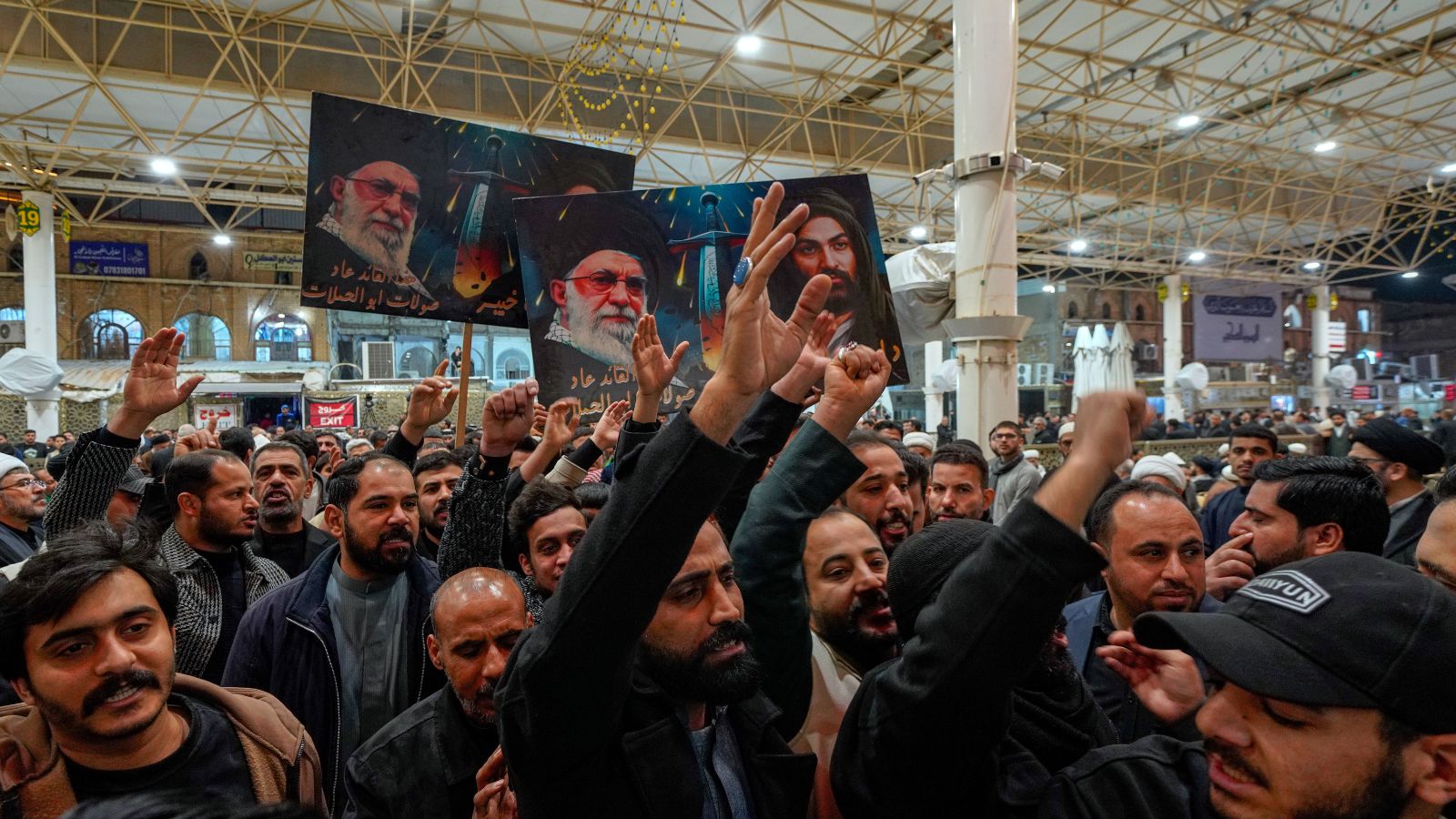
The rumors are finally hardening into something resembling a political reality. For years, the question of who follows Ayatollah Ali Khamenei has been the ultimate black box of Middle Eastern politics. Now, the Assembly of Experts says they've reached a consensus. They've narrowed the list. They have a name.
This isn't just another bureaucratic update from Tehran. It's a signal that the inner circle is bracing for a shift that will redefine Iran's role on the global stage for the next thirty years. If you think this is just a religious appointment, you're missing the point. This is about survival, the IRGC, and whether the Islamic Republic stays the course or faces an internal breaking point.
The Assembly of Experts Breaks Its Silence
The Assembly of Experts is an 88-member body of clerics. Their job description is simple but heavy: they elect, supervise, and can technically dismiss the Supreme Leader. Usually, they're about as transparent as a brick wall. But recently, a prominent member, Mahmoud Mohammadi-Eraqi, let it slip that a special committee has settled on a candidate.
What’s wild is that Khamenei himself reportedly gave them the green light to move faster. In the past, discussing a successor while the leader was still breathing was seen as borderline treasonous. Now, it's a matter of national security. Khamenei is 86. He isn't getting any younger, and the regional chaos isn't getting any quieter. The leadership knows that if he passes away without a clear, pre-approved heir, the power vacuum would be a gift to every opposition group and foreign adversary.
The Candidate in the Shadow
Who is it? The Assembly isn't saying, but the list of suspects is incredibly short. For a long time, Ebrahim Raisi was the frontrunner. He was the "safe" pair of hands—hardline, loyal, and already in the presidency. Then his helicopter went down in a fog-shrouaded forest last year. That changed everything. It cleared the path for the one name everyone whispers but nobody wants to say out loud: Mojtaba Khamenei.
Mojtaba is the Supreme Leader’s second son. He’s been running the office of the Supreme Leader (the Beyt) for years. He has the ear of the IRGC. He knows where the bodies are buried. But there's a massive problem. The 1979 Revolution was built on the idea of overthrowing a hereditary monarchy. If Khamenei hands the keys to his son, it looks a lot like the Pahlavi dynasty they worked so hard to destroy.
The Assembly has to balance two things. They need someone who can keep the IRGC (Islamic Revolutionary Guard Corps) happy, and they need someone who won't trigger a massive street uprising the moment they take the oath.
Why the IRGC Holds the Real Vote
Don't let the turbans fool you. While the clerics in the Assembly of Experts do the voting, the guys in the green uniforms hold the power. The IRGC has transformed from a military wing into a massive economic conglomerate. They control construction, telecommunications, and oil.
The next Supreme Leader isn't just a spiritual guide. He's the CEO of a multi-billion dollar empire. The IRGC wants a successor who won't touch their bottom line or pivot toward a rapprochement with the West that might diminish their influence. This is why the consensus mentioned by the Assembly is so vital. It means the clerical establishment and the military elite have finally shaken hands on a name.
What This Means for Global Stability
If the consensus candidate is a hardliner—which is almost certain—expect the "Ring of Fire" strategy to continue. Iran's support for proxies in Lebanon, Yemen, and Iraq isn't just a Khamenei hobby. It's the central pillar of their defense doctrine. A new leader will likely double down on these regional ties to prove his revolutionary bona fides.
There's also the nuclear question. Khamenei has long maintained a fatwa against nuclear weapons, though many Western intelligence agencies remain skeptical. A new leader might not feel bound by that same rhetoric. If the succession is rocky, the new guy might reach for the ultimate deterrent to secure his position at home.
The Misconception of Reform
Many people hold out hope that a successor might be a "closet moderate." Honestly, that’s wishful thinking. The system is designed to filter out anyone who isn't a true believer. The vetting process for the Assembly of Experts itself is handled by the Guardian Council, which is appointed by the Supreme Leader. It’s a closed loop.
You don't get to the top of this list by promising reform. You get there by proving you’re the most reliable guardian of the 1979 status quo. The "consensus" the Assembly is talking about isn't a move toward the center. It's a hardening of the shell.
What Happens the Day After
The transition won't be a simple ceremony. Under the Iranian constitution, if the leader dies, a temporary council consisting of the President, the head of the judiciary, and one member of the Guardian Council takes over until the Assembly votes.
Because the Assembly claims to have reached a consensus already, that "temporary" period might last about five minutes. They want to avoid a repeat of 1989, where the transition was fraught with backroom deals and constitutional maneuvering. They want a seamless handoff.
But the Iranian people are the wildcard. High inflation, social restrictions, and the memory of the "Woman, Life, Freedom" protests haven't gone away. A sudden transition is the most dangerous moment for any authoritarian regime. If the public senses weakness or division within the Assembly, they might take to the streets before the new guy can even finish his first speech.
Next Steps for Observers
Keep a close eye on the official state media outlets like IRNA and Fars News. Watch for the frequency of Mojtaba Khamenei’s appearances in non-political, religious contexts. That’s how the regime builds "theological legitimacy" for someone who lacks the traditional clerical rank.
Also, watch the movement of the IRGC commanders. If you see high-level reshuffling in the Sarallah Base—the unit responsible for the security of Tehran—it means the transition is imminent. The consensus is reached, the plan is set, and the world is about to see if the Islamic Republic can survive its most significant test since the death of Khomeini.


