The grease-slicked floor of a fast-food kitchen is a leveling force. It doesn't care if you own the building, the franchise, or a significant portion of the global economy. If you don't find your footing, you will slip.
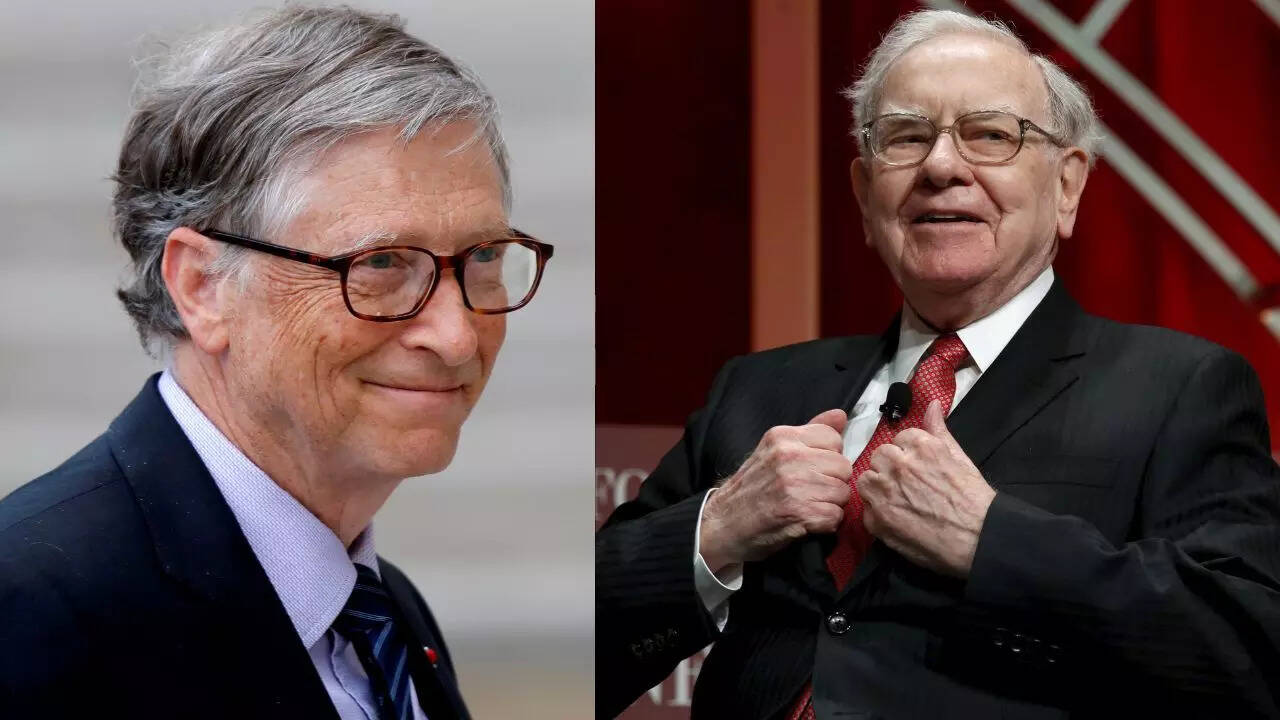
Bill Gates and Warren Buffett—men whose combined net worth has, at various points, rivaled the GDP of mid-sized nations—once walked into a Dairy Queen not as owners, but as trainees. They didn't do it for a photo op or a clever marketing campaign. They did it because they were starving for something that a balance sheet could no longer provide. They were looking for the friction of the real world.
The Cilded Cage of Success
When you reach the stratosphere of global influence, the world starts to lie to you. It happens slowly. First, people stop correcting your jokes. Then, they stop questioning your bad ideas. Eventually, you are surrounded by a soft, padded room of "yes" men and executive summaries. This is the death of perspective.
For Buffett, the Oracle of Omaha, and Gates, the architect of the digital age, the "boardroom ceiling" is a very real psychological barrier. When every decision you make is filtered through ten layers of management, you lose the scent of the street. You forget what it feels like to have a customer look you in the eye and complain that their fries are cold.
That interaction is raw. It is honest. It is something you cannot buy.
Consider a hypothetical executive named Sarah. She oversees a logistics empire. She looks at data points—on-time delivery percentages, fuel costs, churn rates. To Sarah, a "delay" is a red cell in an Excel spreadsheet. But to the driver stuck in a blizzard in Nebraska, that delay is a shivering cab, a missed dinner with family, and a mechanical failure that feels like a personal betrayal. If Sarah never sits in that cab, she isn't actually managing a company. She is playing a video game with lives she doesn't understand.
The Humility of the Hairnet
Watching Buffett attempt to operate a soft-serve machine is a masterclass in intentional vulnerability. There is a specific kind of internal shift that occurs when a man who can move markets with a whisper struggles to create the perfect "curl" on top of a vanilla cone.
It is the practice of being a beginner again.
Most people spend their entire lives trying to escape the service industry. We view the "fast food job" as a rung on a ladder we are meant to climb and never look back at. But there is a hidden danger in the ascent. As we climb, the air gets thinner, and our connection to the fundamental mechanics of human exchange begins to wither.
The drive-thru window is a crucible of human psychology. You have exactly fifteen seconds to facilitate a transaction, manage an emotion, and deliver a product. It requires a level of presence that a three-hour board meeting rarely demands. In a meeting, you can drift. You can delegate. At the window, the car is waiting. The person is hungry. The stakes are immediate.
Why the Giants Swap Seats
We often mistake humility for a sign of weakness or a performative virtue. It isn't. In the world of high-stakes investment and technological innovation, humility is a competitive advantage. It is a data-gathering mission.
When Buffett puts on the apron, he isn't just "being a nice guy." He is recalibrating his internal compass. He is reminding his nervous system what it feels like to be at the mercy of a system rather than the creator of one. This "downward mobility" allows an individual to see the cracks in the foundation that those at the top usually ignore.
- The inefficiency of a poorly placed condiment station.
- The way a team’s morale fluctuates based on the tone of a single manager.
- The physical toll of repetitive motion.
These aren't just "employee problems." They are the molecular structure of a business. If the molecules are unstable, the entire structure is a lie.
The Invisible Stakes
There is a psychological phenomenon known as the "Empathy Gap." The more power an individual gains, the less their brain mirrors the emotions of others. It is a literal neurological shift. High-power individuals often struggle to read facial expressions or anticipate the needs of those "below" them. It’s as if success builds a cataract over the mind’s eye.
By voluntarily stepping back into the fray, Gates and Buffett are performing a sort of manual surgery on their own empathy. They are forcing their brains to re-engage with the micro-struggles of the everyday.
Think about the last time you were frustrated by a piece of software or a corporate policy. You likely thought, "Did the person who designed this ever actually try to use it?" Usually, the answer is no. They designed it from a tower. They designed it for a user manual, not for a human being with a crying toddler in the backseat and five minutes to get to work.
The Weight of the Apron
There is a story, perhaps apocryphal but deeply telling, of an executive who spent a week working in his own warehouse. On the third day, he realized that the "optimized" walking paths designed by his consultants were actually causing chronic back pain for 40% of his staff because of a slight incline no one had measured.
He didn't find that in a report. He found it in his own hamstrings.
The "Humility Habit" isn't about the work itself; it’s about the willingness to be uncomfortable. It’s about the rejection of the pedestal. When we see world leaders or billionaires doing "menial" tasks, our instinct is to scoff and call it a stunt. And sure, for many, it is. But for the ones who actually listen—the ones who actually try to master the soft-serve machine—it is an act of survival.
They know that the moment they stop understanding the person at the counter is the moment they start losing their grip on reality.
The Quiet Power of the Swap
The real magic doesn't happen in the headlines that follow these events. It happens in the quiet moments of the next board meeting.
Imagine Gates sitting across from a group of developers. They are discussing a new interface. One developer argues that a certain feature is "intuitive enough" for the average user. Before, Gates might have looked at the data and agreed. But now, he remembers the chaos of the lunch rush. He remembers the grandmother who couldn't find the "total" on the screen because the sun was hitting the glass at a specific angle.
He speaks up. He pushes back. Not because he’s a genius, but because he was there.
The transition from the boardroom to the burger flip is a journey from the abstract to the concrete. It is a reminder that every number on a spreadsheet represents a human heartbeat, a bead of sweat, and a person trying to make it through their shift.
The Mirror in the Window
We live in an age of profound disconnection. We order food through apps so we don't have to talk to people. We work from home so we don't have to see our colleagues. We manage from a distance so we don't have to feel the consequences of our choices.
But the window is still there.
Whether you are a billionaire or a middle manager or a student, there is a profound necessity in occasionally swapping seats. We need to feel the heat of the grill. We need to hear the bell of the drive-thru. We need to remember that the world is built by hand, one small, "unimportant" task at a time.
Next time you see a person behind a counter, don't just see a service provider. See a mirror. They are doing the work that keeps the world turning while the rest of us argue over the "big picture."
The big picture is composed of those tiny interactions. The salt on the fries. The change in the hand. The "have a nice day" that actually means it. If you lose sight of that, you haven't succeeded. You've just become a very wealthy ghost in a machine of your own making.
The apron isn't a costume. It’s a life jacket. And in a world of rising tides and shifting winds, it might be the only thing that keeps you from drowning in your own ego.