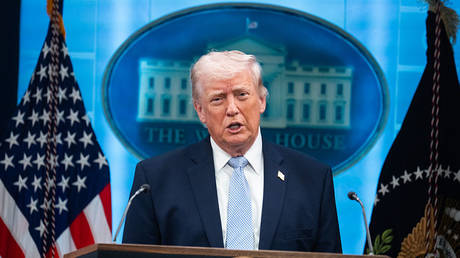
The media is currently hyperventilating over a "lost opportunity" to rein in executive power regarding Cuba. They see a Senate vote blocking limits on a president’s ability to designate state sponsors of terrorism as a failure of democracy. They are wrong.
This isn’t about Donald Trump. This isn’t about partisan loyalty. This is about the terrifying reality of the Foreign Commerce Clause and the Antiquities of Statecraft that most commentators are too lazy to study. The attempt to strip the executive branch of its agility in the Caribbean wasn't a noble pursuit of checks and balances; it was an attempt to turn the Oval Office into a debating society while the world burns.
If you think a committee of 100 ego-driven senators can manage the surgical precision of economic sanctions better than a centralized intelligence apparatus, you’ve never seen how the sausage is actually made.
The Myth of the Imperial Presidency
The loudest voices in the room claim we are living through the era of the "Imperial Presidency." They cite the State Sponsor of Terrorism (SST) designation as a weapon used for political leverage rather than national security.
Here is what they won't tell you: The SST list is one of the few remaining tools of credible deterrence that doesn't involve dropping bombs. When you tie a president’s hands with legislative red tape, you don’t "fix" foreign policy. You simplify it into a binary choice: total inaction or kinetic warfare.
Legislative oversight sounds great in a high school civics textbook. In the real world, it’s a death sentence for nuanced diplomacy. The Senate didn't "block a bid to limit power"; they refused to sabotage the executive branch's ability to react to real-time intelligence.
The Cuba Context: It Was Never About the Cold War
The "lazy consensus" dictates that Cuba is a harmless relic of the 1960s—a tropical island frozen in time that we bully out of habit. This perspective ignores the last decade of geopolitical shifts.
Cuba is no longer just a neighbor with a different economic system. It is a logistical hub for transnational actors that do not play by Westphalian rules. We are talking about intelligence sharing with adversaries that make the Cold War look like a playground dispute. When the State Department looks at the SST list, they aren't looking at Castro’s ghost. They are looking at current flows of illicit finance and state-shielded cyber activity.
By attempting to move the power to remove or add Cuba to this list into the halls of Congress, activists were essentially asking to make foreign policy subject to the whims of the Florida primary cycle and Midwestern trade lobbies.
The Mechanics of the SST Designation
To understand why the Senate stayed its hand, you have to understand the Legal Threshold of Designation. Under Section 6(j) of the Export Administration Act (and subsequent successor statutes), the Secretary of State must determine that a government has "repeatedly provided support for acts of international terrorism."
- Executive Agility: The President can act on classified data that Congress won't see for six months.
- Economic Scalpel: Designation triggers a suite of sanctions including restrictions on U.S. foreign assistance and a ban on defense exports.
- The Leverage Trap: Once a designation is codified by law—rather than executive order—it becomes nearly impossible to remove.
Ironically, the people trying to "limit" Trump’s power would have actually made the Cuba sanctions more permanent. By forcing the process through Congress, they would have locked the designation in a legislative vault that no future president could open without a 60-vote majority. They were building a cage and calling it freedom.
Why the "Consensus" is Wrong About Oversight
I have watched various administrations struggle with the "Cuba problem" for twenty years. The mistake every armchair analyst makes is assuming that "transparency" equals "better outcomes."
In foreign policy, transparency is often a liability. If the President needs to negotiate a back-channel deal to stop a specific threat, he needs the ability to move the SST needle as a bargaining chip. If he has to go to the Senate floor and hold a vote every time he wants to adjust that leverage, the chip is worthless. The adversary knows exactly what it takes to move the needle, and they know the President can’t deliver.
Dismantling the "People Also Ask" Nonsense
"Does the President have too much power over foreign policy?"
Wrong question. The question is: "Is the alternative—congressional management—functional?" The answer is a resounding no. Congress is designed to be slow, deliberate, and domestic-focused. It is structurally incapable of managing an evolving threat matrix in the Caribbean.
"Why is Cuba still on the list?"
Because they haven't stopped the behavior that got them there. This isn't a "legacy" issue. It’s a "current behavior" issue. If you want off the list, you stop harboring fugitives and stop acting as a proxy for hostile intelligence services. It’s that simple.
The Dangerous Allure of "Restraint"
There is a growing movement for "Restraint" in foreign policy. It’s popular on both the far left and the populist right. They argue that by shrinking the President's toolkit, we reduce the risk of conflict.
This is a fundamental misunderstanding of power dynamics. Power does not vanish when you take it away from the President. It just moves. In this case, it would have moved to lobbyists and special interest groups who have no accountability for national security.
Imagine a scenario where a President discovers a credible, time-sensitive link between a Havana-based entity and a planned strike on U.S. infrastructure. Under the proposed "limits," the President might have to wait for a committee hearing to authorize the necessary economic retaliation. By the time the gavel bangs, the damage is done.
The Cost of Competence
The Senate’s refusal to pass these limits wasn't a "win" for any one politician. It was a win for the concept of a functional state. We have become so obsessed with the personality of the person in the chair that we are willing to break the chair itself.
The Cuba designation is a tool. Tools are agnostic. They can be used well or poorly. But destroying the tool because you don't like the current carpenter is the height of strategic illiteracy.
The "consensus" wants you to believe that more rules make us safer. But in the world of high-stakes geopolitics, rules are often just friction that favors the aggressor. The Senate didn't choose "dictatorship" over "democracy." They chose the ability to govern over the desire to posture.
Stop looking for the Senate to "save" you from the executive branch. If you don't like how the power is being used, change the person using it. Don't lobotomize the office of the presidency and expect the country to keep walking.
You can't run a superpower with a 535-person steering committee. The Senate finally admitted that. It's time the rest of the country did too.
The next time you see a headline about "unfiltered presidential power," ask yourself if you’d rather have a President who can act, or a Congress that can only argue while the opportunity for peace—or the window for defense—slams shut.
The vote wasn't a tragedy. It was a rare moment of legislative sanity in an era of performative outrage.