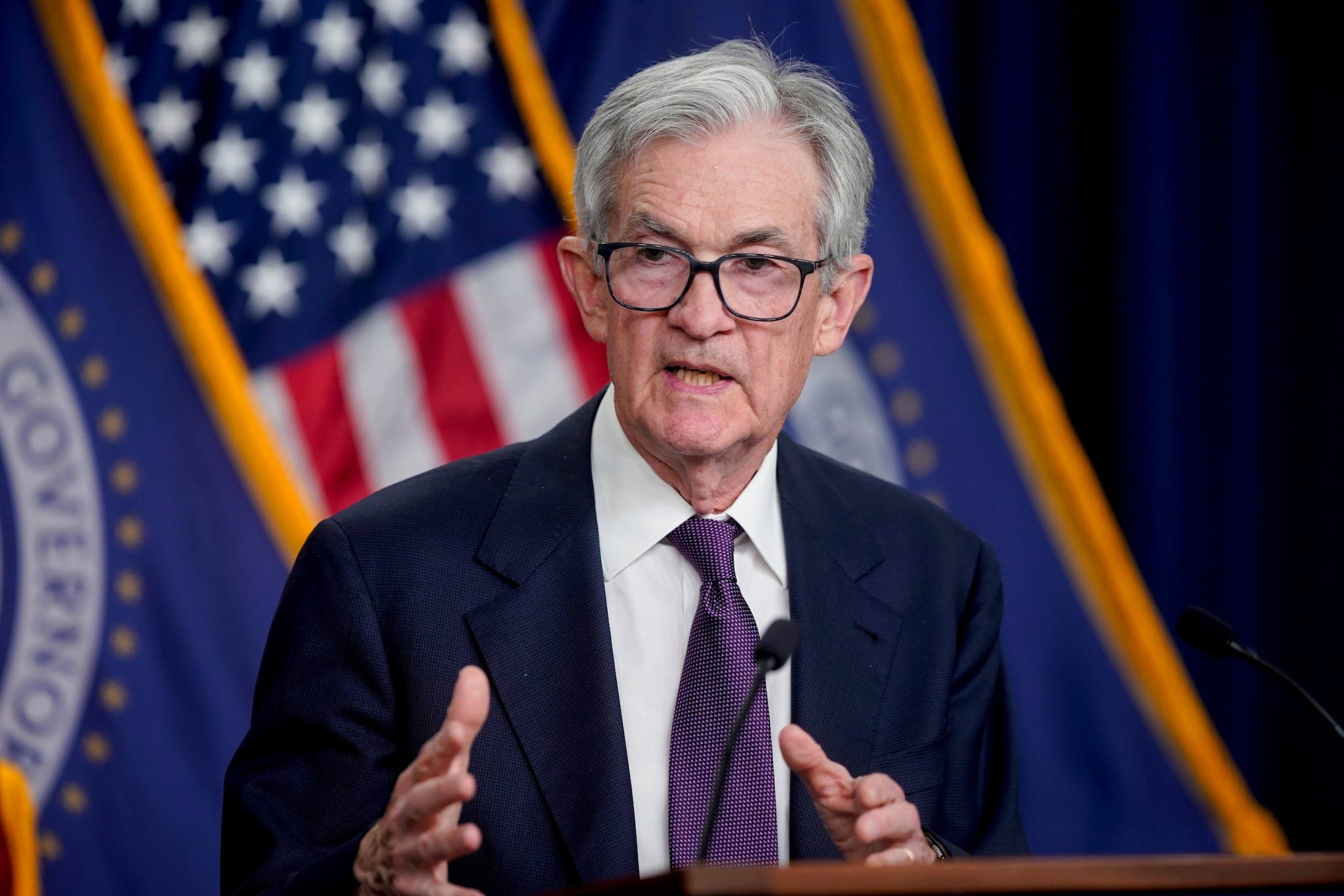
A federal judge just slammed the door on the Department of Justice, effectively insulating Federal Reserve Chair Jerome Powell from a high-stakes legal probe that threatened to crack the central bank’s wall of independence. By quashing subpoenas aimed at the Fed’s inner circle, the court didn't just rule on a procedural motion; it signaled that the executive branch's power to scrutinize monetary policy-making has reached a hard limit. The DOJ’s attempt to peel back the curtain on internal deliberations met a judiciary unwilling to let criminal investigators treat the Federal Reserve like any other federal agency.
At the heart of this clash is the tension between transparency and the "deliberative process privilege." The Justice Department argued that certain communications were essential to a broader investigation into potential financial misconduct or leaks. However, the court found that forcing the Chair to testify or surrender private records would create a "chilling effect" that could destabilize global markets. If every word spoken in a closed-door meeting at the Eccles Building could be seized by a prosecutor, the Fed’s ability to act decisively during a crisis would vanish.
The Judicial Firewall and the Doctrine of Autonomy
This ruling reinforces a long-standing legal tradition that treats the Federal Reserve as a quasi-independent fourth branch of government. The judge’s decision turned on the fact that the DOJ failed to prove "extraordinary circumstances" or a specific "showing of need" that outweighed the Fed’s right to privacy. This isn't just about protecting one man; it is about protecting the sanctity of the Federal Open Market Committee (FOMC) and its ability to debate interest rates without looking over its shoulder for a process server.
Federal judges are traditionally wary of letting the political arm of the government—the DOJ—rummage through the files of the institution responsible for the dollar’s stability. The subpoenas were seen by the court as an overreach, a fishing expedition that lacked the surgical precision required to pierce executive privilege. In the eyes of the bench, the risk of undermining the Fed’s credibility outweighed the potential evidence the DOJ hoped to find.
Why the DOJ Went After the Chair
The Department of Justice does not typically target the Federal Reserve Chair without a significant trigger. While the specific details of the underlying investigation remain partially redacted, sources suggest the inquiry stemmed from allegations of selective disclosure—the idea that market-moving information might have reached preferred ears before the general public.
Prosecutors were betting on the "No one is above the law" card. They argued that the Fed’s independence is not a license for a total lack of accountability. By seeking these subpoenas, the DOJ wanted to establish a precedent: that when it comes to potential criminal behavior or gross negligence, the Fed’s marble walls are not impenetrable.
They lost that bet.
The judge’s skepticism was rooted in the potential for political weaponization. If a sitting President’s DOJ can subpoena a Fed Chair during an election year or a period of high inflation, the independence of the central bank becomes a fiction. The ruling suggests that the bar for such an intrusion is set so high that, barring a smoking gun of clear criminal intent, the Fed remains a black box to investigators.
The Ghost of Market Volatility
Market reaction to the subpoena news was muted, precisely because investors bet on this outcome. The global financial system operates on the assumption that the Fed is insulated from the whims of the White House and the aggression of the DOJ. Had the subpoenas been upheld, we would have seen a massive repricing of risk.
Imagine a scenario where a Fed Chair is sitting in a deposition instead of preparing for a rate decision. The uncertainty would be catastrophic. Traders rely on the consistency of the Fed’s communication strategy. If that strategy is disrupted by legal discovery, the "Fed Put"—the belief that the central bank will step in to support the economy—starts to look very shaky.
The court was acutely aware of this. The decision repeatedly mentions the "institutional integrity" of the Federal Reserve. This is code for: "We aren't going to let a legal dispute trigger a bank run or a bond market collapse."
The Mechanics of Quashing a Subpoena
To understand how Powell’s legal team won this round, one must look at the specific legal hurdles the DOJ failed to clear:
- Relevance: The government could not prove that the specific documents requested were central to the crime being investigated.
- Availability: The court noted that the DOJ could likely find the information they needed from other, less sensitive sources.
- Privilege: The deliberative process privilege was upheld as a near-absolute defense for high-level policy discussions.
The Power Vacuum in Oversight
With the DOJ sidelined, the question shifts to who actually watches the watchers. Congress has oversight authority, but it is often bogged down by partisan theater. The Government Accountability Office (GAO) has limited scope when it comes to monetary policy. This ruling effectively creates a "blind spot" in the American system of checks and balances.
If the DOJ cannot use the grand jury process to investigate the Fed’s leadership, then the Fed is essentially left to police itself through its own Inspector General. For critics, this is the ultimate "get out of jail free" card. They argue that the Fed has become too powerful, a technocratic elite that operates without the oversight that governs every other part of the American bureaucracy.
However, proponents of the ruling argue that this is exactly how the system was designed. The Fed was never meant to be a popular institution or a transparent one in the way the Department of Transportation is. It was designed to be a group of experts making hard, often unpopular choices in total isolation.
The Precedent for Future Chairs
Jerome Powell may have won this battle, but the war over the Fed’s boundaries is far from over. This case provides a blueprint for future Chairs who find themselves in the crosshairs of an aggressive administration. It establishes that "routine" investigations cannot be used to bypass the protections afforded to the central bank.
It also serves as a warning to the DOJ. Prosecutors will now think twice before signing off on subpoenas for Fed officials. They know the judiciary will demand a level of evidence that is nearly impossible to gather without the very access they are seeking. It is a classic Catch-22 that favors the status quo.
The Hidden Risks of Total Immunity
While the court’s decision protects the economy from immediate volatility, it carries a long-term risk. When an institution is told it is effectively beyond the reach of the law's standard investigative tools, arrogance can set in. History shows that lack of accountability often leads to a slow drift in ethical standards.
If the Fed is a "no-go zone" for the DOJ, the internal culture of the bank becomes the only line of defense against misconduct. We are essentially trusting that the people in the room are of such high character that they don't need the threat of a subpoena to keep them honest. In a world of multi-trillion dollar markets, that is a very heavy lift for human nature.
The DOJ is likely to appeal, but the legal mountain they have to climb is now much steeper. They must find a way to argue that the judge misapplied the law, rather than just complaining that the law makes their job too difficult. For now, the files remain locked, the testimony remains unsworn, and the Fed’s independence remains the most formidable armor in Washington.
Review the internal compliance reports of the Federal Reserve's Inspector General from the last three years to see if the "gaps" the DOJ was trying to fill are already being documented by the bank's own internal watchdogs.