The ink was still wet when the notification pings began to vibrate across the desks of Capitol Hill. It wasn't the sound of a debate starting; it was the sound of one ending before it could even begin.
In May 2019, a pen stroke transformed a geopolitical disagreement into an $8.1 billion reality. By invoking a rarely used provision of the Arms Export Control Act, the administration effectively told Congress that its permission was no longer required. The "emergency" was the looming shadow of Iran, but the result was a direct pipeline of precision-guided munitions, aircraft engines, and maintenance support flowing into the hands of Saudi Arabia, the United Arab Emirates, and Jordan. Discover more on a related topic: this related article.
To understand what happened, you have to look past the dollar signs. You have to look at the machinery of a "Section 3" bypass. Usually, when the United States sells weapons to a foreign power, there is a thirty-day waiting period. It is a time for questions. It is a time for senators to weigh the moral cost of a bomb against the strategic necessity of an alliance. But "emergency" is a word that acts like a skeleton key. Once turned, the doors of the Capitol lock from the outside.
The Ghost in the Assembly Line
Imagine a factory floor in Arizona or Pennsylvania. To the people working the shifts, the "emergency" isn't a geopolitical chess move; it’s a backlog. When an $8 billion deal is greenlit, it doesn’t just mean weapons are shipped; it means production lines hum with a renewed, frantic energy. Thousands of jobs depend on the export of these high-tech systems. This is the quiet reality of the American defense industry—a massive, intricate organism that feeds on the stability of instability. Additional journalism by The Washington Post delves into related perspectives on the subject.
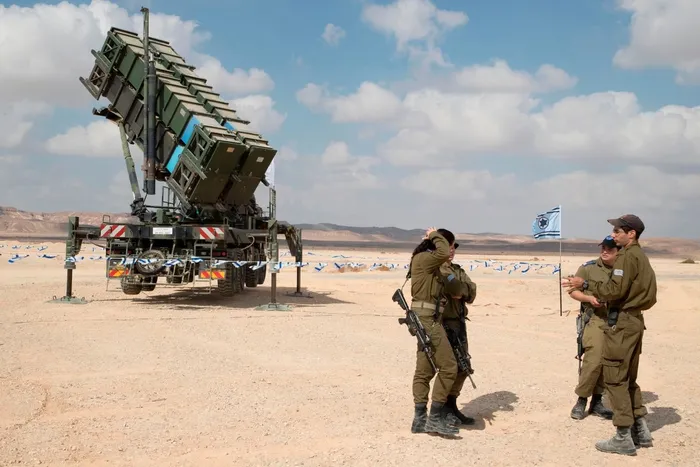
The products in question weren't just simple rifles. We are talking about Paveway laser-guided bombs. These are the "smart" eyes of modern warfare. When the administration bypassed Congress, they weren't just sending hardware; they were sending the ability to strike with surgical precision from ten thousand feet.
But precision is a double-edged sword. While the administration argued these weapons were necessary to deter Iranian aggression, critics pointed to the charred remains of school buses and hospitals in Yemen. The human stakes of this policy aren't found in the Oval Office. They are found in the dust of a Sana’a street, where the distinction between a "strategic deterrent" and a "civilian tragedy" is measured in the few seconds it takes for a guided kit to find its coordinate.
The Mechanics of the Bypass
The legal architecture of this move is fascinating and terrifying in its simplicity. The Arms Export Control Act of 1976 was designed to give the President flexibility in a crisis. It assumes a world where a sudden invasion or a collapsing front might require an immediate infusion of American steel.
The administration’s logic was that the "malign influence" of Iran had reached a boiling point. They pointed to sabotage of oil tankers and drone strikes on pipelines. In their view, every day spent debating in a Senate subcommittee was a day the Middle East moved closer to a total conflagration.
However, the friction arose because many in Congress felt the "emergency" was being manufactured to circumvent their specific objections. Just months prior, the Senate had voted to end U.S. support for the Saudi-led coalition in Yemen. The bypass wasn't just a response to Iran; it was a counter-move against domestic opposition. It was a high-stakes game of constitutional chicken.
The Weight of the Ledger
There is a specific kind of silence that follows a massive arms deal. It’s the silence of a calculated risk. On one side of the ledger, you have the "stabilization" of the region. By bolstering the military capabilities of the Saudis and the Emiratis, the U.S. maintains its role as the ultimate security guarantor in the Persian Gulf. It keeps the oil flowing. It keeps the global economy from a heart attack.
On the other side of the ledger are the invisible costs. When a government uses emergency powers to bypass its own legislature, it erodes a bit of the foundation. It sets a precedent. If Iran is an emergency today, what constitutes an emergency tomorrow?
Consider the diplomat who has to explain American values of democracy and oversight to a foreign head of state while knowing that, back home, the primary check on military power was just sidestepped. It makes the conversation awkward. It makes the "rules-based order" look like a suggestion rather than a mandate.
The $8.1 billion wasn't just a purchase price for 22 separate arms transfers. it was a down payment on a specific type of future. A future where the executive branch can act as a global arms dealer with the speed of a Silicon Valley startup, unencumbered by the slow, grinding gears of representative government.
The Aftermath in the Dark
The weapons eventually arrived. They always do. The crates are offloaded in ports like Jeddah, their contents gleaming under the harsh desert sun. For the pilots and the generals, it is a restoration of parity. For the manufacturers, it is a successful fiscal quarter.
But for the concept of Congressional oversight, it was a profound wounding. The bipartisan anger that followed—led by figures like Senator Chris Murphy and Senator Bob Menendez—wasn't just about the weapons themselves. It was about the realization that the power of the purse had been replaced by a power of the pen.
They tried to block the sales after the fact. They introduced resolutions of disapproval. They spoke passionately on the floor about the humanitarian crisis in Yemen and the need for a moral foreign policy. But the veto pen is even stronger than the emergency pen. The sales went through. The bombs were built. The money changed hands.
We often talk about "geopolitics" as if it’s a game of Risk played on a board. We forget that every piece on that board is made of flesh and blood. Every decision to bypass a vote is a decision to prioritize speed over consensus, and "security" over the messy, frustrating process of accountability.
The ink dried years ago, but the paper still carries the scent of that afternoon in May. It smells like cordite and bureaucracy. It reminds us that in the halls of power, an "emergency" is whatever the person holding the pen decides it is, and the rest of the world simply has to live—or die—with the consequences.
The missiles are in the silos now. The ships are on the water. The debate is a matter of historical record. Yet, every time a new conflict flares up in the Gulf, or a new headline breaks about a strike gone wrong, the ghost of that $8.1 billion signature reappears. It sits in the corner of the room, a silent witness to the day the checks and balances were traded for a faster delivery date.