In the sterile, pressurized environment of a situation room, victory doesn’t always sound like a thunderclap. It doesn’t smell like cordite or look like a mushroom cloud blooming over a desert horizon. Sometimes, winning looks like a flickering cursor on a monitor. It looks like a room full of tired men in white shirts, watching a digital line go flat.
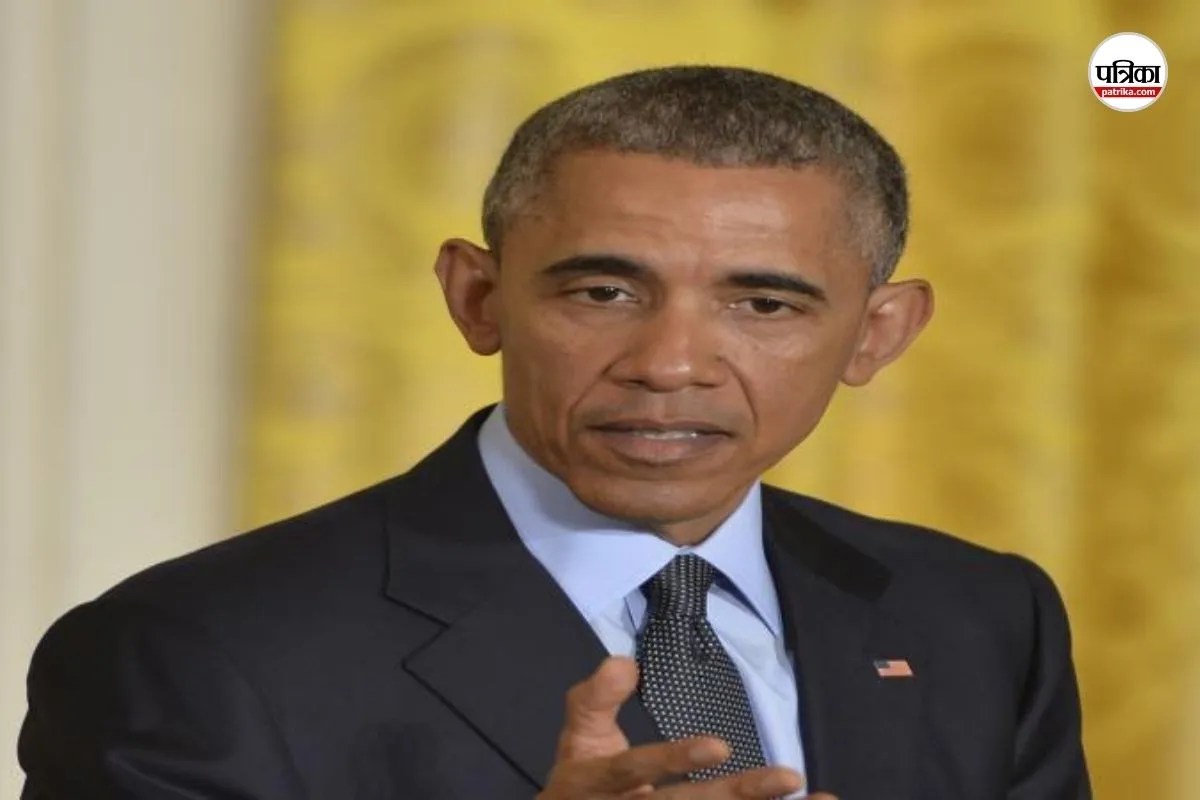
The year was 2015. Barack Obama stood before a microphone, his voice devoid of the usual martial chest-thumping that defines American foreign policy in the Middle East. He wasn't announcing a victory of arms. He was announcing a victory of leverage.
"Not a single missile was fired," he remarked.
This wasn't just political spin. It was the epitaph for a new kind of warfare, one where the front lines were bank accounts and the infantry were lines of code. To understand how the world’s most stubborn theocracy was brought to a mahogany table in Vienna, you have to look past the soaring rhetoric of "deals" and "treaties." You have to look at the cold, hard mechanics of a country being slowly, surgically disconnected from the living pulse of the global economy.
Consider a hypothetical shopkeeper in Isfahan. Let’s call him Reza.
Reza doesn't care about the enrichment levels of Uranium-235. He doesn't spend his nights debating the merits of heavy water reactors. But Reza knows that the price of the saffron he buys has tripled in a month. He knows that the medicine his mother needs for her heart condition has vanished from the shelves because the German supplier can no longer accept Iranian currency. He knows that his life is shrinking, constrained by invisible walls that he cannot see and certainly cannot fight.
This was the "quiet" war.
The strategy wasn't to destroy Iran's infrastructure. That would have been easy, and catastrophic. Instead, the goal was to make the cost of defiance so heavy that the regime’s survival depended on its submission. It was a slow-motion strangulation. By cutting Iran out of the SWIFT banking system, the West essentially told Tehran that their money was no longer real outside their own borders.
Imagine trying to run a country when you can’t use a credit card, can’t wire funds, and can’t sell your only valuable resource—oil—without resorting to back-alley deals and physical suitcases of cash. It is exhausting. It is humiliating. And eventually, it becomes unsustainable.
The core of the Obama administration's argument was built on a singular, uncomfortable truth: traditional war is a failure of imagination. When you drop a bomb, you create a martyr. When you freeze a bank account, you create a negotiator.
The technical reality of the Joint Comprehensive Plan of Action (JCPOA) was a masterpiece of scientific micromanagement. It wasn't built on trust. Trust is a luxury for friends; verification is for enemies. The deal demanded that Iran pour concrete into the heart of its Arak reactor. It demanded that thousands of centrifuges—the humming, spinning silver cylinders that turn raw earth into weaponized fuel—be dismantled and locked in a room under the unblinking eye of international inspectors.
Critics at the time called it a surrender. They wanted the fire. They wanted the spectacle of "regime change." But they failed to see the psychological toll of the invisible siege.
The Iranian leadership wasn't just fighting the Great Satan; they were fighting the growing murmur of their own people. When the value of the Rial plummeted, the conversation in the bazaars changed. The revolutionary fervor of 1979 was being smothered by the mundane, crushing weight of 210% inflation. You can’t eat ideology. You can’t power a city on defiance alone.
Obama’s "win" was rooted in the realization that modern power is a network. If you are part of the network, you thrive. If you are unplugged, you wither. Iran, a proud civilization with thousands of years of history, found itself unplugged.
The negotiation in Vienna was the sound of a country trying to plug itself back in.
But there is a darker side to this bloodless victory. While no missiles were fired, the "human-centric" cost was felt in the hospitals of Tehran and the kitchens of Shiraz. Sanctions are a blunt instrument, even when they are marketed as "targeted." They hit the most vulnerable first. The invisible stakes of diplomacy are often paid for by people who have never met a diplomat.
The brilliance of the 2015 approach was its clinical coldness. It treated a geopolitical crisis like a plumbing problem. If you want to stop the flow, you don't blow up the pipes; you just turn the valve. By the time the deal was signed, Iran had "bent" because the alternative was breaking into a thousand pieces.
Then, the world shifted.
The subsequent years proved that digital and economic victories are as fragile as the paper they are written on. When the United States later walked away from the deal, it wasn't just a policy change; it was a ghosting of the entire philosophy of non-kinetic warfare. It told the world that the "quiet win" was a fluke, a temporary pause in a much older, louder conflict.
Today, the centrifuges are spinning again. The concrete in the Arak reactor is a memory. The shopkeepers in Isfahan are once again watching their currency dissolve like salt in water.
We often think of history as a series of loud bangs—battles, assassinations, invasions. But the real history of the 21st century is being written in the silences between those bangs. It’s written in the decisions to keep the missiles in their silos and use the ledger instead.
Obama’s claim of winning without a war was a glimpse into a future where the most powerful weapon isn't a nuke. It's the ability to make an entire nation disappear from the world's ledger with the stroke of a pen. It is a terrifying, elegant, and profoundly human tragedy.
The lesson isn't that the deal was perfect. It wasn't. The lesson is that in the modern age, you don't need to conquer a city to control it. You just need to make sure they can't pay the light bill.
As the sun sets over the Alborz mountains, the lights of Tehran flicker. They stay on for now, powered by a precarious balance of old grudges and new desperation. The missiles remain in their tubes, silent and lethal, but the real war—the one for the soul of a nation’s survival—continues to be fought in the silent, digital dark.