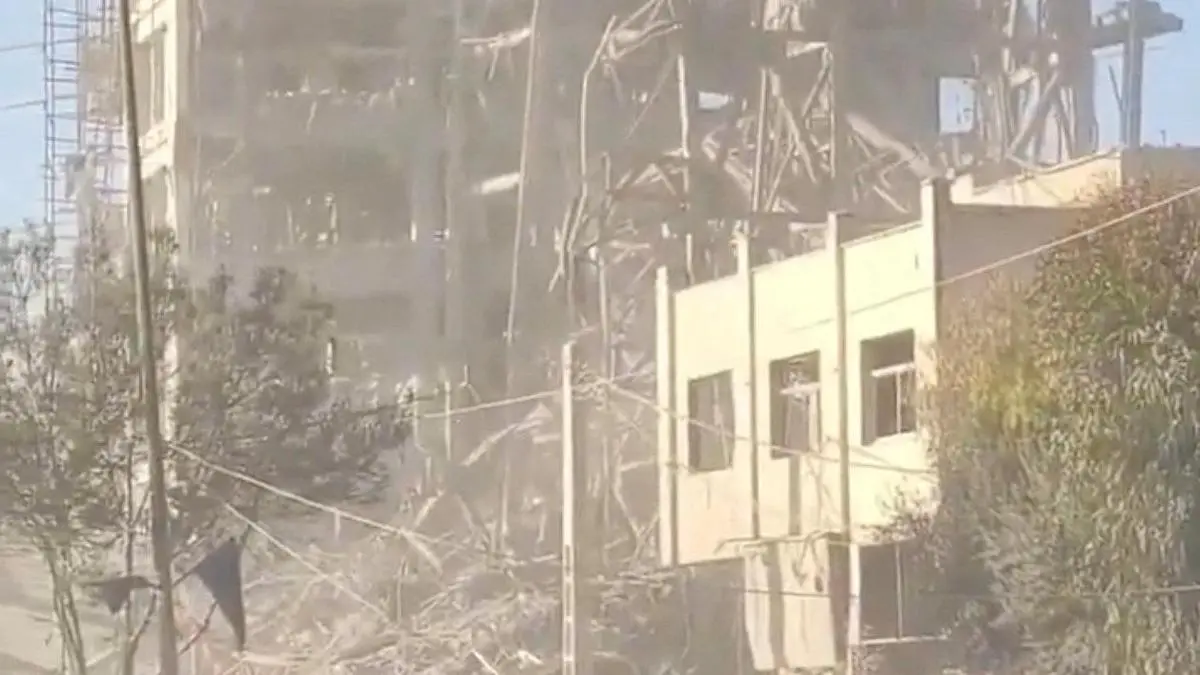
The tea in the glass is still hot, but the man holding it has forgotten it exists. He sits on a balcony in Isfahan, his eyes fixed on a horizon that should be dark. It is not dark. It is alive with a frantic, artificial electricity that has become the new rhythm of the Middle East. Somewhere in the silence of the upper atmosphere, metal is meeting metal. The sound arrives seconds later—a dull, thumping roar that vibrates in the marrow of his bones. This is not a drill. It is the sound of a decade-long shadow war finally stepping into the light.
For years, the conflict between Israel and Iran was a series of whispers. It was a computer virus in a cooling pipe. It was a magnetic limpet mine attached to a hull in the dark of the Gulf of Oman. It was a scientist’s car stalled at a busy intersection. But the whispers have turned into a scream. The latest exchange of fire marks a definitive break from the old rules of engagement. We are no longer watching a chess match played in the basement. The board has been kicked over, and the pieces are falling across sovereign borders in broad daylight.
To understand why a strike in the desert matters to a family in a city thousands of miles away, you have to look past the technical specifications of the drones. You have to look at the fragility of the ceiling.
The Architecture of Anxiety
Imagine a house where the walls are made of glass. Every inhabitant knows that the person in the next room has a stone in their hand. For forty years, the unspoken agreement was simple: don't throw the stone, and I won't shatter your world. This was the doctrine of strategic patience. It was cold. It was tense. But it was predictable.
That glass is gone.
When Israel launched its latest wave of strikes, the objective wasn't just to dismantle a radar array or a drone manufacturing plant. The objective was to prove that the distance between Tel Aviv and Tehran has shrunk to nothing. In the age of supersonic missiles and long-range loitering munitions, geography is a ghost. The mountains of the Zagros and the sands of the Negev are no longer barriers; they are merely scenery for the flight paths of machines programmed to kill.
Consider the logistics of a modern strike. A pilot sits in a cockpit, or perhaps a technician sits in a refrigerated room in the desert, and with a slight movement of a finger, they alter the geopolitical trajectory of a billion people. There is a terrifying cleanliness to it. No boots on the ground. No bayonets. Just the surgical application of heat and pressure. But for the people on the ground—the baker in Haifa or the student in Shiraz—there is nothing surgical about the fear. They live in the "in-between." They are waiting for the second wave, the retaliation, the escalation that nobody wants but everyone expects.
The Math of Miscalculation
War is often described as a series of deliberate choices. In reality, it is more like a pile of dry brush waiting for a single, accidental spark. The danger right now isn't necessarily a planned invasion. It is the math of miscalculation.
In any military exchange, there is a concept known as "proportionality." If you hit my warehouse, I hit your airfield. If you take out my general, I take out your command center. But proportionality is subjective. What looks like a measured response to one side looks like an existential threat to the other. When Israel hits back after an Iranian volley, they aren't just aiming for a target; they are trying to "restore deterrence."
Deterrence is a psychological state. It is the art of making your enemy so afraid of the consequences that they choose to do nothing. But there is a paradox here. To make someone afraid, you have to show them what you can do. And once you show them what you can do, they feel compelled to show you that they aren't intimidated. It is a ladder with no top rung.
Statistics tell us that most modern conflicts are contained. They flicker and die. But this particular fire is fueled by something deeper than territory. It is fueled by two competing visions of the future of the Middle East. One side sees a region integrated, high-tech, and Western-aligned. The other sees a region defined by resistance, sovereignty, and the expulsion of foreign influence. These are not just different policies. They are different realities.
The Invisible Stakes
While the headlines focus on the blast radius, the real damage is happening in the places cameras don't go. It’s in the global shipping lanes. It’s in the price of a gallon of gas in a suburb in Ohio. It’s in the insurance premiums of a cargo ship carrying grain to East Africa.
The Strait of Hormuz is a narrow throat of water through which the world’s energy flows. If that throat is squeezed, the global economy chokes. This is the invisible leverage that Iran holds. Israel, conversely, holds the leverage of technological supremacy and the backing of the world’s most powerful military apparatus. When these two forces collide, the ripples don’t stop at the Mediterranean. They wash up on every shore.
We often talk about "global instability" as if it’s a weather pattern. It isn't. It is the cumulative result of individual moments of terror. It is the investor who decides not to build a factory because the region feels too volatile. It is the airline that cancels flights, severing the connection between families. It is the slow, grinding erosion of the belief that tomorrow will look like today.
The Human Cost of High-Altitude War
The most chilling aspect of this intensification is how routine it is becoming. We are growing accustomed to seeing maps with red arrows pointing at cities. we are learning to recognize the silhouettes of Shahed drones and the arc of Iron Dome interceptors. We are being desensitized to the brinkmanship.
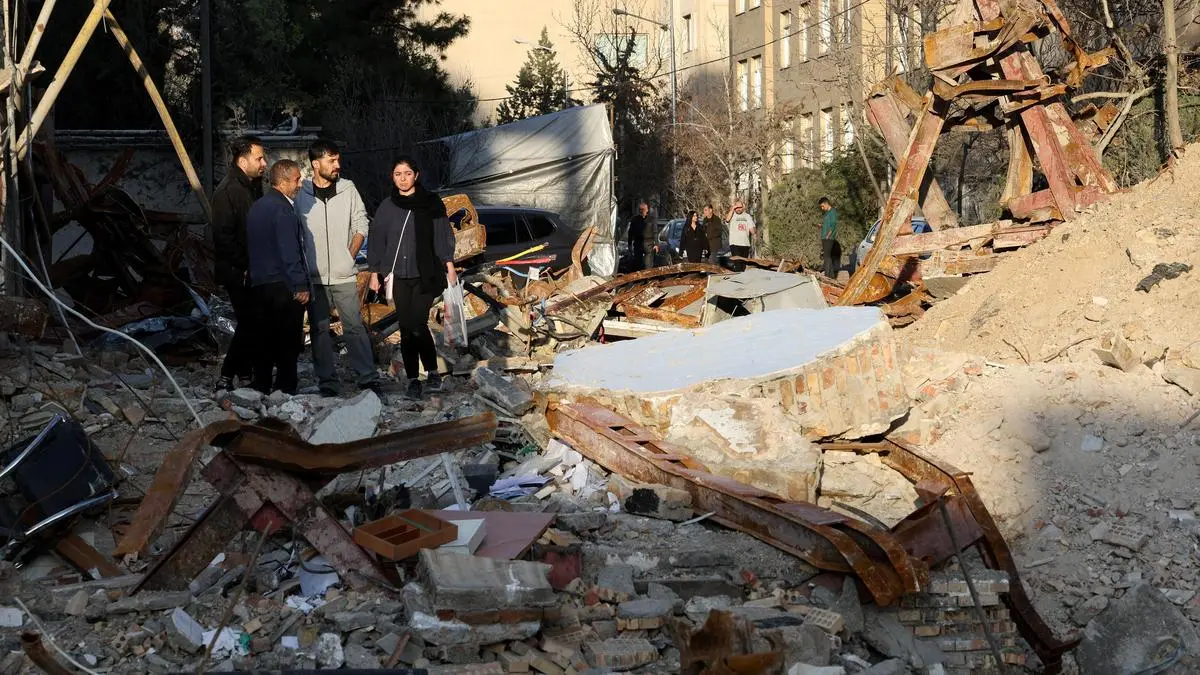
But there is no such thing as a "limited" strike for the person whose window just shattered.
Think of the children. In Israel, a generation is growing up knowing exactly where the nearest bomb shelter is. They can tell the difference between the sound of a sonic boom and the sound of an interception before they can ride a bike. In Iran, a generation is growing up under the weight of sanctions and the constant, looming threat of a sky that might turn into fire at any moment. This is a shared trauma, even if they are taught to hate each other. They are both prisoners of a geography they didn't choose and a history they can't escape.
The rhetoric from both capitals is always the same: "We do not seek war." And yet, every action taken is a step toward it. They are like two people tied together on a tightrope, each pulling the rope to stay balanced, only to make the other person wobble.
The End of the Shadow
We are witnessing the end of the shadow war. The era of deniability is over. When missiles fly from one territory directly into another, there is no more room for "unidentified actors" or "mysterious explosions." The masks are off.
This transition is dangerous because shadows provide cover for diplomacy. In the dark, you can negotiate. You can send back-channel messages. You can pretend you didn't see what you just saw to avoid a fight. In the harsh light of direct conflict, prestige becomes a weapon. Neither side can afford to look weak. Neither side can afford to be the one who blinked.
The world watches the grainy black-and-white footage of explosions with a sense of detachment, as if it’s a video game. It isn't. Every flash on that screen represents a catastrophic failure of the human imagination. It is a failure to find a way to live in the same world without trying to burn it down.
The man on the balcony in Isfahan finally takes a sip of his tea. It is stone cold. He looks up again, searching for the stars, but the glare of the anti-aircraft fire has washed them out. He wonders if the person on the other side of the border is looking up at the same empty sky, waiting for the same terrible light.
The silence returns, but it is not the silence of peace. It is the silence of a held breath.