The coffee in San Salvador tastes like woodsmoke and rain, but for the journalists at El Faro, it has recently begun to taste like adrenaline.
Imagine a newsroom not as a collection of desks and monitors, but as a nervous system. Every story is an electrical impulse. Every whistleblower is a heartbeat. When a government decides to sever that system, they don’t start by breaking the doors down. That is too loud. It creates martyrs. Instead, they reach into the digital ether and flip a switch.
Silence.
That is what happened when the Salvadoran government, under the tightening grip of President Nayib Bukele, moved to freeze the assets of El Faro. It wasn’t a physical raid. There were no sirens. Just a notification. A balance that used to represent salaries, rent, and the cost of gasoline for investigative trips into the northern jungles suddenly became a ghost.
Money is the blood of a free press. Without it, the heart stops.
The Architect of the Digital Siege
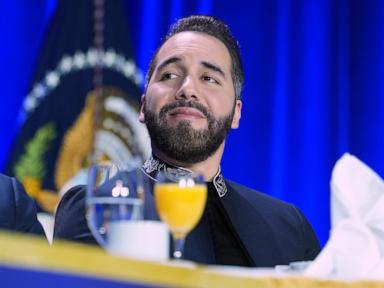
Nayib Bukele is not your grandfather’s autocrat. He does not wear a military uniform weighted down by medals. He wears a baseball cap backward. He tweets in English. He carries the swagger of a tech CEO who just closed a Series C funding round. To his millions of followers, he is the "coolest dictator in the world"—a title he once jokingly (or perhaps not) added to his Twitter bio.
But behind the neon lights of "Bitcoin City" and the glossy PR videos of mega-prisons lies a much older story. It is the story of power’s allergic reaction to the truth.
For decades, El Faro has been the premier investigative outlet in Central America. They covered the civil wars, the gang violence, and the systemic corruption that has haunted the region. They are the winners of the Maria Moors Cabot Prize and the Ortega y Gasset Award. They are, by any objective measure, the gold standard of Spanish-language journalism.
That reputation is precisely why they are a target.
When El Faro published reports alleging that Bukele’s government had negotiated a secret truce with the MS-13 gang—the very gang he claimed to be eradicating—the response wasn't a formal rebuttal. It was a tax audit. Then another. Then a barrage of Pegasus spyware infections on the phones of its reporters.
The Slow Suffocation of the Truth
The freezing of assets is the final stage of a long, calculated strangulation.
Consider a hypothetical reporter named Elena. She has spent six months tracking how public funds intended for pandemic relief were diverted to political cronies. She has the documents. She has the recorded testimonies. She is three days away from publishing.
Then, she goes to buy a sandwich. Her card is declined.
She calls her editor. The editor tells her that the outlet’s accounts are under "precautionary seizure" by the Ministry of Finance. It isn’t just Elena’s sandwich. It is the electricity for the servers. It is the health insurance for the staff. It is the legal fund meant to protect them from the very government currently draining their veins.
This is the invisible stake. It isn’t just about El Faro. It is about the precedent that a state can use the banking system as a weapon of censorship. If a government can freeze your money because they dislike your adjectives, then you don't live in a democracy. You live in a company town where the boss owns the air you breathe.
The irony is thick enough to choke on. Bukele has marketed El Salvador as a frontier of financial freedom, a "Bitcoin Haven" where people can escape the tyranny of traditional banking. Yet, while he invites foreign crypto-investors to build mansions on the coast, he uses the state’s old-fashioned regulatory machinery to bankrupt the people asking where the money comes from.
The Mechanics of Retaliation
The technical justification for these freezes usually falls under the umbrella of "administrative irregularities." It is a gray, boring term designed to make people look away. The government claims El Faro owes back taxes or has failed to file certain forms correctly.
In reality, it is a war of attrition.
The strategy is simple: tie them up in court. Force them to spend their dwindling resources on lawyers instead of investigators. Make the cost of speaking so high that the silence becomes a survival mechanism.
This isn't just happening in El Salvador. We are seeing a global shift in how dissent is managed. The old way was to kill the journalist. The new way is to kill the outlet. In Russia, in Hungary, in India, and now in El Salvador, the playbook is the same. You don't need a firing squad when you have a compliant tax auditor.
El Faro anticipated this. They moved their legal and administrative headquarters to Costa Rica a year ago, sensing that the walls were closing in. It was a move born of desperation, a voluntary exile intended to keep the light on. But the government’s latest move to freeze assets within Salvadoran jurisdiction shows that borders are becoming increasingly porous for those in power.
Why You Should Care About a Newsroom in Central America
It is easy to dismiss this as a local dispute in a small country. That would be a mistake.
The world is currently watching a live experiment in "Digital Authoritarianism." El Salvador is the laboratory. If Bukele can successfully dismantle the most prestigious news organization in the region through financial sabotage—while maintaining a high approval rating on social media—other leaders will take notes.
They are already taking notes.
The human element of this story is the courage of the people who keep showing up to work. I’ve spoken to journalists who have had to send their families out of the country. I’ve seen the bags under their eyes. They aren't doing this for the fame; El Faro is a non-profit. They are doing it because they remember what the country was like when there was no one to hold the powerful accountable.
They remember the massacres. They remember the disappearances. They know that when the press goes silent, the shadows grow long.
The freezing of these assets is meant to send a message to every young person in El Salvador with a notebook and a sense of justice: This is what happens when you look too closely. ### The Cost of the Invisible
There is a specific kind of hollow feeling that comes when you realize the institutions meant to protect you are the ones picking your pockets. It starts as a whisper of doubt and grows into a roar of cynicism.
When a government freezes a news outlet's assets, they aren't just taking money. They are taking the public's right to know what is being done in their name. They are stealing the future's ability to learn from the mistakes of the present.
The staff at El Faro hasn't stopped writing. They are filing stories from borrowed laptops and secure connections. They are finding ways to bypass the blockades. But the pressure is immense.
Think about the sheer audacity required to tell a story while the ground beneath your feet is being liquidated. It is a form of defiance that requires no weapons, only a stubborn refusal to blink.
The bank accounts may be frozen. The numbers on the screen may read zero.
But the truth has a funny way of finding a crack in the ice. It doesn't need a budget to exist. It only needs someone brave enough to whisper it until it becomes a scream.
In the small, humid offices and remote safe houses where El Faro’s reporters now gather, the keyboards are still clicking. The sound is rhythmic, persistent, and entirely independent of a bank’s permission. It is the sound of a story that refuses to die, even when its oxygen is cut off.
Somewhere in the Ministry of Finance, a bureaucrat is looking at a ledger, satisfied that the "problem" has been neutralized. He is wrong. You can freeze an account. You can’t freeze a ghost. And you certainly can't freeze the eyes of a population that has finally started to see.