The morning air in the borderlands of eastern Afghanistan usually carries the scent of pine and the distant, rhythmic thud of a woodman’s axe. But lately, the silence is what sticks in your throat. It is an unnatural, heavy quiet, broken only by the low rumble of artillery or the sharp crack of small-arms fire echoing through the jagged peaks of the Hindu Kush.
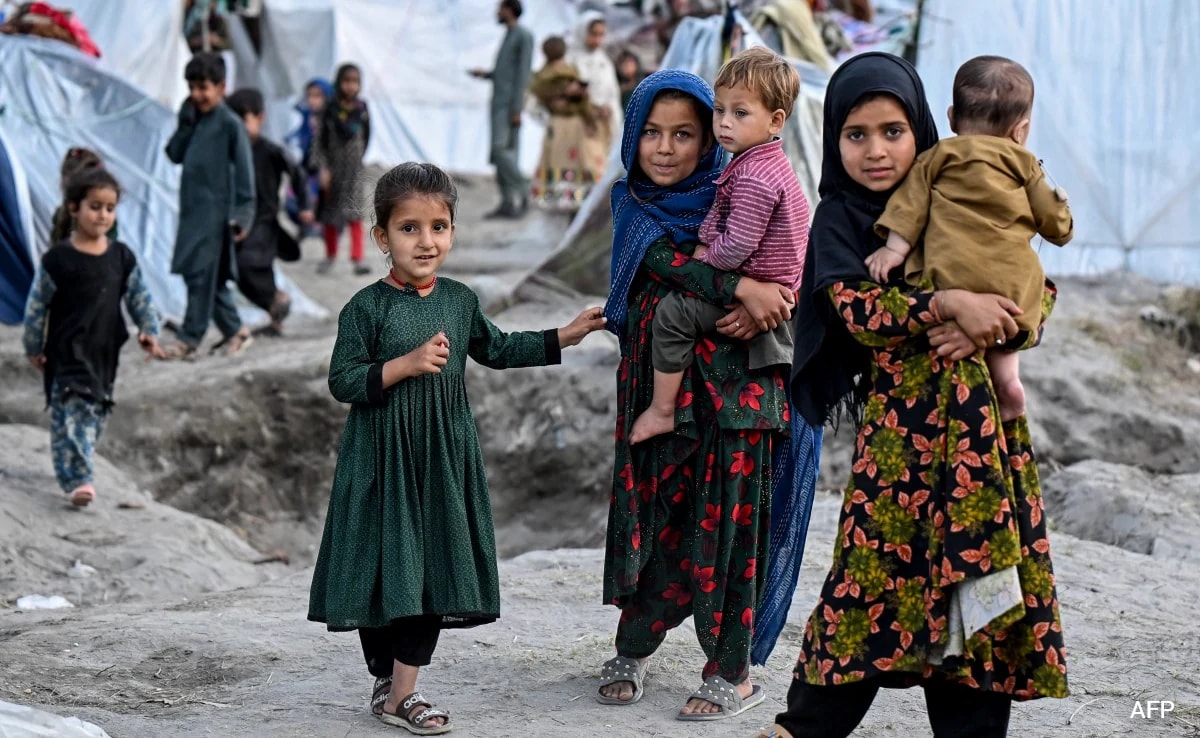
In a small village tucked into the creases of the Kunar province, a ten-year-old named Ahmad sits on a flattened rock outside his home. He isn't playing. He isn't shouting with his friends. Instead, he is staring at a small, dusty backpack leaning against the mud-brick wall. It has been three weeks since he last wore it. For another view, consider: this related article.
When governments talk about "border tensions" or "cross-border skirmishes," the language is sanitized. It sounds like a strategic game played on a map by men in well-lit rooms in Islamabad and Kabul. They speak of territorial integrity, insurgent movements, and diplomatic leverage. They do not speak of the rusted iron gates of the local primary school, now locked with a heavy chain that smells of salt and old rain.
The Geography of a Broken Promise
The border between Afghanistan and Pakistan is not a line; it is a scar. Known as the Durand Line, it slices through ethnic heartlands and families who have walked these mountain passes for centuries. When the shelling starts, the first thing to die is the routine. Related analysis on the subject has been shared by The Guardian.
Education in a conflict zone is a fragile thing. It requires a baseline of predictable safety that most of the world takes for granted. To get to class, a child must believe that the path beneath their feet will not suddenly erupt. Parents must believe that when they send their daughters and sons into a classroom, the roof will stay above their heads.
Recent escalations have shattered that belief. Following a series of militant attacks within Pakistan, the retaliatory strikes and border closures have turned the frontier into a no-man's land. The schools located within the five-mile "danger zone" of the border have effectively ceased to exist as institutions of learning. They are now either makeshift shelters for the displaced or hollow shells waiting for the next tremor.
Statistics tell us that over 10,000 children in these border districts are currently out of school. But a number cannot convey the weight of a Tuesday morning with nothing to do. It cannot describe the look on a teacher’s face as they watch their curriculum rot in a desk drawer.
The Invisible Stakes of a Ghost Classroom
Consider the hypothetical, yet painfully accurate, story of Malala, a teacher in a village just a stone's throw from the Torkham crossing. To her, the school was more than a building. It was a fortress against the cycle of poverty and extremism that has haunted her province for generations.
Every day the school remains closed, the "invisible stakes" grow higher. When children are out of school in a region defined by instability, they don't just lose their ability to solve for $x$ or recite poetry. They lose their protection.
In the absence of a classroom, the vacuum is filled by something darker. Boys become targets for recruitment by local militias who offer a sense of purpose and a steady meal. Girls are ushered into early marriages as families, stripped of their livelihoods by the halt in border trade, look for one less mouth to feed. This is the collateral damage that never makes it into a military briefing.
Education is a delayed-onset miracle. You don't see the results of a geography lesson today; you see them twenty years from now when that student chooses a ballot or a business plan over a rifle. When the schools close, we aren't just pausing the present. We are sabotaging the future.
The Economic Suffocation of the Frontier
The war isn't just fought with lead. It is fought with the closing of gates.
The border crossings at Torkham and Spin Boldak are the lifelines of the Afghan economy. When the "war" halts school, it also halts the trucks carrying grapes, pomegranates, and coal. The families in these border towns rely on the daily flow of trade to survive.
The relationship is simple and brutal:
- The border closes due to military activity.
- The price of flour and fuel triples overnight.
- Parents can no longer afford the "luxury" of school supplies or the time their children spend away from manual labor.
- Even if the school reopens, the students do not return.
The poverty is a physical weight. It sits in the stomachs of the children who should be learning about the solar system but are instead scouring the hillsides for scrap metal or firewood to sell. The education system in Afghanistan was already gasping for air following the political shifts of 2021 and the subsequent withdrawal of international aid. This border conflict is the hand that is currently tightening around its throat.
The Human Cost of a Line on a Map
It is easy to get lost in the "why" of the conflict. One side claims the other is harboring terrorists. The other side claims its sovereignty is being violated. Both are likely telling a version of the truth. But for a child in Kunar or Nangarhar, the "why" is irrelevant.
The reality is the sound of the drone overhead. It is the vibration in the floorboards that tells you to move away from the window.
We often think of war as a series of explosions. In reality, war is a series of subtractions. It is the subtraction of the morning bell. It is the subtraction of the playground shout. It is the subtraction of the hope that life will be different for the next generation than it was for the last.
The teachers who remain in these villages are trying. Some hold classes in their homes, hushed gatherings where five or six students huddle over a single textbook. They operate in the shadows, fearful that a gathering of people will be mistaken for a military target from the air. This is the "hidden cost" of the border war: the criminalization of curiosity.
The Long Echo of the Silence
Ahmad's father, a man with hands calloused by years of mountain farming, looks at his son and sees a mirror of his own stolen youth. He grew up during the Soviet invasion. He came of age during the civil war. He saw his own school burned to the ground when he was twelve.
He had promised himself it would be different for Ahmad.
That promise is the real casualty of the shelling. When a parent loses faith in the possibility of their child’s advancement, the social fabric of a nation begins to unspool. You can rebuild a bridge. You can pave a road. You can even replace a fallen government. But you cannot easily replace the lost years of a child's development.
The cognitive window for literacy and basic numeracy does wait for diplomats to reach a ceasefire. It does not pause while generals argue over the placement of a fence.
The children of the Afghan-Pakistani border are living in a temporal limbo. They are aging without progressing. They are watching the horizon, not for the sun, but for the smoke that signals another day of confinement.
The world looks at Afghanistan and sees a "complex geopolitical challenge." If you sit on that flattened rock with Ahmad, the challenge is much simpler. It is the weight of a backpack that has no place to go.
It is the haunting realization that while the big men play at war, the small ones are being quietly erased from the future.
The sun begins to dip behind the peaks, casting long, distorted shadows across the empty schoolyard. A gust of wind catches a loose piece of tin on the school roof, making it groan—a metallic, lonely sound that carries across the valley. Ahmad picks up his backpack and carries it back inside. He places it in the corner, near the bedroll, where it stays, waiting for a morning that refuses to arrive.