Memphis just lost its voice in Washington, and the national political map just shifted a little more into the red.
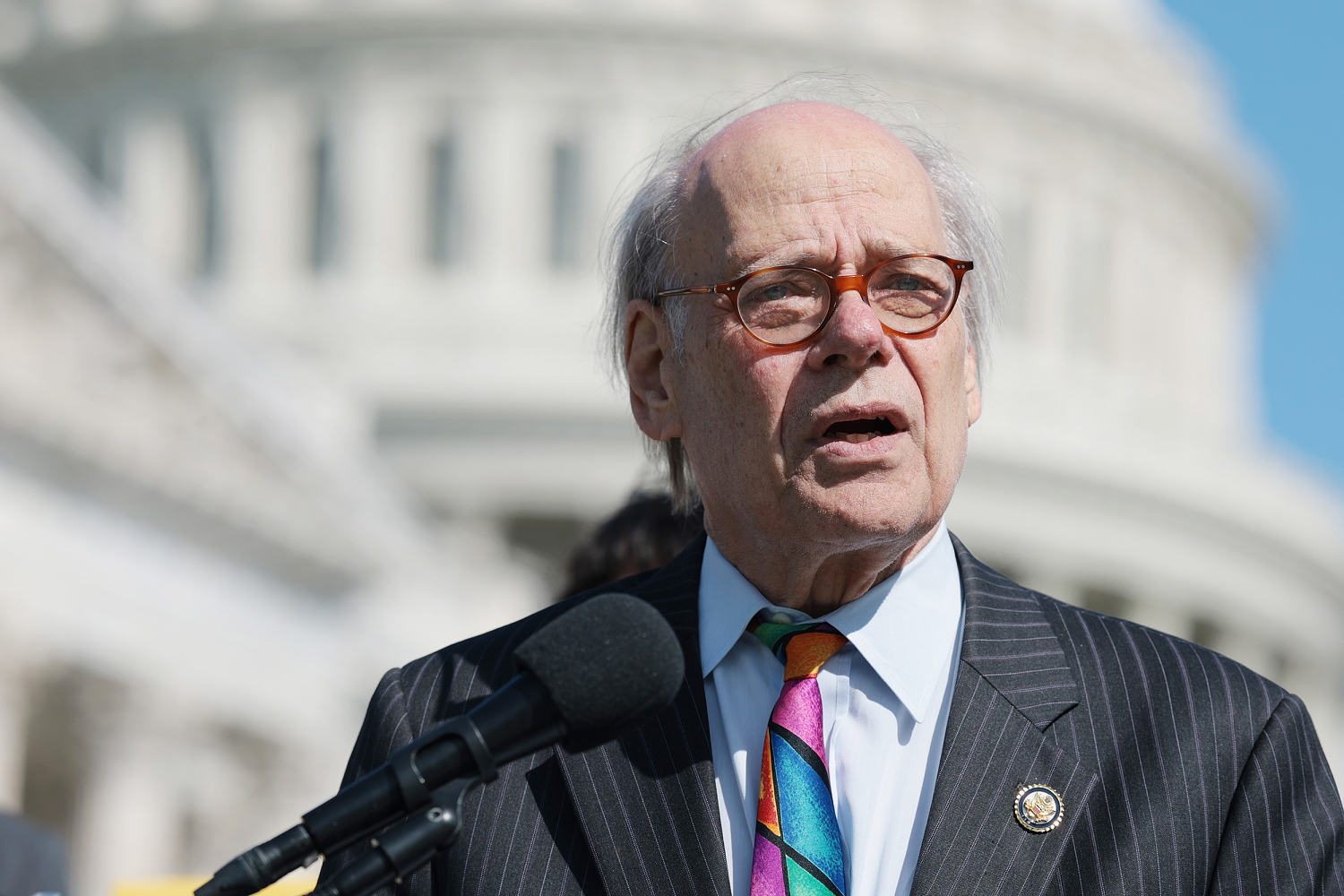
Rep. Steve Cohen announced he is dropping his reelection bid. The 10-term incumbent made it clear he isn’t happy about it. His hand was forced. A brutal, Republican-led redistricting session completely dismantled his Memphis-based stronghold, carving up a historic community to maximize GOP advantage in the upcoming midterm elections.
"This is by far the most difficult moment I've had as an elected official," Cohen told reporters on Capitol Hill.
He didn't hold back. He openly blamed the Tennessee General Assembly for drawing lines specifically designed to end his career. For nearly two decades, Cohen survived as a political anomaly. He is a white, Jewish Democrat who repeatedly won a majority-Black, deeply southern district by commanding margins.
That streak is over. The state's supermajority Republicans effectively wiped his seat off the map.
The Death of the 9th District
The Tennessee General Assembly didn't just tweak the lines. They picked up a scalpel and sliced Memphis into three separate pieces.
By splitting the city's concentrated Democratic vote, the new map distributes those voters into sprawling, heavily conservative rural and suburban districts. It is a textbook partisan gerrymander. The immediate goal is obvious. National Republicans are desperate to protect a razor-thin House majority, and Tennessee just handed them a clear path to a clean nine-for-nine GOP sweep of the state's federal delegation.
Cohen pointed out the sheer absurdity of the new boundaries. The redrawn district now stretches all the way from parts of Memphis to affluent suburban counties near Nashville.
There is zero commonality of interest between Williamson County and Orange Mound. You can't expect a representative to effectively advocate for a historic, urban Black neighborhood in Memphis while simultaneously answering to wealthy suburbanites living hundreds of miles away. The communities share no common infrastructure, no economic ties, and completely opposing political values.
"Memphis is my Jones," Cohen said, visibly frustrated. "It's Memphis."
He spent his career securing billions for local projects. The city's baseball stadium, major medical expansions at St. Jude, and a massive new Mississippi River bridge project all happened because Cohen had the seniority to deliver federal funds. That hyper-local focus gets lost when a district is intentionally diluted.
A Post-Voting Rights Act Free-For-All
This isn't just a Tennessee story. It is a national strategy playing out across the American South.
Following a recent Supreme Court decision that further weakened the remaining protections of the Voting Rights Act, Southern Republican supermajorities have been racing to redraw congressional maps. Louisiana, Georgia, and Alabama have all seen intense legal and legislative battles over minority-opportunity districts.
The strategy is simple. If you can't win the voters, change the boundaries.
In Cohen's case, the survival of his district relied on a fragile coalition. Since 2006, he built an intense level of trust with Black voters in Memphis. He didn't just cruise by on the party label. He led the push for a formal federal apology for slavery and used his senior position on the House Judiciary Committee to champion voting rights and police reform.
Losing that concentrated voting bloc means the end of a specific kind of representation. Civil rights groups have already filed lawsuits to block the maps, calling the redraw a blatant attempt to disenfranchise Black voters. Cohen noted that if the legal challenges succeed, he will jump right back into the race. But as the clock ticks down toward the election, the reality on the ground looks grim.
The Primaries That Never Mattered
Before the lines were redrawn, Cohen was staring down a fierce primary challenge from state Rep. Justin J. Pearson.
Pearson, a 31-year-old progressive leader who gained national attention during the "Tennessee Three" gun reform protests, represented a generational shift. The upcoming primary was supposed to be a major ideological battle over the future of the Democratic party in the South.
The redistricting entirely ruined that dynamic. While Pearson announced he still plans to run in the newly configured district, the ground has shifted underneath his feet. The influx of conservative rural voters makes the general election a massive uphill battle for any Democrat, no matter how much national momentum they have.
Cohen wasn't pushed out by his own party or by voters wanting younger leadership. He was drawn out by his political opponents.
"I'm not a quitter," Cohen insisted. "But these districts were drawn to beat me."
What Happens Next for Southern Politics
The erasure of the 9th District signals the final chapter for the Southern white Democrat in federal politics. They used to be a powerful voting bloc in Washington. Now, they are an extinct species.
The immediate task for Memphis residents is to figure out how to navigate a fractured political reality. Instead of having one dedicated representative fighting for municipal funding, the city's needs will be split among three different lawmakers, most of whom answer to rural conservative majorities who view urban funding requests with skepticism.
If you live in the old 9th District, your first move needs to be checking your updated voter registration status. The new boundaries mean your polling place, your district number, and the names on your ballot will look entirely different. Local grassroots organizations are already pivoting toward massive voter education campaigns to prevent confusion at the polls.
Pay close attention to the federal lawsuits working their way through the courts over the next few weeks. If judges issue an injunction against the state's new maps, the political landscape could flip back upside down overnight. Until then, the era of unified Democratic representation in Tennessee is officially dead.