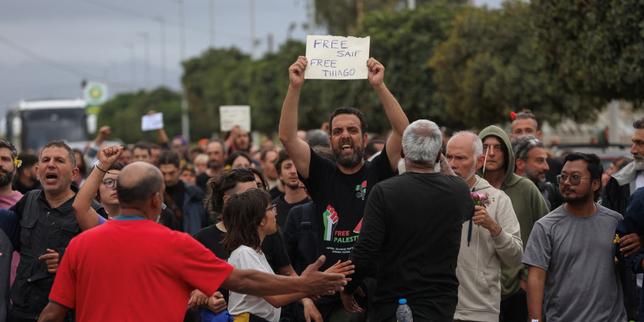
The diplomatic row between Madrid and Jerusalem just hit a new boiling point. Spain's foreign ministry isn't pulling any punches lately. They’ve officially labeled the detention of a Spanish activist by Israeli forces as "illegal." This isn't just another dry press release. It's a direct challenge to how Israel handles international waters and the people who sail through them. When the Freedom Flotilla sets sail, everyone knows the risks are high, but the legal framework behind these arrests is often a total mess of conflicting interpretations.
Spain's stance is clear. You can't just grab a citizen of a sovereign nation in international waters and hold them without a solid, recognized legal basis. The activist in question was part of the Freedom Flotilla, a group trying to break the blockade of Gaza. Israel sees this as a security threat. Spain sees it as a violation of international maritime law. This tension isn't new, but the bluntness of the Spanish government certainly feels different this time around.
The legal vacuum of international waters
International law is supposed to protect people on the high seas. The UN Convention on the Law of the Sea (UNCLOS) is the big rulebook here. Under these rules, a ship on the high seas is generally subject only to the jurisdiction of the country whose flag it flies. When Israeli forces board a ship in these waters to arrest activists, they’re operating in a massive legal gray zone. Spain is betting on the fact that Israel overstepped.
I’ve watched these maritime standoffs for years. Usually, countries try to play nice or use quiet diplomacy. Not Spain. By calling the detention "illegal" out in the open, they’re forcing a conversation about sovereignty. If an Italian or Spanish citizen is on a boat in the middle of the Mediterranean, does Israel have the right to take them? Most maritime experts say no, unless there’s an immediate, proven threat of piracy or slave trading. Delivering aid—even if it's politically charged—doesn't usually fit that bill.
Israel maintains its blockade of Gaza is legal under the San Remo Manual on International Law Applicable to Armed Conflicts at Sea. They argue that if a blockade is established, they can intercept any vessel attempting to breach it. But here’s the kicker. The San Remo Manual isn't a treaty. It’s a set of guidelines. Spain is basically saying those guidelines don't trump the basic rights of their citizens.
Why this specific case is a diplomatic nightmare
This isn't just about one person. It’s about the precedent. If Spain lets this slide, what happens next time? The Spanish activist was held after the flotilla was intercepted, and the conditions of that detention are now under the microscope. Reports suggest the activist was kept in a high-security facility, which Madrid argues is totally disproportionate for someone whose only "crime" was being on a boat with some rice and bandages.
The Spanish government is under a lot of pressure at home. People in Spain are generally very sympathetic to the Palestinian cause. Prime Minister Pedro Sánchez knows this. His government has been one of the most vocal in Europe regarding Gaza. By taking this hardline stance on the detention, he’s signaling to his base that he won’t let Spanish citizens be bullied on the world stage. It’s a mix of genuine legal concern and very savvy domestic politics.
Israel, on the other hand, sees the flotilla as a provocation. They don't see "activists." They see people aiding a territory controlled by Hamas. From their perspective, letting any boat through—even one full of peace activists—weakens the entire blockade. It’s a classic case of two sides looking at the same map and seeing two different worlds.
Breaking down the Freedom Flotilla mission
The Freedom Flotilla isn't just one ship. It’s a coalition of organizations from all over the world. Their goal is simple on paper: end the siege of Gaza. In practice, it’s a logistical and political nightmare. They carry food, medical supplies, and building materials. But they also carry a lot of cameras. The whole point is to get caught. The point is to create exactly the kind of diplomatic friction we’re seeing right now between Spain and Israel.
- The Ships: Often old trawlers or passenger boats renamed for the mission.
- The People: A mix of doctors, journalists, politicians, and human rights workers.
- The Cargo: Symbolically important but physically small compared to what Gaza actually needs.
- The Strategy: Non-violent resistance met with military force.
When these boats get intercepted, the footage goes viral. That’s the real weapon. Spain’s intervention adds a layer of state-level legitimacy to the activists' claims. It’s no longer just a group of "radicals" complaining about being arrested. It’s a European Union member state saying the arrests shouldn't have happened in the first place.
The role of the Spanish consulate
Spain hasn't just been shouting from the sidelines. Their consular services have been working overtime. This is where the rubber meets the road. Consular officials have a right to visit their citizens in foreign jails. If Israel denies that access or makes it difficult, they’re breaking even more international norms. Madrid has been very vocal about the fact that they’ve been demanding immediate access and the release of their citizen.
There's a lot of "he-said, she-said" in these situations. Israel claims the detention followed standard procedure. Spain claims the procedure itself is flawed because the interception happened in international waters. You see the circle? It's a loop that doesn't end until someone gets released or a court gets involved. Most of the time, the activists are eventually deported, but the weeks they spend in "illegal" detention are what cause the lasting diplomatic scars.
What this means for future aid missions
This row is going to change how future flotillas operate. If Spain is willing to back its citizens this strongly, other countries might feel emboldened to do the same. Imagine a flotilla where every ship is backed by a different European government. It would be a nightmare for the Israeli Navy.
The reality on the ground—or the water—is that these missions are getting more dangerous. The rhetoric is sharpening. Spain’s move is a clear signal that the "business as usual" approach to intercepting aid boats is over. They want accountability. They want to know why a Spanish passport doesn't protect a Spaniard from being hauled off a boat in the middle of the sea.
You should keep an eye on the European Court of Human Rights or even the ICC on this one. While these bodies move slowly, the Spanish government's formal declaration of "illegality" provides a massive amount of fuel for future legal challenges. It's not just talk. It's a legal foundation.
If you’re following this, don't just look at the headlines about the arrest. Look at the coordinates of where the boat was taken. Look at the specific charges—or lack thereof. Often, these activists are held under "administrative detention," which is basically a way to keep someone in jail without charging them with a specific crime. That’s exactly what Spain is calling out. It’s a practice that many international bodies have condemned for decades.
Spain’s next move will likely involve pushing for a collective EU statement. If they can get France or Germany on board, the pressure on Israel will become immense. For now, it’s a one-on-one fight. Madrid isn't backing down, and Israel isn't apologizing. It’s a stalemate, but one where the legal arguments are finally being put front and center.
If you want to support the legal rights of travelers or activists, stay informed about maritime law. Support organizations that provide legal aid to people detained abroad. The more we know about our rights on the high seas, the harder it is for any government to ignore them. Watch the Spanish foreign ministry's updates closely; they're the ones setting the pace for this entire conflict.