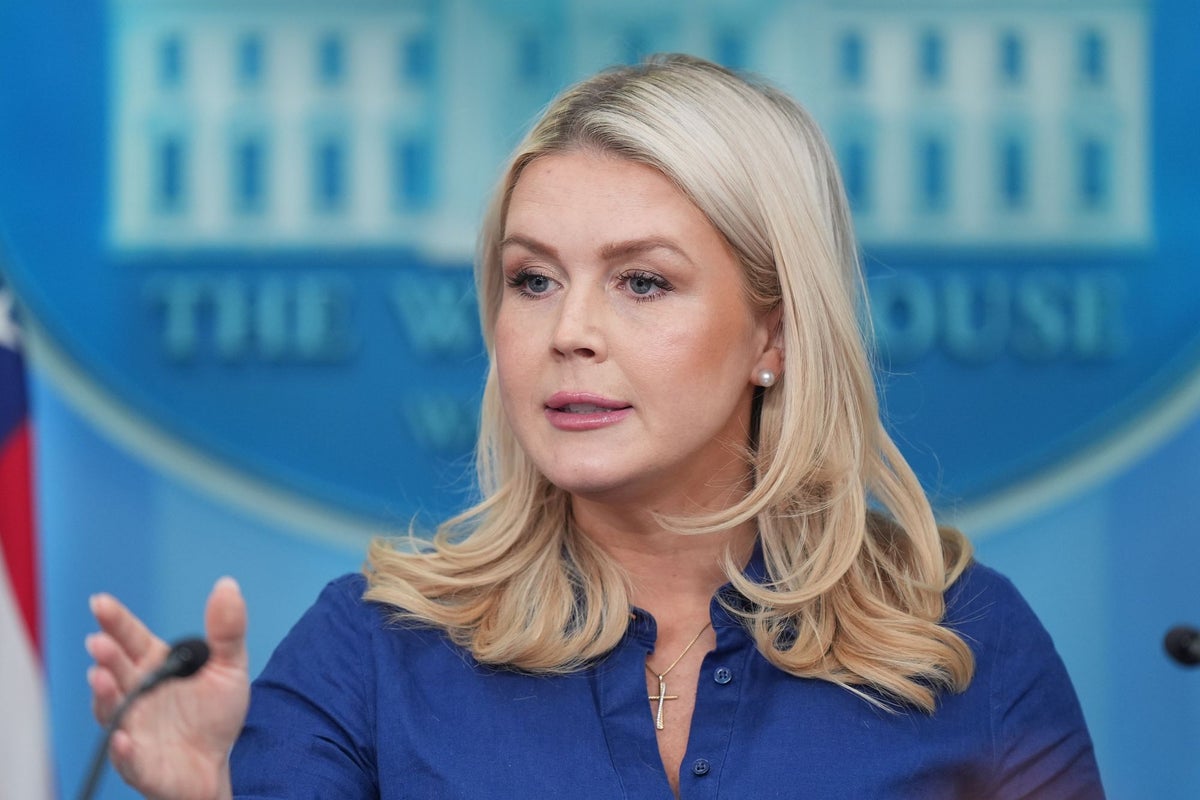
The media is obsessed with the theater of the absurd. Karoline Leavitt’s recent scramble to pivot the narrative away from Donald Trump’s "Praise be to Allah" comment regarding Iranian oil production is a masterclass in distraction. While pundits argue over whether the remark was a slight, a joke, or a cognitive slip, they are missing the seismic shift in global energy hegemony.
If you are looking at the words, you are being conned. The bottom line isn't a suggestion; it is the only metric that survives the geopolitical meat grinder.
The Myth of the "Rogue" Iranian Economy
The common consensus suggests that Iran is a pariah state operating on the fringes of a global system. This is a fairy tale for the economically illiterate. Iran has become a structural necessity for the Eastern energy bloc. When Trump makes a comment—sarcastic or otherwise—about their production capacity, he isn't talking to a domestic audience. He is acknowledging a reality that the current administration's sanctions regime has failed to dismantle: the "Ghost Fleet" of tankers and the indestructible nature of illicit oil flows.
I have spent years watching policy analysts draw red lines in ink that disappears the moment a barrel of crude hits the water. We treat sanctions like a digital "off" switch. They are actually a high-interest tax that the market has already learned to pay.
Why Words Are Worthless in a Commodity War
The "Praise be to Allah" comment caused a social media firestorm because it hit a cultural nerve. It’s "low-hanging fruit" for late-night hosts and partisan hacks. But let’s look at the actual mechanics of the oil market.
Iran's exports reached a multi-year high in 2024, despite "maximum pressure." Why? Because China needs the BTUs. The global economy doesn't care about a candidate’s rhetoric; it cares about the $20-per-barrel discount that Iranian crude offers to independent refineries in Shandong.
When Leavitt tells the public to "focus on the bottom line," she is accidentally telling the truth, though not for the reasons she thinks. The bottom line isn't about American gas prices being lower under one man or another; it’s about the fact that the U.S. dollar's ability to weaponize the global financial system is decaying. Every time we ignore the growth of non-Western oil clearinghouses, we lose a piece of the board.
The Sanctions Delusion
Most people believe that if we just "tighten the screws," Iran’s economy will collapse. It’s a comforting thought. It’s also wrong.
Sanctions do two things: they create a shadow economy and they force innovation in evasion. By the time a politician makes a joke about Iranian production, that production is already baked into the global supply curve. If you removed Iranian oil tomorrow, you wouldn't just see a "bump" at the pump. You would see a systemic shock to the European energy market and a potential collapse of several Asian manufacturing hubs.
The "bottom line" is that the U.S. no longer has a monopoly on economic consequences. We are shouting at a tide that stopped listening to us a decade ago.
The Real Cost of Cultural Distraction
We spend 72 hours debating a three-word phrase while ignoring the fact that the BRICS+ expansion is literally designed to bypass the very "bottom line" Leavitt wants us to focus on.
Imagine a scenario where the petrodollar is no longer the primary vehicle for energy settlements. In that world, it doesn't matter if a president says "Praise be to Allah" or "God Bless America." The price of your groceries will be determined by a central bank in Beijing or a trading floor in Dubai.
We are arguing over the script of a play while the theater is being sold to developers.
Dismantling the "Stability" Argument
The status quo argument is that we need "stable leadership" to manage these tensions. This is a fallacy. Stability in the Middle East has been an expensive hallucination funded by American taxpayers since the 1970s.
True stability comes from energy independence, not from managing the production levels of adversaries through rhetoric or half-hearted sanctions. The "bottom line" is that as long as we are reactive to the words of politicians regarding the actions of foreign powers, we are not in control of our own economic destiny.
Stop Asking the Wrong Questions
The media asks: "Was the comment offensive?"
The real question: "Why does the U.S. still lack the refining capacity to make Iranian production irrelevant?"
The media asks: "Does this hurt the campaign?"
The real question: "How much of our current inflation is tied to the failure of the 'Maximum Pressure' campaign to actually stop the flow of capital to Tehran?"
The pundits are playing checkers. The global energy market is playing 4D chess with a loaded deck.
If you want to understand the future of the American economy, stop reading transcripts. Start reading shipping manifests. Stop watching the rallies and start watching the spread between Brent and WTI.
The noise is for the masses. The numbers are for the masters.
The next time a politician says something "outrageous" about a foreign adversary, don't look at the outrage. Look at who is profiting from the volatility that the outrage creates. The bottom line isn't a political talking point—it's a balance sheet that doesn't have a column for your feelings.
Invest in reality. Everything else is just a press release.