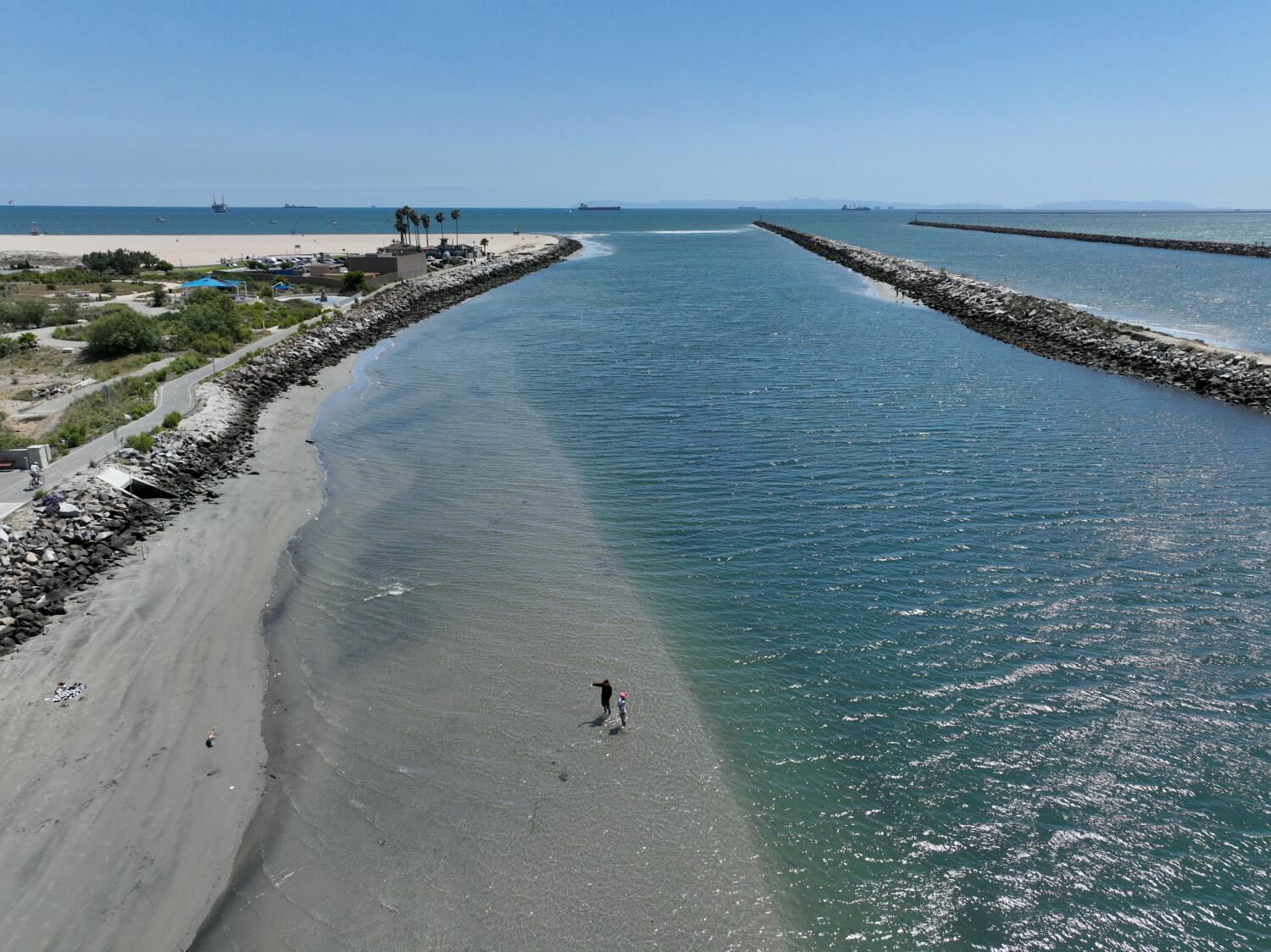
The Olympic Games are coming to Los Angeles, and the city is panicking about its dirty laundry. Specifically, the miles of concrete-jacketed arteries we call the Los Angeles River. The current narrative is a predictable loop of eco-guilt: we produce too much plastic, the rains wash it into the Pacific, and we need "innovative" interceptors to catch the bottles before they hit the surf. It sounds noble. It looks great in a brochure for International Olympic Committee delegates.
It is also a massive, expensive delusion.
The "trash interceptor" industrial complex is a band-aid on a gunshot wound. We are obsessed with catching trash at the mouth of the river—the literal end of the line—while ignoring the fundamental physics of urban hydraulics. If you want to solve the plastic crisis before 2028, you have to stop treating the river like a natural resource that needs "saving" and start treating it like the high-velocity industrial waste system it actually is.
The Myth of the Pristine River
Los Angeles doesn’t have a river. It has a 51-mile flood control channel designed by the Army Corps of Engineers to move water out of the basin as fast as humanly possible so the San Fernando Valley doesn't turn into a lake every time it drizzles.
The "lazy consensus" among city planners and environmental non-profits is that we can somehow "restore" this concrete chute while simultaneously using it as a storm drain. You cannot have both. When you try to "beautify" a flood channel with soft-bottom habitats and trash-catching nets, you create a maintenance nightmare that fails the moment a real storm hits.
During a major rain event, the LA River can move at speeds exceeding 45 miles per hour. That isn't a stream; it's a fire hose. Most current interceptor technologies—the kind being hyped in the lead-up to the Olympics—are designed for the calm, sluggish waters of Northern Europe or the slow-moving deltas of Southeast Asia. Putting a floating trash boom in the LA River during a February Pineapple Express is like trying to catch a bowling ball with a spiderweb.
I’ve seen cities throw millions at these floating collectors only to watch them get shredded by a single shopping cart moving at terminal velocity. We are buying PR wins, not ecological solutions.
The Interceptor Trap
The hype around "Interceptor 007" and similar automated barges is a classic case of tech-solutionism. These machines are designed to be photogenic. They sit in the water, humming along, scooping up jugs and bags. But they address the symptom, not the system.
Here is the brutal reality: the vast majority of the "trash" problem in our oceans isn't just the floating bottles you see on the news. It’s microplastics and chemical runoff—nitrogen, phosphorus, and heavy metals from brake pads—that these interceptors literally cannot catch. By focusing on the visual optics of floating debris, we are giving the public a false sense of progress. We are cleaning the "face" of the river for the Olympic cameras while the "blood" remains toxic.
The cost-per-ton of trash removed by these high-tech barges is astronomical compared to upstream intervention. If you spent that same money on massive, boring, low-tech "trash booms" and street-level catchment basins in the actual neighborhoods where the trash enters the system, you’d solve 80% of the problem. But street basins aren't "innovative." You can't put a sleek logo on a concrete basin and have a ribbon-cutting ceremony with an Olympian.
The Upstream Heresy
If we actually wanted to stop the flow of plastic into the Pacific, we would stop focusing on the river mouth and start focusing on the curb.
The current strategy is reactive. We wait for the trash to travel 40 miles, pick up speed, and consolidate into a massive mass before we try to grab it. It is the most inefficient way to handle logistics. In any other industry, this would be laughed out of the room. Imagine a warehouse that let all its inventory fall off the shelves and roll toward the back door, then hired a robot to catch it all at the exit.
We need to pivot to Hyper-Localized Sequestration.
This means abandoning the dream of a "natural" river for the next decade and leaning into the concrete. We should be installing high-capacity, mechanical "trash traps" at every major storm drain confluence—not just at the ocean. We need to treat the storm drain system like a vacuum, not a slide.
The downside? It’s ugly. It’s loud. It requires heavy machinery to be stationed in neighborhoods, not just at the beach. It’s a hard sell for a city that wants to look "green" and "sustainable" for the world stage. But it's the only thing that works.
The Olympic Deadline Fallacy
The "Plan for the Olympics" is a dangerous incentive structure. It prioritizes speed and visibility over long-term efficacy. We are seeing a rush to install "showcase" projects that will likely be abandoned or under-maintained once the closing ceremonies are over.
We saw this in Rio. We saw it in Tokyo. Cities spend a fortune on "cleaning up" water bodies for televised events, only for the systems to fall into disrepair within 24 months. If the plan is just to make the water look blue for the cameras in Long Beach, we are wasting taxpayer money.
The real "contrarian" move? Stop trying to hide the trash. Let the world see exactly how much plastic a city of 10 million people produces. Instead of a floating barge that hides the debris inside a hull, build a massive, transparent "Wall of Waste" at the mouth of the river. Make the scale of the failure undeniable.
The Logistics of the "Concrete Gutter"
Let’s talk about the math of the concrete. The LA River is 95% concrete for a reason. In 1938, a flood killed over 100 people and destroyed thousands of homes. The concrete was a survival mechanism.
When modern environmentalists talk about "tearing up the concrete" to allow for natural filtration, they are often ignoring the hydrologic reality of a Mediterranean climate. We get months of nothing, followed by a year's worth of rain in three days. Natural banks cannot handle that volume of water without eroding and destroying the very neighborhoods we are trying to protect.
If you remove the concrete to "filter" the trash, you create a marsh. If you create a marsh in a flood channel, you lose the capacity to move water. If you lose the capacity to move water, Long Beach floods.
The superior perspective is this: The concrete is our best tool for trash management. Because the river is a smooth, predictable chute, we can model exactly where trash will accumulate based on flow rates. We should be using this predictability to install permanent, industrial-grade diversion systems that shunt trash-heavy "first flush" water into the sewer treatment system, not the ocean.
Yes, it would overwhelm our treatment plants. So, build more capacity at the plants instead of buying more "interceptors." It’s an infrastructure problem, not a "skimming" problem.
What No One Tells You About "Trash-Free" Goals
The goal of a "Trash-Free LA River" by 2028 is a mathematical impossibility under the current framework.
Even if you caught 100% of the macro-trash—the bottles, the bags, the Styrofoam—the river would still be a biological hazard. We are obsessed with the "visible" trash because it’s easy to understand. We ignore the "invisible" trash because it’s hard to fix.
- Tire Wear: A massive percentage of the "microplastic" in the LA River is actually dust from car tires. No interceptor in the world catches tire dust.
- Atmospheric Deposition: Plastic falls from the sky in the form of rain.
- Illegal Dumping: As long as it costs money to dispose of large items legally, the river will be a graveyard for sofas and refrigerators.
The interceptor at the end of the river is a participation trophy for a race we aren't even running.
The Actionable Pivot
If I were running the Long Beach or LA public works departments, I would cancel the orders for the flashy, solar-powered skimming boats tomorrow. Instead, I would do three things that would actually change the trajectory of the coast:
- Mandate Source-Point Hydro-Dynamic Separators: Every new development and every major street renovation should be required to install underground vortex separators. These use gravity and centrifugal force to spin trash and sediment out of the water before it ever enters the main river trunk. It happens out of sight, underground, where the water is slow enough to actually manage.
- The "First Flush" Shunt: The first inch of rain in any storm carries 90% of the pollutants. We should be building massive diversion gates that send that initial, toxic surge directly into the sanitary sewer system for full treatment, rather than letting it bypass the system into the river.
- Tax the Packaging, Not the People: Stop asking volunteers to pick up trash on a Saturday morning. Tax the producers of single-use plastics at the point of sale in Los Angeles County and use that specific revenue to fund 24/7, industrial-scale dredging of the catchment basins.
We have to stop romanticizing the river. It isn't a lost Eden. It is a piece of critical urban infrastructure that is currently failing its secondary objective. We don't need "nature-based solutions" for a concrete canyon. We need better engineering.
The Olympics shouldn't be the reason we clean the river. The Olympics should be the deadline for admitting that our current "green" strategies are nothing more than high-priced theater.
Stop skimming the surface. Fix the plumbing.