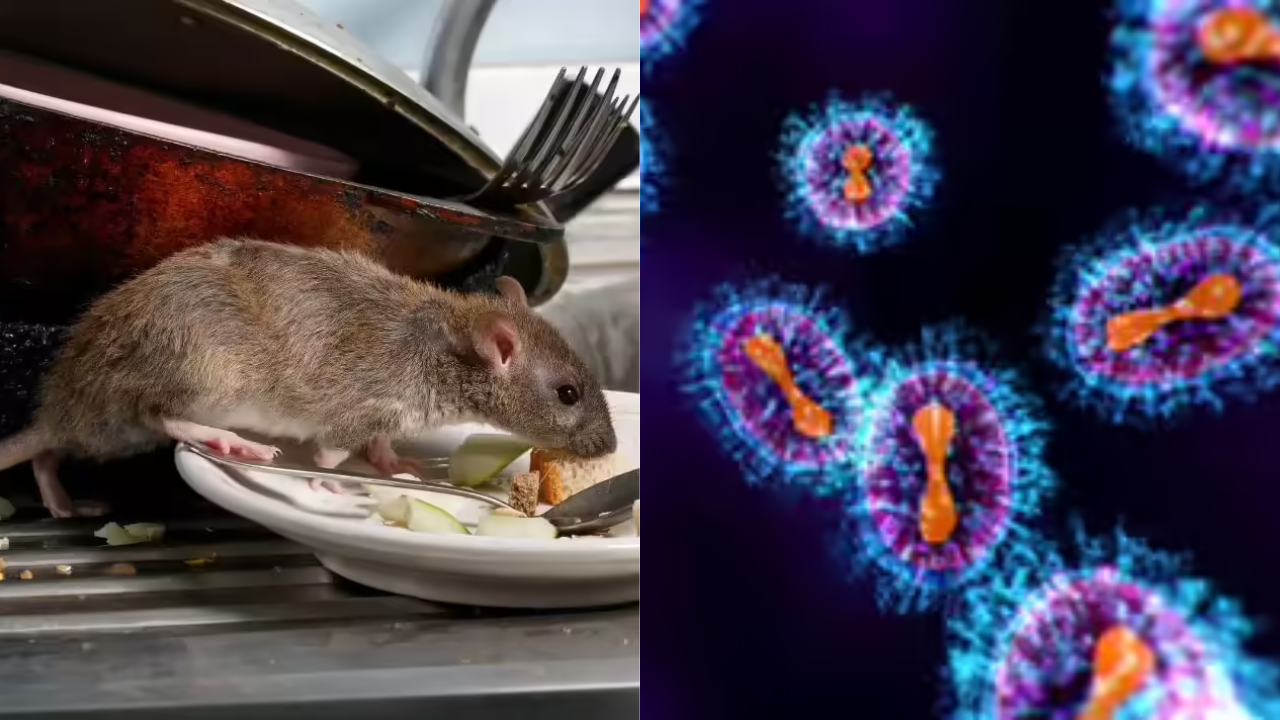
Media outlets are currently engaged in a desperate, frantic hunt for "The Next One." Every time a person sneezes in a province they can't find on a map, the headlines start churning out the same tired comparison: Is this COVID 2.0? The recent chatter around Hantavirus is the latest victim of this intellectual laziness.
Comparing Hantavirus to SARS-CoV-2 isn't just scientifically illiterate; it’s a fundamental misunderstanding of how pathogens survive. If you are waiting for a Hantavirus pandemic to lock down your city, you are going to be waiting a very long time. Biology has rules. Physics has constraints. And Hantavirus is playing an entirely different game—one that makes it a terrifying individual killer but a pathetic global traveler.
The Mathematical Impossibility of a Hantavirus Pandemic
The "lazy consensus" suggests that because Hantavirus has a high case fatality rate—often cited around 38% for Hantavirus Pulmonary Syndrome (HPS)—it is a greater threat than COVID-18 or COVID-19. This is a linear way of thinking in a non-linear world.
In virology, there is often an inverse relationship between virulence and transmissibility. Evolution does not favor a virus that drops its host into an ICU bed within days. SARS-CoV-2 was a masterpiece of stealth because it spent days—sometimes weeks—hiding in asymptomatic hosts who were busy riding subways and attending weddings. It leveraged human sociability.
Hantavirus, by contrast, is a biological sledgehammer.
When you contract Hantavirus, your lungs fill with fluid. You become critically ill, fast. Dead hosts don't go to the office. Dead hosts don't fly coach. By the time a patient is symptomatic enough to be a "spreader," they are usually too sick to move. The virus effectively burns through its fuel source before it can reach the next forest.
The Rodent Wall
The most significant barrier to a Hantavirus "outbreak" is the mode of transmission. The competitor articles love to gloss over this with a quick mention of "rodent droppings." Let’s get precise.
Hantaviruses are primarily zoonotic. Humans are accidental, "dead-end" hosts. We are the biological equivalent of a cul-de-sac. The virus spreads via the aerosolization of excreta from specific rodents—in North America, it’s the deer mouse; in South America, the long-tailed pygmy rice rat.
To have a COVID-style pandemic, you need sustained, efficient human-to-human (H2H) transmission. With Hantavirus, H2H is so rare it’s practically a medical curiosity. Aside from a few isolated clusters involving the Andes virus strain in Argentina, we have almost zero evidence that Hantavirus can move through a human population without the constant intervention of rats.
Unless you are planning on living in a crawlspace filled with infested nesting material, your risk of starting a chain of infection is statistically negligible. We are obsessed with the wrong vector.
The Case Fatality Fallacy
The "38% mortality" figure is used to scare people into clicking links. Here is the reality: that number is high because we only test people who are already dying.
In any disease outbreak, there is a "surveillance bias." We catch the severe cases in the hospital and ignore the mild infections that never required a doctor. While Hantavirus is undeniably more lethal on a per-case basis than the coronavirus, its total "kill count" since its discovery in the 1950s is a rounding error compared to a single week of a bad flu season.
We are pathologically bad at risk assessment. You are infinitely more likely to die from a distracted driver while reading a "Hantavirus Outbreak" headline than you are to die from the virus itself.
The False Security of "Preparedness"
The industry "experts" tell you that we are "better prepared" because of what we learned during the 2020 lockdowns. This is a lie.
Our current healthcare infrastructure is built for respiratory viruses with low-to-moderate acuity and high volume. Hantavirus requires high-acuity, intensive care intervention—specifically extracorporeal membrane oxygenation (ECMO).
If Hantavirus actually managed to mutate for efficient H2H transmission—a biological "black swan" event of massive proportions—the mortality rate wouldn't stay at 38%. It would skyrocket because our hospital systems would collapse under the weight of the hardware required to keep people alive. We don't have enough ECMO machines to handle a neighborhood outbreak, let alone a city.
The "lesson" of COVID was that we could mask up and stay home. You can't "mask away" a virus that requires a specialized machine to breathe for you while your lungs undergo a vascular leak syndrome.
Stop Asking the Wrong Questions
The question isn't "Will Hantavirus be COVID 2.0?" That question assumes all threats look like the last one.
The real threat isn't a known virus with a high death rate; it's the shift in land use and climate that brings us into closer contact with rodent reservoirs. When we encroach on rural environments or when erratic weather patterns cause "mast years" (explosions in seed production that lead to rodent population booms), the localized risk spikes.
Instead of worrying about a global "outbreak," we should be focused on the hyper-local reality of zoonotic spillover. But that doesn't sell ads. That doesn't create the "global catastrophe" narrative that digital media craves.
The Hard Truth of Viral Evolution
Viruses do not "want" to kill you. They want to replicate. A Hantavirus that kills its host in 48 hours is an evolutionary failure. For Hantavirus to become "COVID 2.0," it would have to trade its terrifying lethality for a milder, stealthier profile. It would have to stop being Hantavirus.
We are currently living in an era of "pathogen anxiety." We have been traumatized by a genuine pandemic, and now we see the ghost of a lockdown in every headline. But biology is governed by the laws of probability and mechanics, not by our collective PTSD.
The next pandemic won't be Hantavirus. It won't be something we've already named and tracked for seventy years. It will be something boring, something that looks like a common cold until it’s too late, and something that doesn't require a rodent to do the heavy lifting.
Stop looking at the rats. Start looking at the biology of transmission. If a virus can't survive a conversation in an elevator, it isn't going to take over the world.
Throw away the clickbait. Clean your garage. Wear gloves if you see mouse droppings. Otherwise, go outside and breathe the air.