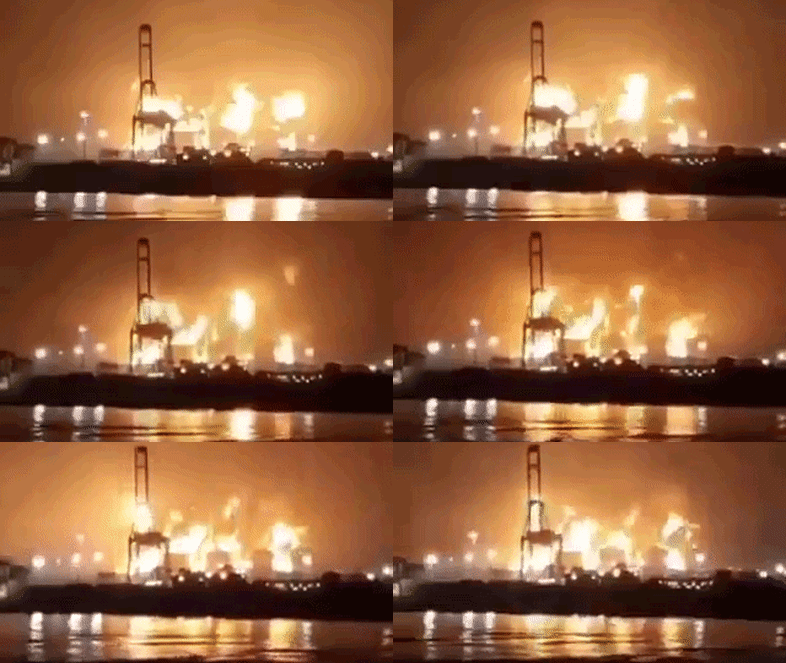
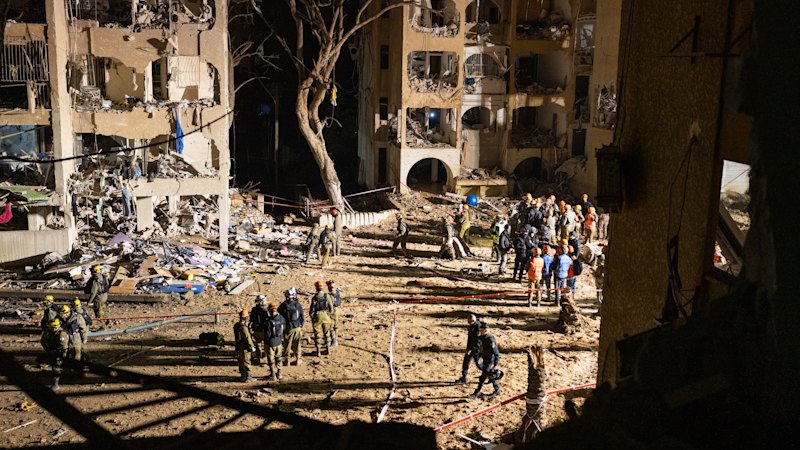
The global energy market operates on a razor-thin margin of error, where a single geographic bottleneck—the Strait of Hormuz—dictates the solvency of industrial economies. When the United States issues a hard-line ultimatum regarding Iranian maritime activity, it is not merely a diplomatic friction point; it is a direct stress test of the global oil supply chain's elasticity. The International Energy Agency’s (IEA) warning of the "worst global energy crisis in decades" stems from a specific confluence of physical supply disruption, speculative price premiums, and the exhaustion of spare production capacity. Understanding this crisis requires moving beyond headlines to analyze the three structural pillars of the Hormuz chokehold: maritime throughput physics, the failure of existing bypass infrastructure, and the non-linear escalation of insurance and logistics costs.
The Throughput Variable: Why 21 Million Barrels Cannot Be Replaced
The Strait of Hormuz is the most critical oil transit point globally because of its sheer volume. Roughly 21 million barrels of oil and petroleum products pass through this 21-mile-wide waterway daily. This represents approximately 20% of total global liquid petroleum consumption. Unlike other transit points, the "Hormuz Factor" is absolute because it serves as the only exit point for the world’s most significant exporters, including Saudi Arabia, the UAE, Kuwait, Iraq, and Iran itself.
A disruption here creates an immediate "dry-up" effect for East Asian markets. China, India, Japan, and South Korea rely on this specific corridor for the vast majority of their crude imports. Because crude oil is not a monolithic commodity—refineries are calibrated for specific grades (e.g., Arab Light vs. Western Canadian Select)—a sudden loss of Persian Gulf medium and heavy sour crudes cannot be mitigated by simply pumping more light sweet crude from U.S. shale plays. The mismatch in refinery configuration would lead to a secondary crisis: a refined product shortage even if total global volume remained technically stable.
The Failure of Bypass Logic
A common analytical error is the assumption that pipelines can bypass a Hormuz closure. While Saudi Arabia and the United Arab Emirates have invested in overland routes, the math does not support a total workaround.
- The East-West Pipeline (Saudi Arabia): This line can move approximately 5 million barrels per day (mb/d) to the Red Sea. However, much of this capacity is already utilized for normal operations. The available surge capacity is insufficient to cover the 12+ mb/d that Saudi Arabia typically exports through the Strait.
- The Abu Dhabi Crude Oil Pipeline: This connects the Habshan fields to Fujairah on the Gulf of Oman, bypassing the Strait. Its capacity is roughly 1.5 mb/d.
- The Sumed Pipeline (Egypt): This provides a link from the Red Sea to the Mediterranean, but it is a downstream solution. If the oil cannot reach the Red Sea from the Persian Gulf, Sumed remains empty.
Combined, these bypasses account for less than 40% of the total volume flowing through Hormuz. This leaves a minimum of 13 million barrels per day stranded. In a market where a 1% supply deficit can trigger a 20% price spike, a 13% global supply deficit represents a catastrophic decoupling of price from value.
The Cost Function of Maritime Risk
The IEA's alarm reflects the "Risk Premium Cascade." When an ultimatum is issued, the cost of moving oil rises before a single shot is fired. This occurs through three distinct mechanisms:
War Risk Insurance Premiums
Standard hull and machinery insurance does not cover "excluded areas" during periods of high tension. Shipowners must purchase "War Risk" premiums. During previous escalations in the Gulf, these premiums have surged from 0.025% of a vessel's value to over 0.5% in a matter of days. For a $100 million Very Large Crude Carrier (VLCC), this adds $500,000 to the cost of a single seven-day voyage. These costs are immediately passed to the consumer via freight rates.
The Tanker Availability Squeeze
International shipping operates on a "just-in-time" basis. If the Strait is declared unsafe, a significant portion of the global VLCC fleet becomes functionally trapped or refuses to enter the region. This creates an artificial shortage of available tonnage globally, driving up shipping rates for unrelated routes, such as West African or North Sea crude. The crisis thus "contaminates" non-Middle Eastern oil prices through logistics inflation.
Tactical Asymmetry and the "Grey Zone"
Iran’s strategy does not require a formal blockade. Instead, it utilizes "Grey Zone" tactics—limpet mines, drone swarms, and cyber-interference with GPS signals (spoofing). This creates a persistent state of high-level uncertainty. Under such conditions, maritime "slow steaming" or rerouting becomes mandatory for safety, effectively lengthening the global supply chain and reducing the "effective" supply of oil because more of it is sitting on water for longer periods.
The Strategic Petroleum Reserve (SPR) Paradox
The United States and other IEA members maintain Strategic Petroleum Reserves to counter supply shocks. However, the SPR is a tactical tool being used against a structural problem. The U.S. SPR has been depleted to its lowest levels since the 1980s following attempts to stabilize prices during the 2022-2024 period.
The mechanism for an SPR release involves a competitive bidding process and physical delivery limits. The U.S. can only pull roughly 4 million barrels per day from its salt caverns due to infrastructure bottlenecks. If the Hormuz deficit is 13 million barrels per day, the combined global SPR release capacity can only bridge the gap for approximately 45 to 60 days. Beyond that point, the world enters a "Physical Scarcity Regime," where fuel rationing becomes the only viable economic policy for major importers.
Geopolitical Friction and Currency Hedging
The Trump administration's ultimatum introduces a secondary risk: the weaponization of the Petrodollar. If the U.S. enforces a total maritime blockade on Iranian exports, it forces Iran's primary customers—most notably China—into a corner. To maintain their energy security, these nations are incentivized to bypass the U.S. financial system entirely, using non-dollar payment rails (e.g., mBridge or bilateral yuan-denominated trades).
This creates a long-term erosion of U.S. financial leverage. While the short-term crisis is one of energy prices, the mid-term crisis is one of monetary hegemony. A "worst-case" energy crisis as defined by the IEA isn't just about $150 oil; it is about the fragmentation of the global trade architecture into competing blocs.
The Nonlinear Response of Demand
Economists often speak of "price elasticity of demand," but in energy, this elasticity is not linear. At a certain price threshold—historically around 4% to 5% of global GDP spent on energy—the economy hits a "Demand Destruction" wall.
When energy costs spike too rapidly, businesses do not just "use less" fuel; they cease operations. Transportation networks fail, agricultural fertilizers (which are natural gas-dependent) become unaffordable, and the manufacturing sector enters a forced hibernation. This is the scenario the IEA is forecasting: not a manageable price increase, but a systemic shutdown of marginal economic activity.
Strategic Operational Play
For stakeholders navigating this volatility, the following maneuvers are the only viable hedges against a Hormuz closure:
- Refinery Recalibration: Industrial buyers must shift procurement toward Atlantic Basin crudes (Brent, WTI, Guyana) immediately, even at a premium, to secure "non-Hormuz" logistics slots before the "panic-bid" phase begins.
- Infrastructure Hardening: Entities relying on Persian Gulf energy must invest in on-site storage capacity to buffer against a 30-day "dark window" in maritime arrivals.
- Synthetic Shorting of Energy-Dependent Equities: The most effective hedge against energy-driven inflation is a short position on high-energy-intensity sectors (Airlines, Long-haul Logistics, Petrochemicals) coupled with long positions in localized energy production that lacks geographic exposure to the Middle East.
The escalation between the U.S. and Iran has moved past the stage of posturing. The data indicates that the global economy lacks the spare capacity and the infrastructure to absorb a Hormuz disruption. The strategy is no longer about prevention, but about surviving the inevitable "Liquidity Gap" in global energy supply.
Would you like me to analyze the specific impact of a Hormuz closure on the Chinese manufacturing sector's energy-to-GDP ratio?