Western diplomacy is currently addicted to a specific brand of performative signaling that does nothing but prolong the agony of the Middle East. Brussels issues a "stern" demand for humanitarian access in Southern Lebanon. London sends a destroyer to the Strait of Hormuz to "secure" global trade. On paper, it looks like leadership. In reality, it is a desperate attempt to apply 20th-century naval doctrine and NGO press releases to a 21st-century proxy war that has already outgrown these obsolete tools.
If you think sending a Type 45 destroyer to the Persian Gulf "secures" anything, you haven't been paying attention to the last decade of asymmetric warfare. You are watching a theatrical production designed to calm insurance markets while the actual strategic ground shifts beneath our feet.
The Myth of Naval Deterrence in a Drone Economy
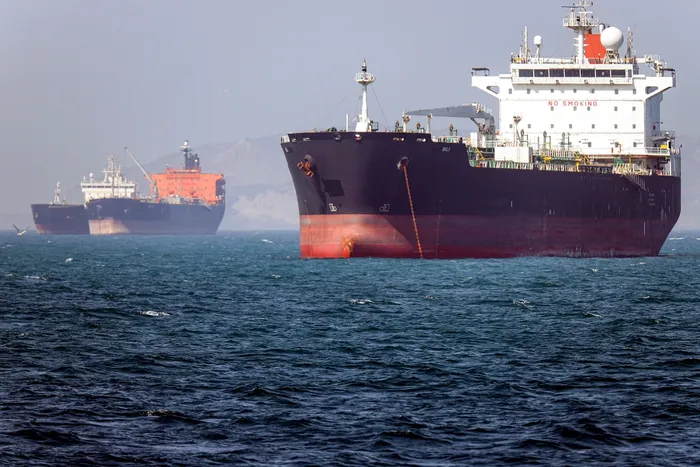
The arrival of the HMS Diamond or its equivalent is the ultimate "feel-good" military move. It broadcasts power. It looks great on a recruitment poster. But in the narrow, congested waters of the Strait of Hormuz, a billion-dollar vessel is a high-stakes liability, not a solution.
We have entered the era of the $20,000 solution to a $2 billion problem. When the Houthis or regional proxies use swarms of low-cost loitering munitions, the math of traditional naval defense collapses. You cannot trade a $1 million Sea Viper missile for a $20,000 plywood drone indefinitely. The Royal Navy knows this. The French know this. Yet, they continue the charade because the alternative—admitting that we cannot "police" these waters without a full-scale regional escalation—is politically unpalatable.
Securing the Strait is no longer about tonnage or hull counts. It is about electromagnetic spectrum dominance and the ability to absorb sustained, low-tech harassment. Sending a destroyer into that environment without a clear mandate to strike the source of the threat is like sending a bodyguard to a knife fight with his hands tied behind his back. It provides the illusion of safety while providing the adversary with a stationary, high-value target to embarrass the West at a time of their choosing.
Humanitarian Corridors as Tactical Breathalyzers
The European Union’s obsession with "urgent humanitarian access" in Southern Lebanon sounds noble. It is the standard liberal-internationalist reflex. But it ignores the brutal logic of the battlefield. In the current conflict architecture, "humanitarian pauses" are rarely about the civilians they claim to protect. They are tactical resets.
When the EU demands a corridor, they are inadvertently asking for a logistical window that benefits the entrenched defender. I have watched this play out in multiple theaters: the "aid" goes in, but the operational tempo of the insurgency refreshes. By focusing entirely on the symptoms of the displacement rather than the mechanics of the kinetic engagement, Brussels ensures that the conflict drags on.
Shortening a war is often the most "humanitarian" act possible. Dragging it out through a series of half-baked ceasefires and monitored corridors—which are inevitably violated—merely increases the total body count over a longer timeline. If you want to save lives in Lebanon, you don't issue a press release from a climate-controlled office in Belgium; you force a decisive diplomatic or military conclusion. Anything else is just managing the optics of a catastrophe.
The Great Misunderstanding of Energy Security
The panic over the Strait of Hormuz usually centers on a single premise: if the Strait closes, the global economy dies. This is 1970s thinking.
- The Saudi Bypass: The East-West Pipeline (Abqaiq-Yanbu) can move five million barrels a day toward the Red Sea, bypassing Hormuz entirely.
- The Emirati Pivot: The ADCOP pipeline sends 1.5 million barrels to Fujairah, outside the Gulf.
- The Global Buffer: The U.S. is now a net exporter. Strategic reserves are lower than we'd like, but the world is no longer a hostage to a single chokepoint in the way it was during the Tanker War of the 1980s.
The real threat isn't the physical blockage of the water. It’s the Risk Premium triggered by the mere presence of Western warships. By "securing" the Strait with high-profile naval assets, we are actually signaling to the markets that the situation is volatile. This drives up insurance rates (P&I clubs), which in turn drives up the cost of every barrel, regardless of whether a single shot is fired. We are subsidizing the very instability we claim to be fighting.
Stop Asking "How Do We Help?"
People always ask: "How can the international community intervene to stop the suffering?"
This is the wrong question. It assumes the "international community" has the leverage or the moral standing to dictate terms to actors who view this as an existential struggle. The brutal truth is that external intervention—be it a British destroyer or an EU aid convoy—often serves as a pressure valve that prevents the local actors from reaching a necessary, if painful, equilibrium.
If you want to actually "secure" trade and "protect" civilians, you have to stop playing the middle.
- Acknowledge the Obsolescence of Presence: A ship in the Gulf is a target, not a shield. If you aren't prepared to use it to dismantle the coastal batteries and drone launch sites, bring it home. Stop wasting taxpayer money on "maritime security" that is actually just maritime target practice.
- Weaponize Transparency, Not Just Aid: Instead of demanding "access," demand the immediate, public disclosure of where combatants are embedding within civilian infrastructure. If the EU wants to be useful, it should use its satellite and intelligence capabilities to strip away the fog of war that both sides use to justify civilian casualties.
- Accept the High Price of Energy: Stop trying to artificially suppress oil volatility through military posturing. Let the market price in the risk. High prices are the only thing that will finally break the global dependency on a region that has been in various states of combustion for eighty years.
The UK and France aren't "securing" the Strait of Hormuz. They are babysitting a powder keg while holding a lit match. The EU isn't "saving" Lebanon; it is subsidizing the status quo of a failed state. Until we stop mistaking movement for progress, we are just spectators at our own decline.
Take the ships out. Stop the press releases. Let the regional powers face the unvarnished consequences of their own escalations. That is the only way the fever breaks.