The global energy market is currently staring down the barrel of a 48-hour ultimatum that could redefine the geopolitical map of the Middle East. With Donald Trump issuing a hard deadline for Iranian de-escalation, Tehran has responded with its most potent kinetic threat: the total blockade of the Strait of Hormuz. This isn't the standard saber-rattling we have seen for decades. This is a collision of two uncompromising doctrines that treat the world's most vital maritime chokepoint as a bargaining chip. If the Strait closes, the "maximum pressure" campaign shifts from a diplomatic theory into a global economic shockwave that no amount of strategic reserves can fully mitigate.
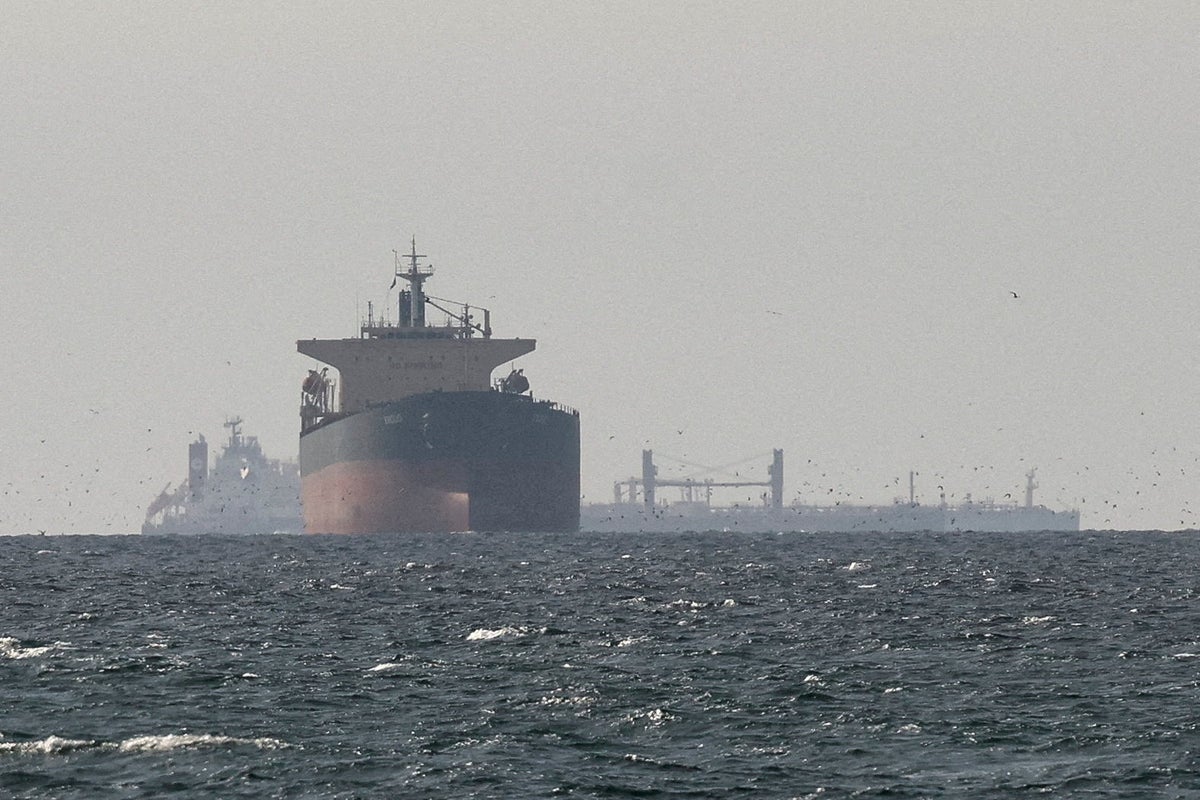
At the heart of this crisis is a twenty-one-mile-wide stretch of water. Through this narrow passage flows roughly 20% of the world's total oil consumption and nearly a third of all seaborne traded liquefied natural gas (LNG). For the United States, the ultimatum is a gamble on the internal stability of the Iranian regime. For Iran, the threat to "completely close" the waterway is an existential insurance policy. They know they cannot win a conventional blue-water naval engagement against the U.S. Fifth Fleet, but they don't have to win. They only need to make the passage of tankers impossible.
The Mechanics of a Modern Blockade
Closing the Strait of Hormuz does not require a massive fleet of destroyers. Iran’s strategy relies on asymmetric warfare—a doctrine designed to turn a superpower's technological advantages into liabilities. This involves a dense layering of mobile anti-ship cruise missiles (ASCMs), thousands of smart mines, and swarms of fast-attack craft.
The Mine Menace
The most immediate tool in Tehran's arsenal is the sea mine. Unlike the primitive tethered globes of World War II, modern Iranian mines are sophisticated. Some are designed to lie on the seabed and wait for the specific acoustic signature of a laden supertanker before detonating. Clearing these mines is a slow, agonizing process. Even if the U.S. Navy deploys its full minesweeping capability, the mere suspicion of a minefield sends insurance premiums into the stratosphere, effectively halting commercial traffic without a single shot being fired.
Swarm Tactics and Land Based Batteries
The Islamic Revolutionary Guard Corps (IRGC) Navy operates hundreds of small, fast boats equipped with rockets and torpedoes. In the narrow confines of the Strait, these boats can overwhelm a high-value target’s defense systems through sheer numbers. Simultaneously, the mountainous coastline of Iran provides natural cover for mobile missile launchers. These batteries can fire and relocate before a counter-strike can be coordinated, creating a "no-go" zone for unescorted commercial vessels.
The Economic Fallout of a 48 Hour Clock
When a 48-hour ultimatum is issued by a U.S. President, the markets don't wait for the deadline to expire. They price in the catastrophe immediately. We are looking at a scenario where Brent crude could skyrocket toward $150 or even $200 a barrel within days of a confirmed closure.
The impact hits different regions with varying degrees of brutality.
- East Asia: China, Japan, and South Korea are the primary destinations for Hormuz-borne oil. A shutdown would immediately trigger industrial slowdowns across the Pacific.
- The European Union: Already struggling with energy transitions and the loss of Russian supplies, a loss of Qatari LNG—which must pass through Hormuz—would lead to immediate rationing.
- The United States: While the U.S. is a net exporter of petroleum, oil is a global commodity. If the world price spikes, domestic gasoline prices follow, regardless of where the crude was pumped.
The Trump Strategy vs. Iranian Reality
The Trump administration’s ultimatum assumes that the Iranian leadership will blink when faced with the prospect of total military engagement. This assumes a rational-actor model that may not apply to a regime that views its survival through a revolutionary lens. By boxing Iran into a corner where they can no longer export their own oil due to sanctions, the U.S. has inadvertently removed the primary deterrent against Iran closing the Strait.
If Iran can't sell its oil, their logic follows, then no one else in the region should be able to either. This "all or nothing" approach turns the Strait of Hormuz into a kill-switch for the global economy.
The Military Counter Response
The U.S. military's "Operation Sentinel" or similar maritime security constructs are designed to provide overwatch, but the logistics of escorting every tanker through the Strait are nightmarish. A single tanker hit by a drone or a mine creates an environmental and salvage disaster that physically blocks the shipping lanes.
The Pentagon’s response to a closure would likely involve a massive "SEAD" (Suppression of Enemy Air Defenses) campaign and strikes on IRGC naval bases. However, this escalates a blockade into a full-scale regional war. Such a conflict would not stay confined to the water. It would likely involve missile exchanges across the borders of Saudi Arabia, the UAE, and Israel, further destabilizing the very oil infrastructure the U.S. seeks to protect.
The Overlooked Factor of Domestic Pressure
Inside Iran, the regime is under immense pressure from a crippled economy. A foreign confrontation often serves as a convenient, albeit dangerous, distraction to unify a fractured populace. On the flip side, the U.S. administration is also playing to a domestic audience. A spike in energy prices is the single fastest way to lose an election or tank a domestic economy. This creates a volatile feedback loop where both sides are incentivized to project strength, even if neither truly wants the total war that a closed Strait would guarantee.
The Fragility of Alternative Routes
Proponents of the ultimatum often point to pipelines as a solution. Saudi Arabia has the East-West Pipeline, and the UAE has the Habshan-Fujairah line. Together, these can move several million barrels a day to terminals outside the Persian Gulf. However, their combined capacity is less than half of what typically moves through the Strait. Furthermore, these pipelines are static targets, vulnerable to sabotage or long-range missile strikes. They are a bypass, not a replacement.
The reality is that there is no "Plan B" for the Strait of Hormuz. The global supply chain is built on the assumption of its openness. The 48-hour window currently ticking down isn't just a deadline for Tehran; it is a countdown for the stability of the global financial system.
Watch the movement of the insurance markets in London over the next twelve hours. If the underwriters pull coverage for the Persian Gulf, the blockade has effectively begun without a single Iranian mine hitting the water.
Check the daily transit logs of the Suez Canal and the Bab el-Mandeb to see if tankers are already being diverted around the Cape of Good Hope.