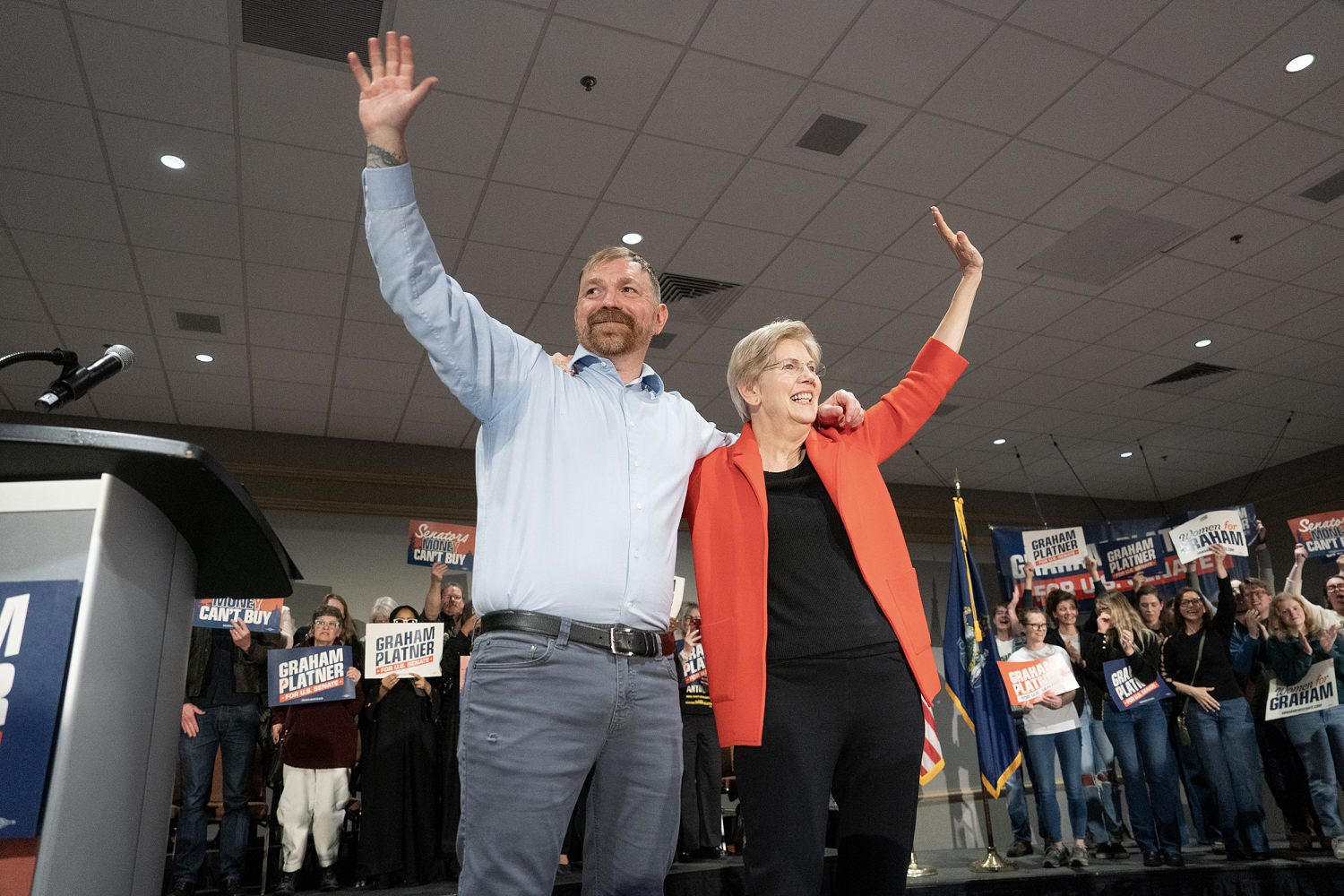
The arrival of Senator Elizabeth Warren in Maine to support Graham Platner’s primary campaign functions as a deployment of political capital designed to bridge the gap between national progressive branding and localized electoral mobilization. This is not merely a campaign stop; it is a calculated effort to institutionalize the "Warren wing" within a specific geographic theater. The success of this intervention depends on three distinct variables: the transferability of national donor networks, the alignment of platform-specific policy frameworks with Maine’s unique demographic pressures, and the structural tension between insurgent progressivism and the existing Democratic establishment.
The Endorsement as a Capital Transfer Mechanism
An endorsement from a top-tier national figure operates as a high-velocity injection of credibility into an underdog campaign. In the context of the Maine Democratic primary, Warren’s presence serves as a signal to the national progressive fundraising apparatus. Small-dollar donors often use such endorsements as a heuristic—a mental shortcut—to identify which candidates across the country deserve their capital. Don't forget to check out our earlier coverage on this related article.
The mechanism of this transfer follows a predictable path:
- Donor Validation: The endorsement reduces the "search cost" for national progressive donors looking for viable local investments.
- Volunteer Scalability: High-profile visits create a momentary spike in local volunteer sign-ups, which the campaign must then convert into long-term infrastructure.
- Media Amplification: The event forces local outlets to cover a primary race that might otherwise be treated as a foregone conclusion, thereby increasing the candidate's name recognition without the associated costs of paid advertising.
The Platner Platform and the Economics of Progressive Populism
Graham Platner’s campaign utilizes a framework that prioritizes economic reform, particularly concerning wealth inequality and corporate accountability. By aligning with Warren, Platner adopts a specific rhetorical toolkit that frames policy issues not as partisan choices, but as structural necessities. If you want more about the context of this, Al Jazeera offers an informative breakdown.
The Cost-of-Living Bottleneck in Maine
Maine’s economy presents specific challenges that test the viability of progressive policy. The state has an aging population and a housing market under significant pressure from external buyers. Platner’s focus on economic justice must address the "affordability gap" through two primary levers:
- Labor Strength: Strengthening collective bargaining rights serves as a counterweight to wage stagnation in sectors like healthcare and manufacturing.
- Regulatory Reform: Implementing stricter oversight on utility providers and pharmaceutical pricing, which disproportionately affects Maine’s elderly demographic.
The causal link here is straightforward: by lowering non-discretionary costs (utilities, medicine, housing) through legislative intervention, the campaign argues that it can stimulate local economies more effectively than traditional supply-side tax incentives.
Structural Tensions Within the Democratic Apparatus
The entry of a national heavyweight into a local primary inevitably creates friction with the state’s party establishment. Political parties generally prefer stability and incumbency, as these factors minimize the risk of losing a seat in a general election. The Warren-Platner alliance represents a "stress test" for the Maine Democratic Party’s internal cohesion.
The Risk of Fractionalization
When an insurgent candidate receives outside help, it can lead to two outcomes:
- The Expansion Effect: The primary generates higher-than-average turnout, bringing new voters into the party fold who then stay for the general election.
- The Alienation Effect: The primary becomes so ideologically charged that the eventual nominee faces a fractured base, with "moderate" or "centrist" voters feeling sidelined.
The strategic gamble of the Platner campaign is that the Expansion Effect will outweigh the risks of alienation. This requires a precise calibration of messaging—appealing to the populist "outsider" sentiment while maintaining enough institutional vocabulary to avoid being labeled as a fringe movement.
Quantifying the "Warren Effect" on Voter Behavior
Measuring the efficacy of high-profile surrogacy requires looking beyond crowd sizes. The data shows that endorsements are most effective when they provide a "permission structure" for undecided voters.
- Voter Identification: The endorsement helps define Platner’s brand in a crowded field, allowing voters to categorize him instantly as the "progressive option."
- Turnout Elasticity: Progressive voters in Maine have shown high elasticity in previous cycles, meaning their turnout is highly dependent on how much they feel the candidate represents a departure from the status quo.
This creates a feedback loop. High-profile endorsements lead to better polling; better polling leads to more endorsements; more endorsements lead to increased fundraising. The bottleneck for Platner is the speed at which this loop can be completed before the primary date.
Strategic Constraints and the Rural Divide
A significant limitation of the Warren-style progressive model in Maine is the cultural and economic divide between the southern coastal regions and the "Second District" rural interior. While Warren’s brand of data-driven populism resonates strongly in Portland and the mid-coast, its efficacy in the rural north is less certain.
The rural Maine voter often prioritizes local autonomy and tangible economic benefits over broad ideological shifts. To win, Platner cannot simply rely on the Warren brand; he must translate "national progressive goals" into "local survival strategies." This involves:
- Reframing environmental policy as a means of protecting the timber and fishing industries.
- Positioning healthcare reform as the only way to keep rural hospitals from closing.
- Defining corporate accountability in the context of protecting small-town businesses from predatory out-of-state competition.
The Mechanics of the Ground Game
The final phase of this strategy involves the conversion of enthusiasm into ballots. Warren’s rally serves as the top of the "conversion funnel." The campaign must then execute a rigorous field operation:
- Data Harvesting: Every attendee at the rally must be captured in a database for subsequent "Get Out The Vote" (GOTV) efforts.
- Micro-targeting: Using the data gathered, the campaign can deploy specific messages to different demographic segments—student loan reform for younger voters, Social Security protection for older voters.
- Early Voting Push: Maine’s liberal voting laws allow for significant early and absentee voting. The post-rally momentum must be used to lock in votes before the news cycle shifts.
The presence of a national figure provides the "why" for voting, but the local campaign infrastructure provides the "how." Without the latter, the former is merely political theater.
Forecast: The Trajectory of Progressive Insurgency
The intervention by Elizabeth Warren signals that the national progressive leadership sees Maine as a viable laboratory for their legislative goals. Regardless of the immediate outcome of the primary, the infrastructure built during this campaign will likely persist, creating a permanent progressive bloc within the state’s political ecosystem.
The immediate strategic play for the Platner campaign is to leverage the media momentum from the Warren visit to secure a "last-minute" surge in fundraising. This capital must be deployed immediately into high-frequency digital and radio ads in the Second District to mitigate the "coastal progressive" perception. The focus must shift from "The Senator is here" to "The Senator is here because our movement is the only one capable of delivering structural change." Failure to make this transition will result in a campaign that is high on energy but low on the broad-based coalition required to win a statewide primary.