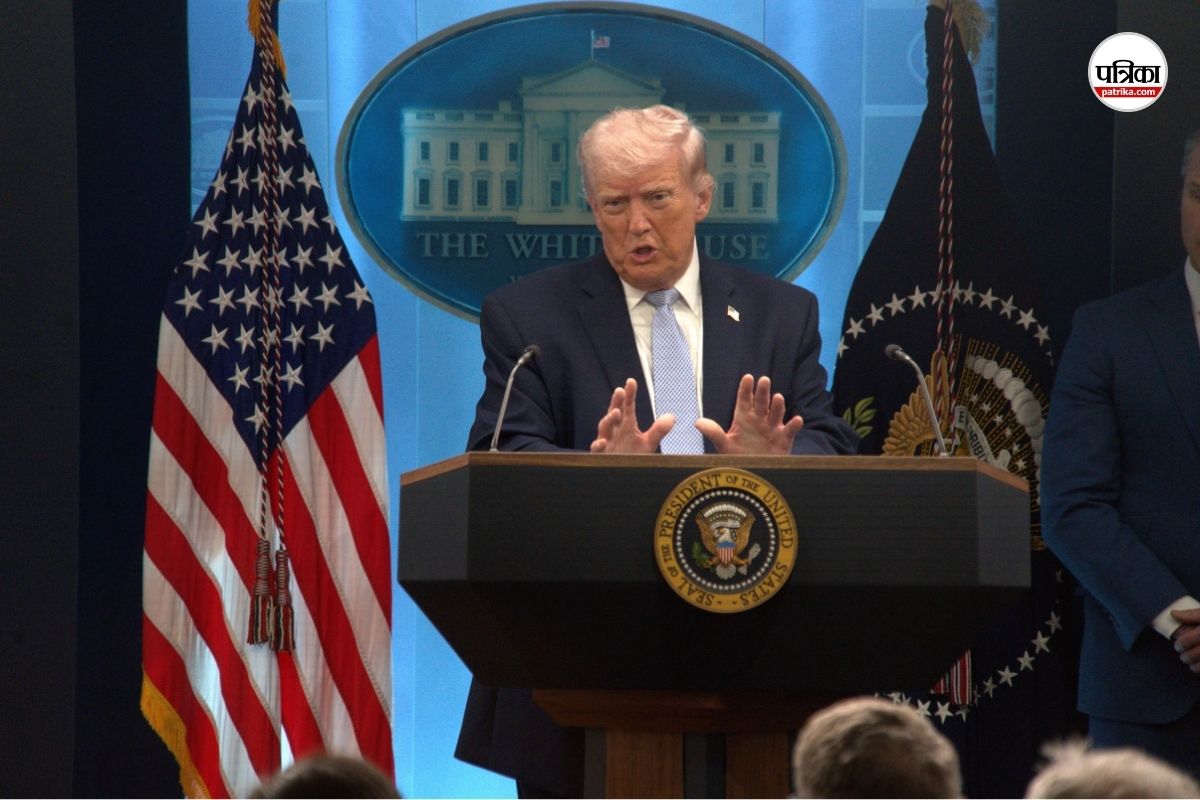
The shift in American foreign policy toward Iran following the implementation of regional ceasefires represents a move from ideological containment to a model of high-stakes transactionalism. This strategy rests on a singular premise: the Iranian state’s internal economic fragility outweighs its external ideological commitments. By offering direct cooperation and economic reintegration in exchange for verifiable behavioral shifts, the U.S. administration is testing a pressure-release valve mechanism designed to de-escalate Middle Eastern tensions without traditional long-form treaty negotiations.
The Tri-Pillar Framework of the American Offer
The current diplomatic overture is not a return to the Joint Comprehensive Plan of Action (JCPOA) or a simple olive branch. It is a three-pronged tactical deployment aimed at altering Tehran’s cost-benefit calculus.
- Economic Decoupling from Sanctions Pressure: The core of the "big offer" is the potential for structured sanctions relief. This is viewed not as a gift, but as a lever. The U.S. aims to incentivize the pragmatic factions within the Iranian leadership by demonstrating that the path to domestic stability—and by extension, the survival of the current regime—runs through Washington rather than through circumventing global financial networks.
- Regional De-escalation as a Prerequisite: The timing, following a ceasefire, indicates that the U.S. now views the cessation of kinetic conflict as a "zero-point." For cooperation to proceed, Iran must move from a state of active proxy funding to one of strategic neutrality. The U.S. is signaling that the era of "maximum pressure" can be replaced by "maximum opportunity," provided the territorial integrity of regional allies is respected.
- Direct Bilateral Engagement: By bypassing multilateral frameworks that often dilute national interests, the Trump administration seeks a binary "deal or no deal" environment. This reduces the noise created by European or Asian intermediaries and forces the Iranian leadership to answer a direct question regarding their long-term economic viability.
The Economic Reality of Iranian Compliance
To understand why this offer carries weight, one must analyze the Iranian fiscal landscape. The Iranian rial has faced chronic devaluation, and the internal inflation rate has consistently breached thresholds that threaten social cohesion.
The U.S. strategy identifies a Critical Failure Point in the Iranian state: the gap between military expenditure for regional influence and the capital requirements for domestic infrastructure. If the U.S. offers a path to bridge this gap, the internal pressure on the Supreme Leader and the Revolutionary Guard increases. The choice becomes a trade-off between the "Export of the Revolution" and the "Maintenance of the State."
The Mechanism of the "Big Offer"
The offer functions as a series of sequential gates.
- Gate 1: Verification. The U.S. requires tangible evidence of a reduction in enrichment levels and the suspension of ballistic missile transfers to non-state actors.
- Gate 2: Controlled Liquidity. In exchange for Gate 1, the U.S. would allow the release of frozen assets or permit specific oil tranches to be sold on the open market, likely under a supervised "oil-for-reconstruction" model.
- Gate 3: Normalization Milestones. Full economic reintegration remains the final, most distant gate, contingent upon a comprehensive shift in Iran’s regional doctrine.
The Logic of Transactional Deterrence
Unlike previous administrations that sought to change the nature of the Iranian regime, the current approach is focused on changing the regime's outputs. This is transactional deterrence. The logic suggests that a regime that has "too much to lose" is easier to manage than a regime backed into a corner.
This creates a new equilibrium. By signaling a willingness to work together, the U.S. effectively removes the "Satanic" archetype of the American adversary from the Iranian rhetorical toolkit. If Washington is ready to cooperate, the Iranian leadership can no longer blame external sabotage for all internal failings. This forces a crisis of legitimacy within Tehran: accept the deal and lose the ideological foundation of the revolution, or reject the deal and face the wrath of an economically exhausted populace.
Obstacles to Implementation and Structural Bottlenecks
While the offer is logically sound from a game-theory perspective, several structural bottlenecks threaten its success.
- The Hardline Paradox: Within the Iranian power structure, the Islamic Revolutionary Guard Corps (IRGC) derives its power from conflict and sanctions-evasion networks. A normalized economy threatens their monopoly on the black market. Therefore, the very group the U.S. needs to comply is the group that loses the most from compliance.
- Verification Latency: International inspectors and intelligence agencies require time to verify shifts in nuclear or proxy activity. In the fast-moving political cycle of a U.S. presidency, the time required for Iran to prove its "good faith" may exceed the patience of the American electorate or the administration itself.
- Regional Misalignment: U.S. allies, specifically Israel and Saudi Arabia, view any "cooperation" with skepticism. Their security concerns are not merely about nuclear breakout but about the conventional "encirclement" by Iranian-aligned groups. If the U.S.-Iran deal does not explicitly dismantle the proxy network, regional allies may act independently to disrupt the rapprochement.
Geopolitical Competition and the China Factor
The U.S. offer is also a strategic move to preempt further Iranian integration into the Sino-Russian axis. Over the last several years, Iran has leaned heavily on China as its primary oil customer and on Russia as a security partner.
By placing a superior economic offer on the table—direct access to the dollar-clearing system and global banking—the U.S. is attempting to outbid Beijing. China offers a survival lifeline; the U.S. offers a path to growth. This creates a competitive environment where Iran must choose between being a junior partner in an autocratic bloc or a reintegrated regional power in a globalized trade system.
The Risk of Miscalculation
The primary risk in this "ready to work together" stance is the potential for Iran to use the negotiations as a stalling tactic. In previous iterations of Middle Eastern diplomacy, "offers of cooperation" have been used by adversaries to build up currency reserves and refine technical capabilities while the U.S. is politically restrained by the ongoing talks.
To mitigate this, the U.S. must maintain a Snap-Back Trigger. Any offer of cooperation must be accompanied by a transparent, pre-defined set of consequences for non-compliance. This ensures that the diplomatic window does not become a security vulnerability.
Strategic Forecast: The Pivot to Conditional Engagement
The path forward will not be marked by a single, grand signing ceremony. Instead, expect a series of "mini-deals" that test the durability of the ceasefire and the sincerity of the Iranian offer. The U.S. is likely to move toward a model of Conditional Engagement, where every increment of cooperation is met with a corresponding, reversible increment of economic relief.
The Iranian leadership now faces a binary choice. The U.S. has effectively shifted the burden of proof. By stating that America is "ready to work together," the administration has neutralized the "Maximum Pressure" criticism and placed the responsibility for regional stability squarely on Tehran. If the war restarts or the economy collapses, the blame will lie with the Iranian leadership's inability to accept a way out.
The most effective move for the U.S. now is the formalization of the "Compliance-for-Capital" roadmap. This involve defining exactly which sanctions will be lifted and for which specific, verifiable actions. This moves the conversation from the realm of rhetoric to the realm of ledger-based diplomacy. The U.S. must remain prepared to pivot back to total isolation within 24 hours of a verified breach, maintaining the credibility of its threat while maximizing the attractiveness of its offer. The success of this strategy depends entirely on the U.S. maintaining the discipline to walk away if the transactional value of the deal is compromised.