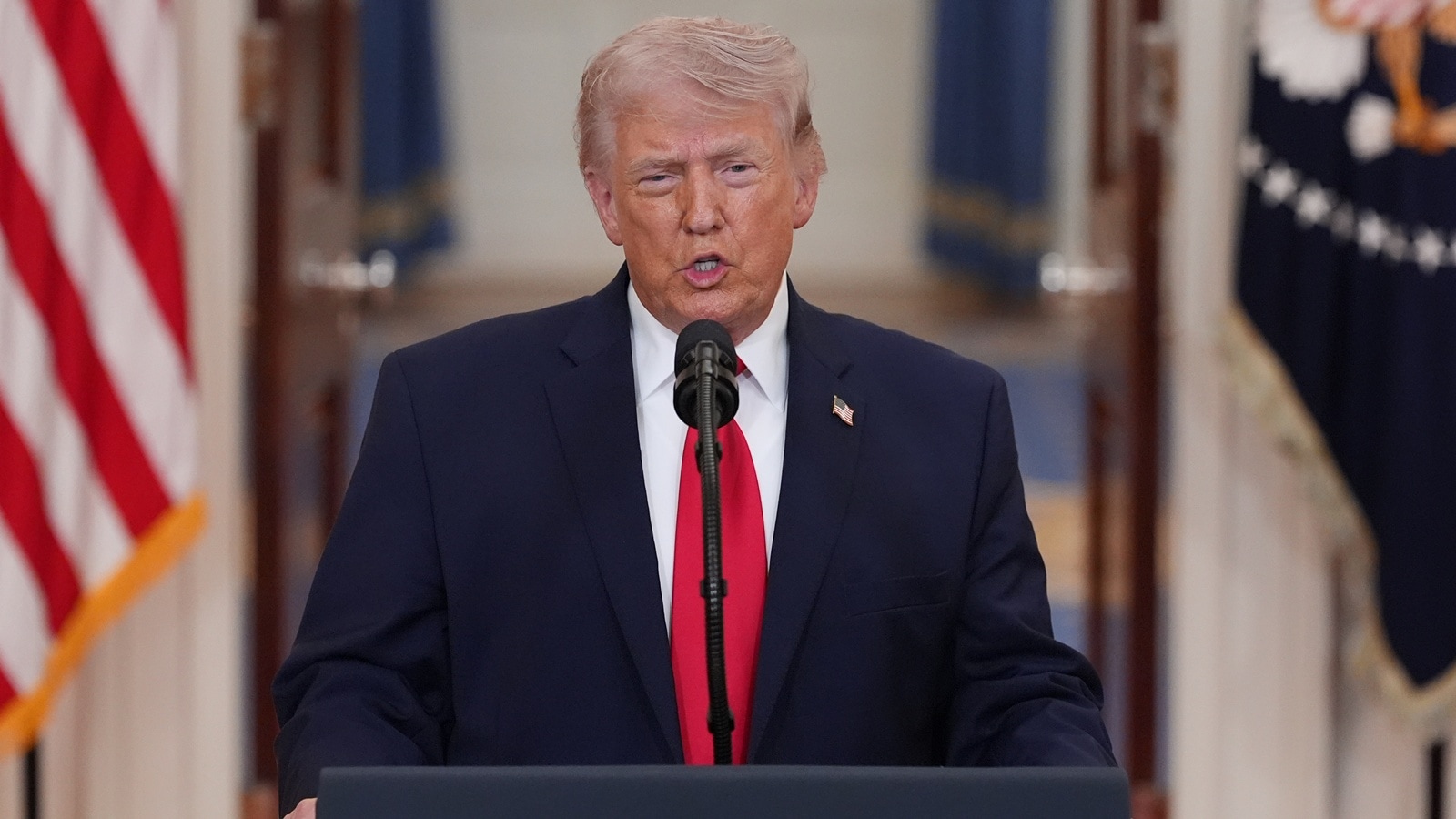
The recent friction between the Trump administration and a segment of Republican legislators concerning Iran ceasefire negotiations represents a breakdown in consensus-building rather than a mere rhetorical clash. While public attention focuses on the President’s personal attacks—specifically the labeling of dissenters as lacking cognitive capacity—the underlying issue is a conflict between divergent foreign policy frameworks: transactional diplomacy versus ideological containment.
The Dual-Objective Conflict
To understand the internal fracturing of the Republican caucus, one must identify the two competing objective functions currently operating within the party.
- Transactional Realism: This perspective views the ceasefire as an instrument to limit US resource expenditure, reduce the risk of entanglement, and prioritize domestic economic stabilization. The success metric here is the cessation of hostilities at a minimal fiscal and military cost.
- Ideological Containment: This perspective mandates the systemic weakening of the Iranian regime. Advocates of this stance argue that any ceasefire which leaves the core power structure of the regime intact facilitates long-term strategic losses for the United States, regardless of immediate stability gains.
When the President pursues a ceasefire, the transactionalists see a victory in burden reduction. The containment-focused legislators see a "sunk cost" scenario where short-term quiet creates long-term vulnerability.
The Information Asymmetry Gap
The friction is exacerbated by an acute information asymmetry. The executive branch manages the flow of classified intelligence, negotiation parameters, and sensitive geopolitical constraints. Legislators outside the immediate decision-making loop are forced to react based on incomplete data.
The President’s reliance on ad hominem attacks against his critics serves a specific political function: it shifts the focus from the strategic validity of the policy to the credibility of the opposition. By framing dissent as a failure of intellect, the executive bypasses the requirement to defend the policy on its strategic merits, effectively narrowing the scope of the public debate. This tactic is high-risk. It consolidates his base by projecting strength but risks creating long-term legislative bottlenecks. If a sufficient number of Republicans perceive their policy input is being treated with contempt, they may transition from quiet skepticism to active obstruction on secondary legislative priorities, such as appropriations or confirmable appointments.
Measuring the Cost Function of Diplomatic Dissent
The cost of this internal rift is measured in two distinct domains: political capital and policy durability.
- Political Capital Depreciation: Every time the executive force-multiplies a disagreement into a public confrontation, the party’s collective bargaining power with moderate voters decreases. Independent observers equate internal dysfunction with administrative instability.
- Policy Durability Risk: A foreign policy strategy that lacks unified legislative support is inherently fragile. If the ceasefire is viewed solely as a "Trump policy" rather than a "Republican policy," a subsequent administration—or even a future Congress—can easily dismantle the framework. For a policy to be binding, it requires a cross-functional coalition that survives electoral cycles.
Strategic Divergence in Legislative Behavior
Legislators opposing the current trajectory are not acting out of personal grievance alone; they are performing a risk assessment. Their calculation is as follows:
- The Verification Problem: Can the Iranian regime be trusted to adhere to a ceasefire, or is this a tactical pause to rearm and reconstitute? The lack of transparent verification mechanisms leads to skepticism.
- The Deterrence Multiplier: If the US withdraws or de-escalates, what is the message to other regional actors? The argument is that perceived weakness invites escalation elsewhere.
Legislators prioritize these variables because they are held accountable by voters who lean toward hawkish foreign policy stances. They are insulating themselves against the potential failure of the policy. If the ceasefire collapses, the legislators who publicly opposed it will claim vindication, while those who remained silent or supported it will bear the reputational cost.
Operational Forecast
The current discord will likely manifest in three phases.
First, the executive will continue to utilize social platforms to diminish the perceived legitimacy of dissenters, maintaining a high-pressure environment to force alignment. Second, the dissenting cohort will deepen their reliance on committee-level oversight, utilizing budget and authorization mechanisms to constrain the executive’s freedom of action in the negotiations. Finally, the outcome will depend on the ground truth of the Iranian response.
If the ceasefire produces measurable, long-term stability without compromising core regional security architecture, the legislative opposition will dissipate as the electoral benefits of "peace and prosperity" dominate the narrative. However, should the Iranian regime utilize the pause to conduct proxy attacks or regional destabilization, the internal opposition will catalyze into a formal legislative bloc. The strategic play for the executive is to transition from demanding blind loyalty to creating an iterative feedback loop with key legislative hawks, providing them with enough visibility into the process to claim ownership of the strategy, thereby converting them from critics to stakeholders. Failure to integrate these factions will result in a policy that is tactically successful but strategically isolated and prone to rapid collapse under the pressure of the next regional crisis.


