The standard narrative surrounding the Sudanese civil war is a masterpiece of intellectual laziness. Humanitarian reports and mainstream headlines scream that drones are "making the war deadlier" for civilians. They paint a picture of a digital sky raining indiscriminate death on a population already broken by two years of conflict between the Sudanese Armed Forces (SAF) and the Rapid Support Forces (RSF).
It is a comfortable lie. It allows the international community to point at a specific piece of hardware—the Turkish Bayraktar TB2, the Iranian Mohajer-6, or the crude FPV (First Person View) kamikaze drones—and blame technology for human barbarity.
The reality is far more uncomfortable. Drones aren't the problem. They are the only precision instruments in an otherwise blunt-force slaughterhouse. If you want to talk about what is killing Sudanese civilians, look at the 122mm Grad rockets and the unguided D-30 howitzers that have been erasing neighborhoods since the 1970s. Drones are the only thing preventing this war from becoming a total scorched-earth erasure of the civilian population.
The Precision Fallacy
Critics argue that the arrival of suicide drones in Khartoum and Omdurman has increased civilian risk. This argument ignores the baseline of African urban warfare.
In a traditional siege, an army lacking precision tools resorts to "area denial." This is a polite military term for "leveling everything in a three-block radius to hit one sniper." Before the proliferation of loitering munitions in Sudan, the SAF’s primary method of urban combat was high-altitude bombing via aging Antonov transports and Sukhoi jets. These platforms have the accuracy of a lawn dart thrown from a skyscraper.
A drone, by contrast, provides a 24/7 unblinking eye. It allows a commander to distinguish between an RSF technical (a pickup truck with a mounted machine gun) and a civilian minibus. When a drone strikes, it carries a small, surgical payload—often less than 10kg of explosives. Compare that to a 250kg "dumb" bomb dropped from a jet.
The "deadlier" argument falls apart under basic physics. If a drone hits a target, it’s because someone saw that target and decided to hit it. If a civilian is nearby, that is a failure of human intent or intelligence, not a failure of the technology. Removing drones doesn't stop the killing; it just forces the combatants back to using heavy artillery, which kills everyone in the building instead of just the person in the room.
The Democratization of Defense
We see a lot of hand-wringing about "cheap" drones being used by the RSF. This is usually framed as a dangerous escalation. In reality, it is the democratization of reconnaissance.
In every conflict I’ve analyzed over the last decade, from Nagorno-Karabakh to Ukraine, the side with better situational awareness is less likely to engage in panicked, indiscriminate fire. When soldiers are blind, they shoot at shadows. When they have a $500 quadcopter overhead, they know exactly where the threat is.
The outcry against drones in Sudan is often a thinly veiled attempt by global powers to maintain a monopoly on "clean" war. When a Western power uses a Reaper drone, it’s "surgical counter-terrorism." When a local militia in East Africa uses a converted DJI Mavic to spot an incoming raid on their village, it’s "unregulated proliferation."
The hypocrisy is stunning. If the goal is truly to protect civilians, we should be advocating for more high-quality sensors and better targeting data for the combatants, not less. A war fought in the dark is always bloodier than a war fought in the light.
Cheap Tech vs. Expensive Blood
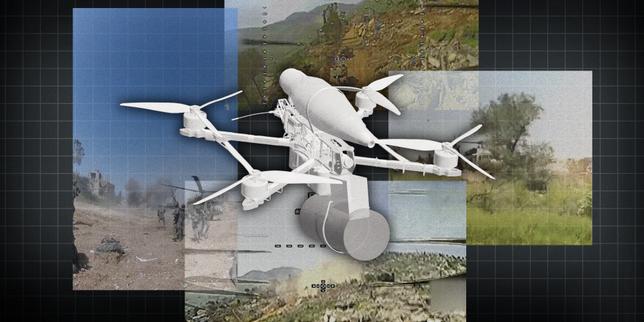
Let’s talk about the FPV drone. These are the racing drones you see hobbyists fly in parks, strapped with a rocket-propelled grenade (RPG) warhead. They cost about as much as a high-end smartphone.
Human rights groups claim these are "terror weapons" because they can fly through windows. Yes, they can. But would you rather have a drone fly through a window to take out a machine-gun nest, or have a T-72 tank fire a 125mm shell through the front door?
The drone is the most "humanitarian" weapon on the Sudanese battlefield today because it replaces the need for massive, indiscriminate kinetic force.
Imagine a scenario where the SAF detects an RSF unit hiding in a densely populated market in Omdurman. Without drones, the SAF has two choices:
- Send in infantry, leading to a bloody, chaotic firefight where stray bullets kill hundreds.
- Shell the entire market.
With a loitering munition, they can identify the specific vehicle and neutralize it with minimal collateral damage. To argue against this is to argue for the return of the meat-grinder tactics of the 20th century.
The Myth of the "Autonomous Killer"
One of the loudest screams in the "Drones are Bad" chorus is the fear of AI-driven, autonomous slaughter. This is a ghost story.
The drones being used in Sudan today are manually piloted. There is a human looking at a screen, a human holding a controller, and a human making the decision to pull the trigger. If civilians are being targeted—and they are—it is a deliberate war crime, not a technological glitch.
By focusing on the "threat of drones," we are letting the war criminals off the hook. We are blaming the tool for the hand that holds it. If an RSF commander uses a drone to target a hospital, he is a murderer. If he used a mortar to do the same thing, we wouldn’t be writing articles about "The Dangers of Ballistic Trajectories."
We are obsessed with the "how" because we are too cowardly to deal with the "who."
The Intelligence Gap
The real tragedy in Sudan isn't that there are drones in the sky; it's that there isn't enough high-fidelity intelligence to make those drones effective.
Most civilian casualties in drone strikes occur due to bad intelligence (SIGINT) or poor visual identification. Instead of calling for a "drone ban" that will never happen, the international community should be focused on how these tools are being integrated into command structures.
If you want to save lives, you train operators on Rules of Engagement (ROE). You provide the tools for better target identification. You don't try to strip away the only technology that offers a sliver of precision in a sea of chaos.
The Economic Reality of Modern War
War is a business of attrition. Sudan is a poor country. High-end jets are expensive to maintain. Tanks are fuel-hungry monsters. Drones are incredibly cost-effective.
This shift in economics means the war will last longer. That is the hard truth. When war is cheap, it doesn't end quickly. But a long, low-intensity war fought with precision tools is objectively less lethal to the general population than a short, high-intensity war fought with "dumb" heavy weaponry.
We saw this in the Siege of Sarajevo. We saw it in Grozny. When armies run out of precision options, they resort to "leveling the city." The presence of drones in Sudan is the only reason Khartoum still has standing buildings in some districts.
Stop Blaming the Hardware
The "Drones are Deadlier" narrative is a distraction. It’s a way for Western observers to feel superior about their "civilized" tech while condemning the "barbaric" use of the same tech by others.
If we want to stop the dying in Sudan, we need to address the political vacuum, the ethnic cleansing, and the flow of small arms and heavy artillery. The drones are a symptom of a shifting technological era, not the cause of the misery.
Actually, the drones are the only thing keeping the casualty counts from being ten times higher. They are the surgical scalpel in a room full of sledgehammers.
Stop asking how to get the drones out of the sky. Start asking why we are so terrified of the only weapon that actually requires a soldier to look his target in the eye before he kills them.
Identify the killer. Ignore the tool.