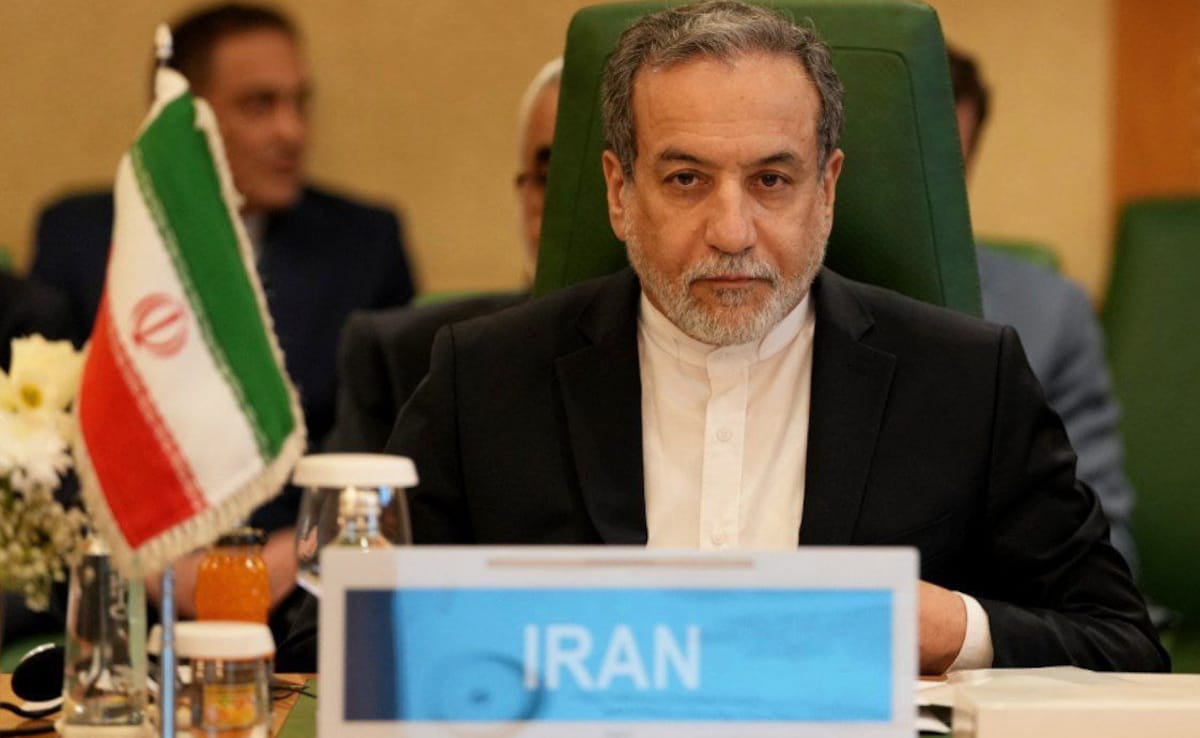
The Iranian government has issued its most direct ultimatum to Washington yet, demanding a ceasefire in Gaza or a permanent expansion of the conflict across the Lebanese border. This is not merely a war of words. It is a strategic calculation aimed at forcing the United States to restrain Israel by threatening a wider regional conflagration that would draw in Western assets from the Mediterranean to the Persian Gulf. Tehran’s message is clear: either the West secures a truce, or it must prepare for a multi-front war where Israel acts as the primary spark for a much larger fire.
The Brinkmanship of the Northern Front
For months, the border between Israel and Lebanon has simmered with controlled aggression. Now, that control is evaporating. Iran sees the increased Israeli strikes on Hezbollah positions not as a localized security measure, but as a systematic dismantling of its most prized regional asset. Hezbollah is the crown jewel of Iran’s "Axis of Resistance." If the group is pushed too far or faces an existential threat from an Israeli ground invasion, Tehran’s strategic depth in the Levant disappears.
To prevent this, Iranian officials are leveraging the only tool they believe the Biden administration fears during an election cycle: a total regional breakdown. By framing the choice as "Truce or War," Iran is attempting to shift the burden of de-escalation entirely onto American shoulders. They are betting that the White House will find the prospect of a direct conflict with Iranian proxies—which could spike oil prices and destabilize global markets—more unpalatable than forcing a diplomatic concession from Jerusalem.
The Mechanics of the Proxy Threat
Tehran does not fight its battles directly if it can help it. The "War via Israel" rhetoric refers to the idea that the United States is essentially funding and directing a campaign to neutralize Iranian influence. In response, Iran utilizes a network of decentralized militias. These groups do not require a formal declaration of war to cause chaos.
- Hezbollah's Arsenal: With over 150,000 rockets and precision-guided munitions, the group can overwhelm the Iron Dome.
- The Maritime Pressure Point: The Houthi rebels in Yemen have already shown how easily they can choke the Red Sea. A wider war would see these efforts intensified.
- Iraqi and Syrian Militias: These groups provide the "land bridge" necessary to move hardware and personnel from Iran to the Mediterranean coast.
Why the White House Cannot Simply Walk Away
The United States finds itself in a geopolitical vice. On one side, there is the ironclad commitment to Israeli security. On the other, there is a desperate need to avoid being dragged into another Middle Eastern quagmire that would deplete resources needed for the Indo-Pacific or Ukraine. Iran knows this. Every drone launch from Lebanon and every bellicose statement from Tehran is designed to test the elasticity of American patience.
The "truce" Iran demands is not just about stopping the bombs in Gaza. It is about a return to the status quo where Iran's influence remains unchallenged. If a ceasefire is reached, Hezbollah can claim victory by survival, and Iran retains its leverage. If the war continues, Iran feels it has no choice but to activate the rest of its network to ensure Israel pays a price high enough to stop the offensive.
The Intelligence Gap and Miscalculation
One of the greatest risks in this standoff is the potential for miscalculation. Both sides believe they understand the other's red lines, but those lines have become blurred. Israel views the return of its displaced citizens to the north as a non-negotiable sovereign requirement. Iran views the survival of Hezbollah’s military infrastructure as a non-negotiable strategic requirement. These two goals are fundamentally incompatible.
Washington’s diplomats have been shuttling between Beirut and Jerusalem trying to find a middle ground—perhaps a withdrawal of Hezbollah forces a few kilometers back from the border. However, these efforts are often undermined by the sheer scale of the animosity. A single stray missile hitting a high-value target could trigger the very war that both Tehran and Washington claim they want to avoid.
The Economic Shadow of a Wider Conflict
If the situation in Lebanon transitions from a border skirmish to a full-scale invasion, the economic ripples will be felt far beyond the Levant. We are talking about the potential closure of the Strait of Hormuz, a move Iran has threatened for decades but has rarely had the incentive to execute. In a total war scenario, that incentive changes.
Energy markets are currently pricing in a moderate level of risk. But a direct confrontation involving Iran would likely send crude prices into triple digits. This isn't just about the cost of gas at the pump; it’s about the cost of everything. Global shipping is already strained. Adding a major Mediterranean war to the existing Red Sea disruptions would break the back of international logistics for the foreseeable future.
The Role of Regional Players
Saudi Arabia, the UAE, and Qatar are watching this with growing alarm. While they have no love for Iran’s proxies, they are also terrified of a regional war that would incinerate the progress they have made in diversifying their economies. They have spent years trying to move away from being "war zones" and toward being global hubs for tourism and tech. A rain of missiles across the Middle East ends that dream instantly.
These nations are quietly pressuring both the U.S. and Iran to find an exit ramp. But Iran’s leadership is currently dominated by hardliners who view the current moment as a test of will. They believe the West is tired, divided, and unwilling to commit to a long-term fight.
The Deadlock of Diplomacy
Current diplomatic tracks are failing because they address the symptoms rather than the disease. Negotiating a few kilometers of buffer zone in Southern Lebanon is useless if the underlying tension between Tehran and Jerusalem remains at a boiling point. Iran’s "Truce or War" ultimatum is a blunt instrument, but it reflects a sophisticated understanding of the current global power vacuum.
The U.S. has attempted to use sanctions as a deterrent, but Iran has spent forty years learning how to live under—and circumvent—those sanctions. They have built an "economy of resistance" that, while painful for their population, allows the military and the Islamic Revolutionary Guard Corps (IRGC) to continue their operations unabated. Money is not the deterrent it used to be.
The Military Reality on the Ground
If Israel decides to move into Southern Lebanon, it will not be like the 2006 war. Hezbollah is better trained, better equipped, and battle-hardened from years of fighting in the Syrian Civil War. They have built an extensive tunnel network that makes the Gaza tunnels look like amateur hour. An Israeli ground incursion would be a brutal, slow-motion grind that would require a massive mobilization of reserves.
Iran's warning that the war would be "via Israel" is a subtle way of saying they will provide Hezbollah with every piece of advanced technology in their inventory, including anti-ship missiles and sophisticated drone swarms. They want to turn the Eastern Mediterranean into a graveyard for expensive military hardware.
The Illusion of a Contained War
There is a dangerous belief among some policy circles that this conflict can stay "contained." The history of the Middle East suggests otherwise. Conflict here has a way of leaking across borders, drawing in external powers, and radicalizing populations that were previously indifferent.
Tehran’s threat is a gamble that the United States will blink first. They are betting that the American public has no appetite for another intervention and that the political cost of a regional war is too high for any administration to bear. By pushing the "War via Israel" narrative, they are trying to paint the U.S. as the primary aggressor, even as their own proxies fire the first shots.
The window for a diplomatic solution is closing. As the rhetoric from Tehran sharpens, the military movements on the ground are accelerating. The choice presented—truce or war—is a false dichotomy designed to mask the fact that Iran has already decided to escalate if its regional interests are not protected.
The next few weeks will determine if the Middle East falls into a cycle of violence that could last for a generation. If the U.S. cannot find a way to balance its support for Israel with a realistic strategy to contain Iran, the "Long War" that Tehran is threatening will become a reality. This isn't a localized problem anymore. It is a global security crisis that is one mistake away from exploding.
Stop looking for a clean resolution where everyone wins. In this theater, victory is often defined simply by who has the most pieces left on the board when the dust settles. Tehran is counting on the fact that they are more willing to lose those pieces than the West is.