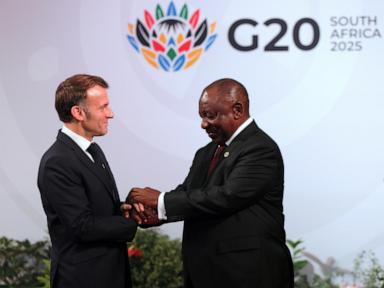
Donald Trump is trying to treat the G20 like a private club where he's the only one with a membership list. By barring South Africa from the upcoming 2026 summit in Florida, he’s not just picking a fight with Pretoria—he’s trying to rewrite the rules of global diplomacy on the fly. It won’t work, and the French are currently the loudest ones in the room saying so.
France’s ambassador to South Africa, David Martinon, recently made it clear that as far as Paris is concerned, South Africa is an "equal, full-fledged member" of the G20. He didn't mince words. Speaking in Johannesburg, Martinon pointed out that no single host country has the authority to unilaterally strip a sovereign nation of its seat at a table it helped build.
You’ve likely seen the headlines. Trump’s beef with South Africa isn't new, but it’s reached a fever pitch. He’s cited everything from "white genocide" conspiracy theories to Pretoria’s refusal to hand over the G20 presidency to a US embassy official during the 2025 transition. Now, he’s following through with a ban that feels more like a personal vendetta than a strategic foreign policy move.
The G20 is a consensus group not a kingdom
The biggest thing Trump is getting wrong is how the G20 actually functions. It’s an informal forum built on consensus. It doesn't have a charter, it doesn't have a permanent secretariat, and most importantly, it doesn't have a "bouncer" role for the host.
When South Africa held the presidency in 2025, they focused on "Solidarity, Equality and Sustainability." Trump hated it. He boycotted the Johannesburg summit and has since been trying to scrub South Africa’s influence from the 2026 agenda. But here’s the reality: if the US successfully blocks South Africa, it breaks the very foundation of the G20. If one host can ban a member they don't like, what stops Brazil from banning the US? Or India from banning China?
Ambassador Martinon’s intervention is vital because it reminds everyone that the G20 is about collective economic stability, not a popularity contest. France is essentially telling the White House that if they want to lead the G20 in 2026, they have to invite the whole group, not just the people they want to play golf with at Doral.
Why the French are standing up for Pretoria
It's not just about being "nice" to South Africa. France has a massive stake in keeping South Africa at the table for a few specific reasons.
- Multilateralism is on life support: France under Macron has positioned itself as the defender of the "rules-based order." If Trump successfully turns the G20 into a "G19 + Whoever Trump Likes," the institution loses all credibility.
- The G7 vs. G20 dynamic: France is hosting the G7 in 2026. They’ve already faced heat for "disinviting" President Cyril Ramaphosa from the G7 under US pressure (though they officially claim it was about a "streamlined" summit). Martinon’s vocal support for South Africa in the G20 is partly damage control and partly a line in the sand.
- Shared Priorities: France and South Africa actually agree on a lot when it comes to climate finance, debt relief for the Global South, and reforming international tax laws. If South Africa isn't in Florida, those topics likely die on the vine.
The white genocide narrative and the handover spat
Trump’s justification for the ban is a mix of ideological grievances and petty procedural complaints. He’s claimed the South African government is "killing white people" and seizing farms—narratives that have been debunked by international observers but play well to his domestic base.
Then there’s the "handover" issue. Usually, the outgoing G20 president hands the symbolic gavel to the incoming leader. In 2025, because Trump wasn't there, South Africa handed the instruments of the presidency to a US embassy official in Pretoria. Trump called this a "refusal to acknowledge" US leadership. It sounds like a scene from a high school drama, but it's currently dictating the movement of global markets.
What happens if the US holds firm
If the US actually prevents South African diplomats from entering Florida or blocks them from G20 finance meetings—which they’ve already started doing—we’re looking at a fractured summit.
Other members like Brazil, China, and even "Team Europe" (Germany, Italy, and the EU) have signaled they aren't okay with this. You could see a situation where other leaders boycott the Florida summit in solidarity. Or, more likely, they'll attend but refuse to sign any joint communiqué that doesn't acknowledge South Africa's status.
Basically, by trying to exclude one country, Trump might end up making himself the outsider.
Next steps for the G20 standoff
Don't expect South Africa to back down. They’ve already appointed Roelf Meyer—a veteran negotiator who helped end apartheid—as the new ambassador to the US. It’s a genius move. Meyer knows how to talk to people who fundamentally disagree with him.
If you’re watching this play out, keep an eye on these specific markers:
- Visa denials: Watch if the US State Department officially denies visas to the South African delegation for the ministerial meetings leading up to the December summit.
- Joint statements: Look for "G19" statements. If the other members start issuing documents without the US, the G20 is effectively dead.
- The French "middleman" role: Watch for Macron to try and broker a "guest" status compromise that saves face for Trump while keeping Ramaphosa in the room.
The G20 was created to prevent global economic collapse. Turning it into a weapon for bilateral bullying is the quickest way to ensure it fails its original mission. South Africa isn't just a guest; they're a founder. You can't just delete a founder because they didn't hand you a gavel exactly the way you wanted.