The coffee in your hand is getting more expensive, and the reason has nothing to do with the beans, the roasting process, or the barista’s hourly wage. It has everything to do with a jagged strip of water tucked between the mountainous coast of Oman and the desert flats of Iran.
Ninety miles long. Only twenty-one miles wide at its narrowest pinch point.
The Strait of Hormuz is the world’s jugular vein. When it constricts, the global economy gasps for air. Right now, the U.S. Energy Information Administration (EIA) is operating under a grim, quiet assumption: that this vital artery will remain obstructed, if not entirely severed, through the end of May.
To understand why this matters to someone sitting in a suburban living room thousands of miles away, you have to look past the spreadsheets. You have to look at the tankers.
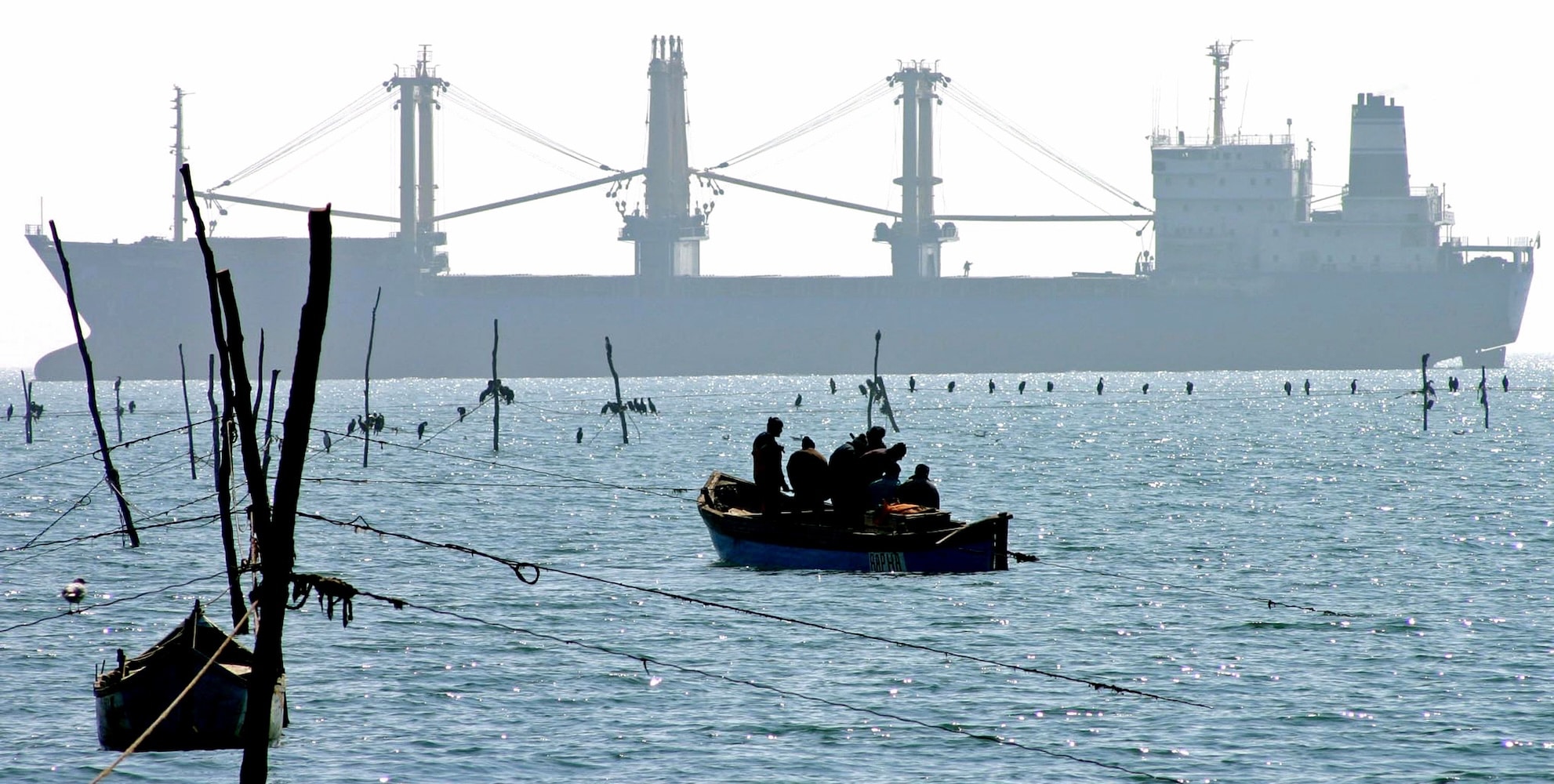
Imagine a vessel the size of the Empire State Building, laden with two million barrels of crude oil. It moves with a slow, terrifying momentum. Now, picture dozens of these behemoths—steel islands carrying the lifeblood of modern civilization—stalled in the water. They are waiting for a green light that isn't coming. They are watching the horizon for threats that are all too real.
The Math of Anxiety
When the EIA adjusts its "base case" projections, it isn't just playing with numbers on a screen. It is signaling a shift in the reality of how we power our lives. By assuming the Strait stays shut or severely restricted through late May, the government is essentially prepping the market for a supply shock.
One-fifth of the world’s total oil consumption passes through this single, narrow corridor.
Every day the passage is blocked, the pressure builds. It is a hydraulic effect. If you stop the flow at the source, the pressure doesn't just vanish; it ripples outward, inflating the price of plastic, the cost of shipping a container from Shanghai to Los Angeles, and the price of the fuel used to heat homes in the Northeast.
Consider a hypothetical logistics manager named Elias. Elias doesn't work for an oil company. He manages a fleet for a regional grocery distributor. For Elias, the "Strait of Hormuz" isn't a geopolitical concept. It is a line item that is currently eating his quarterly budget alive. Because the EIA assumes the closure will persist, Elias has to tell his boss that shipping rates are going up. Again. Those costs eventually land on the price tag of a gallon of milk.
This is how a conflict in a distant sea becomes a silent tax on your checking account.
The Ghost of 1973
History isn't just a record of what happened; it's a blueprint for what could happen. We have seen this movie before. In the 1970s, the world learned exactly what happens when the energy tap is turned off. Lines at gas stations stretched for blocks. Fistfights broke out at pumps. The economy didn't just slow down; it seized.
Today, we like to think we are more resilient. We have renewables. We have domestic shale. We have the Strategic Petroleum Reserve.
But global markets are interconnected in ways the 1970s could never have imagined. A disruption in the Strait doesn't just affect the oil coming to the U.S.; it affects the global pool of energy. If Japan or China can't get their oil through Hormuz, they start outbidding everyone else for the oil that is available elsewhere. The price goes up for everyone. Total synchronization.
The EIA’s assumption is a calculated bet on instability. They are looking at the regional tensions—the drone strikes, the naval skirmishes, the diplomatic stalemates—and concluding that there is no quick fix. There is no "back to normal" by next week.
We are living in the "May Scenario."
The Invisible Fleet
While the world watches the headlines, there is an invisible war of nerves happening on the water. Captains of these massive tankers are navigating a nightmare.
Think about the sheer stress of commanding a billion-dollar cargo through a zone where a single mistake or a single localized strike could cause an environmental and economic catastrophe. Insurance companies are the first to feel it. They have hiked "war risk" premiums to astronomical levels.
For every barrel of oil that eventually makes it through, you are paying for the insurance, the rerouting, and the literal hazard pay of the crew.
It is a game of high-stakes chicken played with the world’s thermostat.
But why May? Why that specific date?
The EIA isn't guessing. They are looking at the seasonal demand curve. As the Northern Hemisphere moves into summer, the demand for cooling and transportation traditionally spikes. If the Strait is still restricted when the summer heat hits, the "buffer" in the system disappears. We go from a period of high prices to a period of genuine scarcity.
The Fragility of the "Just-in-Time" World
We have built a civilization on the assumption of frictionless movement. We expect things to be there when we need them. We expect the lights to turn on and the planes to fly.
The assumption that the Strait will remain shut exposes the profound fragility of this arrangement. We are dependent on a twenty-one-mile-wide gap of water that is currently being used as a geopolitical lever.
It forces a hard question: What happens if the late May deadline passes and the ships are still sitting still?
If the blockage extends into June or July, the EIA’s "base case" becomes a "worst-case." The global inventory of oil—the rainy-day fund held by nations—begins to drain. Once those tanks go dry, the price is no longer determined by supply and demand. It is determined by desperation.
We aren't there yet. But the government is telling us, in the driest possible terms, that we are standing on the edge of that possibility.
The Cost of the Wait
Every day the sun rises over the Strait of Hormuz, and every day the tankers remain anchored or diverted around the Cape of Good Hope, the bill grows.
Rerouting a ship around Africa adds weeks to the journey. It burns thousands of tons of extra fuel. It ties up ships that should be elsewhere, creating a massive traffic jam in the global supply chain.
You don't see the ships. You don't see the Strait. You don't see the EIA analysts sitting in windowless rooms in Washington, D.C., adjusting their models.
But you feel it. You feel it in the creeping anxiety of the evening news. You feel it in the way the world feels just a little bit more expensive and a little bit less stable than it did yesterday.
The Strait of Hormuz is a long way from your driveway. Yet, the fate of your summer, the health of your 401(k), and the stability of the global order are currently suspended in those twenty-one miles of water, waiting for a resolution that remains, for now, just out of reach.
The engines are idling. The world is holding its breath. Late May can't come soon enough.