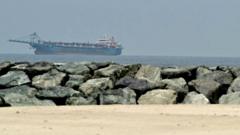
Donald Trump just put the global economy on a collision course with a steel wall. By ordering the US Navy to blockade Iranian ports and sections of the Strait of Hormuz, the administration is betting that total isolation will force Tehran to blink. It's a massive gamble. It's also a move that ignores how much the world has changed since the last time a superpower tried to choke off a nation's air supply.
The goal seems simple enough on paper. You stop the ships, you stop the money, you stop the nuclear program. But the reality on the water today, April 13, 2026, is a chaotic mess of "shadow fleets," false flags, and desperate geopolitical maneuvering. This isn't the 1962 Cuban Missile Crisis. This is a high-stakes game of maritime whack-a-mole where the hammer is a billion-dollar destroyer and the mole is a rusty tanker flying the flag of Malawi.
The Physicality of the Blockade
Setting up a blockade isn't just about parking a few ships in a row. It’s an exhausting, 24/7 logistical nightmare. US Central Command (CENTCOM) says they’ll be "impartial," targeting everything entering or leaving Iranian waters while supposedly letting other traffic through the Strait. Sounds clean. It isn't.
The Strait of Hormuz is barely 21 miles wide at its narrowest point. When you factor in the shipping lanes, you’re looking at a space where one wrong move by a nervous ensign leads to a global catastrophe. Iran has already spent the last year seeding these waters with mines. They aren't just sitting back. Their Revolutionary Guard is currently playing a game of chicken with US destroyers, claiming "full control" while the US Navy tries to clear paths for non-Iranian vessels.
The Shadow Fleet Problem
If you think a blockade means Iran’s oil exports drop to zero, you haven't been paying attention to the "shadow fleet." For years, Iran has refined the art of the ghost ship. We're talking about hundreds of aging tankers with obscured ownership that turn off their transponders and engage in ship-to-ship transfers in the middle of the night.
- False Flags: Just today, a tanker named the Rich Starry turned away from the Strait. It was flying a Malawi flag—a landlocked country that hasn't seen an ocean in its life.
- The Chinese Factor: China is still the primary customer. They aren't exactly eager to help the US enforce a blockade that jacks up their own energy costs.
- Deterrence: Iran's military is already threatening that if their ports aren't safe, "no port in the region will be safe." That's a direct threat to Saudi and Emirati terminals.
The US is trying to use a physical solution for a digital-age smuggling problem. You can block a port, but can you block every square inch of the Persian Gulf? Not without enough ships to stretch from Dubai to Bandar Abbas.
Why This Gamble is Different in 2026
The context of this blockade is what makes it so dangerous. This isn't happening in a vacuum. We're six weeks into a conflict that has already seen the assassination of Ali Khamenei and over 2,000 airstrikes. The Iranian regime is cornered. When a regime feels it has nothing left to lose, traditional "maximum pressure" doesn't lead to a seat at the negotiating table; it leads to a "burn the house down" mentality.
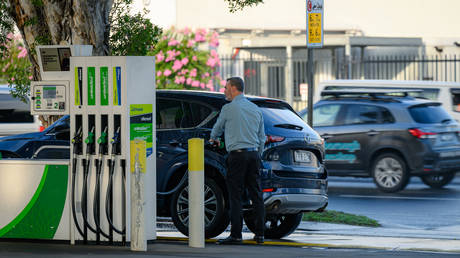
Oil prices are already screaming. OPEC production plummeted by nearly 8 million barrels per day last month. If this blockade stays tight, you’re not just looking at expensive gas—you’re looking at a global inflationary spiral that could make the 2022 crisis look like a minor hiccup.
The Brinkmanship of JD Vance and the Negotiators
Over the weekend in Islamabad, Vice President JD Vance tried to draw a hard line. The demands were steep: end all uranium enrichment, dismantle facilities, and stop funding regional proxies like the Houthis and Hezbollah. Iran’s negotiators basically laughed them out of the room, calling the demands "maximalism."
The U.S. thinks the blockade is a lever to get Iran back to the table. Iran thinks the blockade is an act of "piracy" that justifies total war. This disconnect is where the real danger lies. One side thinks they're applying pressure; the other thinks they're fighting for survival.
What Happens Next
Don't expect a quick resolution. Blockades are notoriously slow to produce political change and incredibly fast at causing humanitarian disasters. If you're watching the markets, keep your eye on the "insurance" premiums for maritime shipping. If those keep climbing, the blockade is failing even if no shots are fired.
You should watch for two specific indicators over the next 72 hours:
- Mine-clearing progress: If the US Navy can't safely clear the Strait, the blockade effectively blocks everyone, including US allies.
- Iranian "levers": Iran hinted they have "untouched levers." This usually means cyberattacks on regional infrastructure or activating sleeper cells in neighboring Gulf states.
The US Navy is the finest in the world, but it can't sail through a computer virus or stop a missile fired from a nondescript truck in the Iranian mountains. This blockade is a 20th-century tactic being used in a 21st-century war. It’s bold, it’s aggressive, and it might just be the spark that turns a regional conflict into something much, much worse. Keep your eyes on the transponder data and the price of Brent crude. The next few days will tell us if this gamble pays off or if the house is about to go bust.