The shovel hits the earth with a hollow thud that vibrates up through your wrists. It is five o’clock in the morning. The dew is thick enough to soak through your leather boots, and the air smells of crushed damp grass and woodsmoke. You are looking at a mound of fresh, dark soil—the third one this week—ruining the symmetry of a lawn you spent all spring nurturing.
For the city dweller, this is a minor annoyance, a smudge on a weekend aesthetic. But for those who live where the pavement ends, that pile of dirt is the opening shot in a quiet, subterranean war.
Recently, a series of photographs began circulating on social media. They weren't of sunsets or sourdough starters. They were images of moles, caught and displayed, sometimes in rows, sometimes dangling from the silver jaws of a trap. The reaction was a digital schism. On one side, the horrified urbanites cried cruelty, their screens filled with the "senseless" killing of a creature that looks, in the right light, like a plush toy. On the other side, the rural pragmatists shrugged, citing the necessity of land management and the ancient, unsentimental laws of the farm.
We have become a culture deeply separated from the dirt under our fingernails. We love nature in the abstract—as a desktop wallpaper or a high-definition documentary narrated by a soothing British voice—but we are increasingly terrified of its messy, violent realities.
The Architect of the Dark
To understand the conflict, you have to understand the mole. It is a creature of singular, terrifying purpose. A mole is not a rodent; it is an insectivore, a tiny, high-metabolism engine that must consume nearly its own body weight in earthworms and grubs every single day to avoid starving to death.
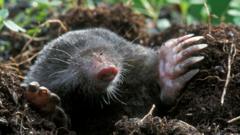
It lives in a world of absolute sensory deprivation, guided by a nose that can "smell" in stereo and fur that can lay flat in any direction, allowing it to reverse through tunnels like a velvet piston. Its front paws are not feet; they are oars, tipped with extra bones to widen the stroke. It swims through the earth.
When you see a molehill, you aren't just seeing a hole. You are seeing the tailings of a mine. A single mole can tunnel up to 15 feet in an hour. In a week, your garden isn't just a garden anymore. It is a hollowed-out shell, a honeycomb of air pockets that can collapse under the weight of a footstep or drain the water away from the roots of your prized hydrangeas.
Consider the farmer. To a farmer, those tunnels are a direct threat to the machinery that feeds a family. A mower hitting a hidden mound can shatter a blade, costing thousands in repairs and days of lost labor. To the shepherd, a molehill in a pasture is a broken leg waiting to happen to a ewe. This isn't about hatred. It’s about the friction between a human trying to carve out a living and a wild thing trying to eat.
The Digital Great Divide
The outrage sparked by those viral photos didn't happen because people are soft. It happened because of a fundamental shift in how we perceive our place in the ecosystem.
For the person living in a high-rise, a mole is a character from a children’s book—a shy, bumbling gentleman in a waistcoat. When they see a photo of a dead mole, they see the murder of a character. They don't see the four months of ruined crops, the structural damage to a historic stone wall, or the infestation of chafer grubs that the mole was chasing in the first place.
But the country person sees something else. They see a task completed. In rural communities, there is a tradition of the "mole-catcher," a trade that dates back centuries. It was once a position of high status. The mole-catcher was a shadow-walker, a man who understood the secret ley lines of the field. He didn't use poison, which leeches into the groundwater and kills the owls that eat the poisoned carcasses. He used mechanical traps—swift, decisive, and localized.
When those photos are posted online, the two worlds collide without a translator. The rural user posts it as a sign of a job well done, a protective measure for their livelihood. The urban user sees it as a macabre trophy.
The middle ground is a lonely place. It’s the realization that nature is not a Disney set. It is a zero-sum game of resources. Every time we build a house, plant a rose bush, or pave a road, we are declaring war on the things that lived there first. The only difference is that some of us choose to look at the casualties, and some of us prefer to pretend they don't exist.
The Weight of the Choice
If you find yourself standing over a molehill, shovel in hand, you are forced to make a choice. You can try the "humane" deterrents. You can buy the vibrating sonic stakes that hum in the ground, or the castor oil pellets that claim to smell so foul the mole will pack its bags and move to the neighbor’s yard.
Most of the time, these don't work. The mole simply digs deeper, or moves three feet to the left.
Then comes the harder path. You can live with the destruction. You can watch your lawn turn into a topographical map of a mountain range. You can accept that the land you thought you owned actually belongs to the velvet ghost in the dark. There is a certain beauty in that surrender. It is an acknowledgment that we are guests in the wild, even in our own backyards.
But for many, surrender isn't an option. If the mole is undermining the foundation of a barn or destroying a commercial nursery, the "cruelty" of the trap becomes the "mercy" of the harvest.
The real tragedy isn't the death of a mole. The tragedy is our inability to talk to one another about why it happens. We have traded nuanced understanding for 280-character condemnations. We have forgotten that for someone to have a perfectly manicured park to walk in or a reliable source of organic vegetables, someone else had to manage the "pests" that would have destroyed them.
Beneath the Surface
The next time you see a photo that makes you flinch, or a mound of dirt that makes you curse, remember the scale of the world beneath you. A mole’s life is a frantic, short-lived burst of energy. They rarely live past three years. They are solitary, fierce, and entirely indifferent to our property lines.
The farmer isn't a villain for protecting his soil, and the activist isn't a fool for valuing a life. They are simply looking at different parts of the same difficult truth. We are all trying to survive in a world that is constantly trying to reclaim itself.
The shovel stays in the shed for now. You walk back toward the house, your boots leaving heavy prints in the mud. Behind you, beneath the clover and the rye, a pair of powerful, pink-fleshed hands continue to paddle through the dark, oblivious to the storm of human opinions raging in the air above.
The earth heaves, just a fraction of an inch. Another mound rises. The war continues, silent and deep, while the rest of the world argues behind glowing screens.