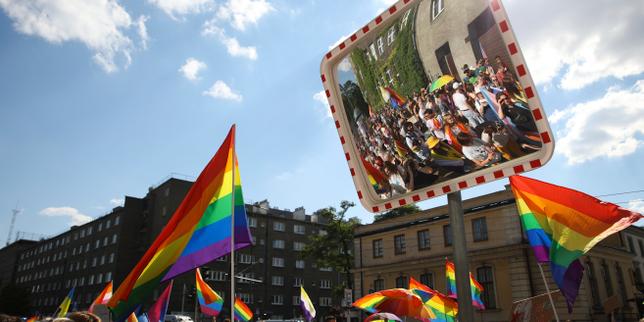
The headlines are shouting about a revolution in Warsaw. The media is desperate to frame a single administrative decision by City Hall as a tectonic shift in Polish civil rights. They want you to believe that because Warsaw recognized a same-sex marriage performed abroad, the gates of equality have swung wide.
They are wrong.
This isn't a victory. It’s a clerical anomaly. By celebrating this as a "first," activists and journalists are ignoring the brutal reality of the Polish legal system and setting a dangerous precedent for false hope. When we mistake a bureaucratic loophole for a structural change, we stop fighting for the actual legislation that matters.
The Sovereignty of the Rubber Stamp
Let’s look at what actually happened. A couple got married elsewhere in the European Union. They returned to Poland. Warsaw officials registered their status. The "lazy consensus" says this is a bold defiance of the national government’s conservative stance.
In reality, this is a conflict between local administrative zeal and national statutory law. Under Article 18 of the Polish Constitution, marriage is defined as a union between a man and a woman. No municipal clerk has the power to override the Constitution. What Warsaw has done is create a legal "ghost" status. These individuals might have a piece of paper from the city, but try using that paper to file joint taxes, inherit property without a 20% tax hit, or make medical decisions in a hospital in Kraków or Lublin.
The city is handing out umbrellas in a hurricane and calling it a weather control system.
The EU Court of Justice Trap
The optimist’s argument usually rests on the Coman case (C-673/16). The Court of Justice of the European Union (CJEU) ruled that EU countries must recognize same-sex marriages for the sole purpose of granting residency rights to non-EU spouses.
Here is the nuance the "breakthrough" articles missed: the CJEU does not force member states to legalize same-sex marriage or even grant the same social and tax benefits as heterosexual couples. Poland has consistently used the "public policy exception" to block the full transcription of foreign marriage certificates into the Polish civil registry (miejscowy urząd stanu cywilnego).
When Warsaw "recognizes" a marriage, it is often doing so through a workaround that doesn't actually trigger the full suite of rights associated with marriage. It is a symbolic transcription. Symbols don't pay the bills. Symbols don't give you standing in a family court.
The High Cost of Symbolic Victories
I have seen movements stall because they settled for "recognition" instead of "rights." This is the same trap. By focusing on these isolated administrative wins, the pressure on the Sejm (the Polish Parliament) to pass a comprehensive Civil Partnership Act evaporates.
Politicians can point to Warsaw and say, "See? The system is flexible. We don't need new laws."
This is a classic diversion tactic. If you want to see what actual progress looks like, look at the European Court of Human Rights (ECHR) ruling in Przybyszewska and Others v. Poland. The court explicitly told Poland it has an obligation to provide a legal framework for recognizing same-sex relationships. That is a mandate. Warsaw’s move is a press release.
The Administrative Purgatory
Imagine a scenario where a couple relies on this Warsaw recognition to organize their lives. They buy a home. they raise a child. Then, a change in city leadership or a direct order from the provincial governor (wojewoda) invalidates the registration. Because there is no underlying national law supporting the city's move, the couple is plunged into a legal void.
This isn't just a theoretical risk. In Poland, the Naczelny Sąd Administracyjny (Supreme Administrative Court) has previously ruled that transcription of a foreign same-sex marriage certificate is "incompatible with the principles of the legal order of the Republic of Poland."
Warsaw is essentially encouraging citizens to build their lives on shifting sand. It is professional malpractice to call this a "recognition" without mentioning that it could be overturned by a single court order from a higher jurisdiction.
Stop Asking if it’s Progress
People always ask: "Isn't some progress better than none?"
No. Not when that progress is a facade that masks the lack of institutional protection. If you are a same-sex couple in Poland, you are better off seeking a comprehensive private legal contract—wills, powers of attorney, and co-ownership agreements—than relying on a symbolic nod from a mayor.
The "controversial truth" is that Warsaw's move might actually make things harder. It provokes a backlash from the conservative base without providing any real legal armor for the people at the center of the storm. It turns human lives into a partisan football for a week of news cycles.
The Data of Disappointment
If we look at the ILGA-Europe Rainbow Map, Poland consistently ranks at the bottom of the EU for LGBTQ+ rights. Why? Because the legal infrastructure is stagnant. You don't move the needle on a continental index by having one city clerk sign a paper. You move it by changing the Civil Code.
The competitor’s article paints a picture of a domino falling. It suggests that where Warsaw goes, Poland follows. This ignores the deep urban-rural divide that defines Polish politics. Warsaw is a liberal island in a deeply traditional sea. A "win" in the capital often triggers a defensive "lockdown" in the rest of the country.
The Strategy of Direct Assault
We need to stop celebrating the crumbs falling from the table of local government. If the goal is equality, the target must be the national registry system.
- Legislative Pressure: Force a vote on the Civil Partnership bill. Let every member of parliament go on the record.
- Litigation: Continue using the ECHR to pile up fines and international pressure on the state, not just individual cities.
- Economic Arguments: Highlight the "brain drain" of talented Poles moving to Berlin or London because they can't get a mortgage with their partner at home.
Warsaw's decision is a distraction from the fact that, legally speaking, nothing changed yesterday. The couples are still vulnerable. The laws are still discriminatory. The Constitution remains a wall.
Until the national government amends the registry rules, these "recognitions" are nothing more than a city-sponsored performance. Don't applaud a performance when you should be demanding a policy.
Get off the victory lap. There is no track beneath your feet.