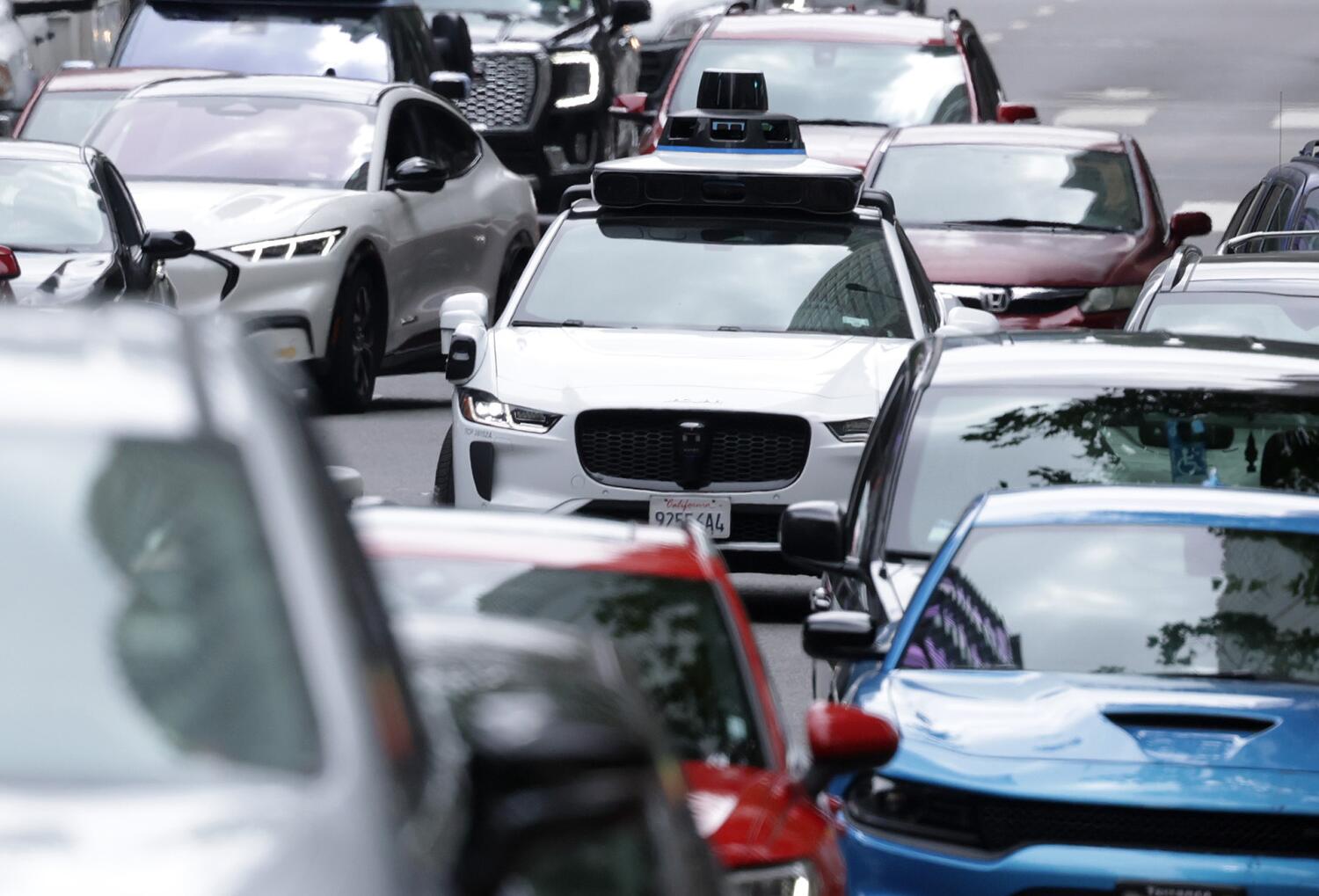
Waymo just issued a massive software recall for nearly its entire fleet. If you've been following the self-driving car saga, you know the big players usually try to bury these headlines under talk of "safety milestones." Not this time. The Alphabet-owned company had to admit that its software couldn't handle a basic reality of driving—standing water. Specifically, the cars were failing to navigate flooded roads, leading to stalled vehicles and messy traffic jams. It’s a wake-up call for anyone who thinks we’re just a few months away from total autonomy.
The recall affects every vehicle running a specific version of the Waymo Driver software. We're talking about thousands of Jaguar I-PACE SUVs across Phoenix, San Francisco, and Los Angeles. While no injuries occurred, the optics are terrible. Imagine a multi-million dollar sensor suite getting stumped by a deep puddle. It sounds like a bad joke, but it’s the current state of the industry.
The Puddle Problem That Grounded a Fleet
Software is great at following rules. It’s terrible at nuance. Most of us see a flooded street and make a split-second judgment based on the curb height or the behavior of the car in front of us. Waymo’s AI struggled with that logic. In several documented instances, the vehicles drove into water that was too deep for their mechanical components or simply froze in the middle of the road because the sensors became "confused" by reflections and water depth.
This isn't just about a wet carpet. When a robotaxi stalls in a flood, it becomes a literal roadblock. Emergency vehicles can't get through. Other drivers have to swerve into oncoming traffic to get around the dead autonomous "brain." The National Highway Traffic Safety Administration (NHTSA) doesn't take kindly to cars that turn into stationary obstacles during a storm.
The technical failure happened because the perception system misinterpreted the height of the road surface. Water acts like a mirror for LiDAR. It bounces the laser beams away rather than returning them to the sensor. This creates a "black hole" in the car's digital map. If the software isn't programmed to recognize that a sudden lack of data means "danger: water," it just keeps rolling until the tailpipe—or the battery—is submerged.
Why This Recall Is Different From a Typical Car Fix
When Ford or Toyota recalls a car, you drive to a dealership. You wait in a plastic chair, drink bad coffee, and eventually get a new bolt or a brake pad. Waymo’s recall is a different beast. It’s a "software-defined" recall. Most of the fix happens over the air (OTA).
Waymo pushed a patch to its fleet to improve how the "Driver" identifies and reacts to standing water. They've updated the logic to be more conservative. If the car suspects a flood, it’s now supposed to pull over or find a different route entirely rather than trying to forge the river.
However, "OTA" doesn't mean "instant." The company still had to pull vehicles from the road to verify the update worked and to check for physical damage from previous water encounters. They’re basically babysitting the fleet while the new code settles in. It shows a massive gap in how we think about vehicle maintenance. The hardware was fine; the "eyes" were just seeing things that weren't there—or failing to see things that were.
The Reality Check for Level 4 Autonomy
Everyone loves to talk about Level 4 autonomy. That’s the stage where the car does everything within a specific area. Waymo is the leader here. But this flooding incident highlights the "edge case" nightmare. Developers spend 90% of their time on 10% of the problems. Most driving is easy. Go straight. Stop at red. Turn at green.
The remaining 10% involves things like heavy rain, construction workers using hand signals, or a street that looks like a pond. This recall proves that even with billions of miles of simulated driving, the real world still finds ways to break the code. If a car can't handle a San Francisco rainstorm, how is it supposed to survive a Chicago blizzard or a Florida hurricane?
The Data Gap
- Waymo’s sensors are top-tier, but they're calibrated for "normal" conditions.
- Heavy rain creates "noise" in LiDAR and Radar data.
- Refraction from water surfaces leads to false positives or total sensor blindness.
We have to stop pretending these cars are perfect. They're learners. Right now, they're in the "toddler" phase of understanding weather. They can walk on a flat, dry floor, but give them a slippery rug and they faceplant.
NHTSA is Watching Closer Than Ever
Don't think the regulators are sitting back. The NHTSA has been breathing down the necks of Tesla, Cruise, and Waymo with increasing intensity. This recall wasn't just a voluntary "hey, we'll fix this" moment. It was a preemptive strike to avoid a formal investigation that could have grounded the entire fleet indefinitely.
After the Cruise incident in San Francisco—where a pedestrian was dragged by a robotaxi—the tolerance for "learning on the fly" has vanished. Cities are tired of being laboratories. Residents are tired of being test subjects. Every time a Waymo stalls in a puddle, it gives fuel to the critics who want to ban autonomous vehicles from city streets entirely.
Waymo had to be transparent here. They shared the data. They admitted the software flaw. That’s a move toward building trust, but the trust is fragile. One more high-profile stall during a weather event could lead to local governments Revoking permits.
How to Handle a Robotaxi in Bad Weather
If you're a regular rider or just someone sharing the road with these things, you need a plan. Don't assume the robot sees what you see.
First, if it’s pouring rain, maybe skip the Waymo. It’s cool tech, but your human brain is still better at judging if a dip in the road is two inches or two feet deep. If you are inside a Waymo and it starts heading toward a flooded area, use the in-app support immediately. Don't wait for the car to figure it out.
Second, if you're driving your own car and you see a Waymo stopped with its hazards on near water, give it a wide berth. These cars are programmed to "fail safe." That usually means stopping dead in their tracks. They won't move until a remote operator takes over or the software clears the error. Don't get stuck behind a "safe" robot that’s actually a 5,000-pound brick.
Moving Beyond the Software Patch
The fix for this isn't just better code. It might require hardware changes. Some engineers argue that we need better ground-penetrating radar to truly understand what's happening beneath a water surface. Others think we need more cameras with polarized filters to cut through the glare.
Waymo is sticking with its current sensor suite for now. They believe the software can be trained to "hallucinate" the road correctly even when the data is messy. It’s a bold bet. If next winter brings more floods and more recalls, the company might have to rethink the entire design of the Waymo Driver.
The industry is at a crossroads. We're moving away from the "move fast and break things" era. Now, it's "move slowly and don't get stuck in a puddle." It's less exciting, but it's the only way people will actually feel safe enough to let a computer take the wheel during a storm.
Check your app for service interruptions if you're in a high-risk flood zone. Waymo is still limiting some geofenced areas until they're 100% sure the patch holds. Stay alert, keep your eyes on the road, and remember that even the smartest car on earth can still be defeated by a big bucket of rain.