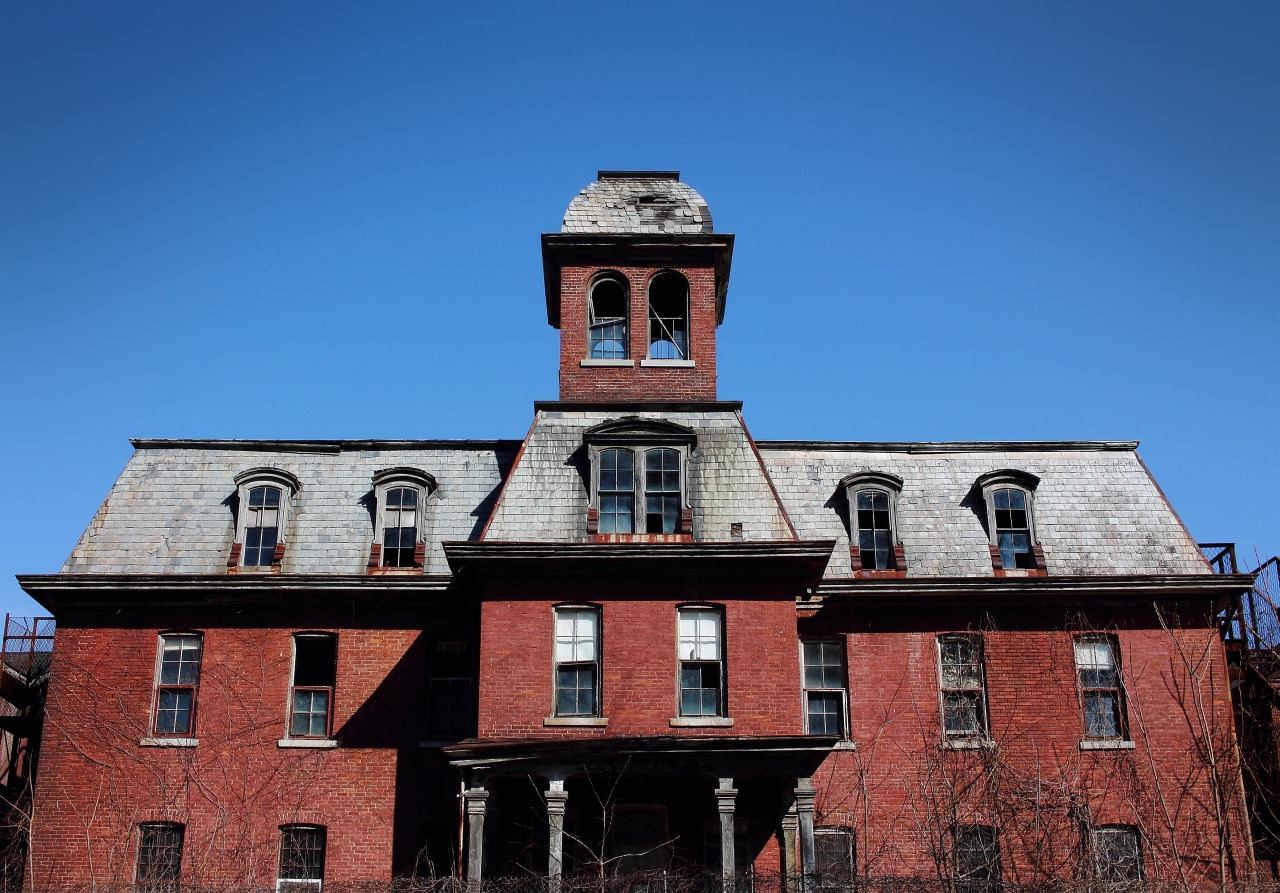
Honestly, if you drive through the Finger Lakes region of New York, you might miss it. The Willard Asylum—or the Willard Asylum for the Chronic Insane, to use its heavy, Victorian-era name—is tucked away on the eastern shores of Seneca Lake. It's a place that feels like it’s holding its breath.
People love to talk about "haunted" asylums. They want the ghost stories and the jump scares. But Willard? The real story is way more human, and frankly, way more heartbreaking than any campfire tale. It started as a noble experiment in 1869. The idea was simple: get the mentally ill out of the horrific county poorhouses where they were chained up in basements and give them a place with fresh air and dignity.
The First Patient and the Chicken Crates
Mary Rote. That was her name. She was the very first person to walk through those doors on October 13, 1869.
She arrived in chains. Before Willard, she had spent ten years locked in a cell in a county almshouse, never wearing clothes, just huddled under a blanket. When she got to Willard, they took the chains off. They gave her a room. They gave her clothes. For a while, the Willard Asylum was the gold standard for "moral treatment."
The doctors then believed in the Kirkbride Plan. This was a theory by Dr. Thomas Story Kirkbride that beautiful architecture and sunlight could actually cure insanity. So, they built these massive, ornate brick buildings with long wings to let the sun in.
It wasn't just a hospital; it was a self-sustaining city. Patients ran the farm. They grew their own vegetables, raised pigs, and even had a bowling alley and a movie theater. By the early 1900s, there were over 2,000 people living there. But as the population grew, the "moral treatment" started to crack.
The Suitcases in the Attic
Most people only know about Willard because of the suitcases. In 1995, when the facility finally closed for good, an employee named Beverly Courtwright went up into the attic of the Chapin House.
She found 427 suitcases.
They weren't just luggage; they were time capsules. When patients were admitted between 1910 and 1960, they brought things they thought they’d need for a short stay. A newspaper clipping about a "Smuggling Plot" from a man named Earl B. A clown doll belonging to a woman named Virginia W. Some bags had fancy dresses, tea sets, and photographs of families who never came back for them.
The staff at Willard Asylum Willard New York couldn't bring themselves to throw these items away. They carefully tagged them and moved them to the attic when the owners died. Most of these people were buried across the street in the cemetery, their graves marked only by small concrete blocks with numbers on them. No names. Just digits.
The New York State Museum eventually took the cases. If you ever see the photos taken by Jon Crispin, who spent years documenting the contents, it's a gut punch. You realize these weren't "inmates." They were people who liked to sew, who read the news, and who hoped they were just passing through.
Why the Willard Asylum Still Matters
By the mid-20th century, the dream of a "curative" environment had mostly vanished. Tuberculosis and influenza ripped through the wards. In 1918 alone, 90 patients died of the flu. Overcrowding became a nightmare. By 1934, the population peaked at nearly 3,000.
The treatments got "heavier" too. We're talking electro-shock therapy and ice baths. It's easy to look back and judge, but at the time, doctors were desperate. They were trying to manage thousands of people with almost no effective medicine.
Today, the site is a weird mix of life and decay. Part of the grounds is used as a drug treatment campus for the Department of Corrections. Other buildings, like the morgue and the old wards, are literally rotting into the ground. You can’t just walk in—it’s heavily restricted—but the cemetery is open to the public.
What most people get wrong about Willard
Most people think these places were just torture chambers. They weren't. For many, Willard was actually a step up from being homeless or locked in a jail. The tragedy isn't that the asylum existed; it's that society basically used it as a "junk drawer" for people they didn't know how to help.
The "chronic" in the name meant they weren't expected to get better. Once you went in, you usually stayed until the end. Out of the 50,000 people admitted over its 126-year history, about half of them died right there on the campus.
Actionable Steps for History Buffs
If you’re interested in the legacy of the Willard Asylum, don't just look for "ghost hunting" videos. Here is how you can actually engage with the history:
- Visit the New York State Museum: They often have rotations or digital archives of the Willard Suitcase Project. It’s the most respectful way to "meet" the patients.
- Check the Inmates of Willard Database: If you’re doing genealogy, there’s a volunteer-run site that has transcribed records for thousands of patients buried in the cemetery. You might find a lost branch of your own family tree.
- Support Mental Health Preservation: Many organizations are fighting to keep these buildings from being demolished. Look into the Preservation League of New York State to see which Kirkbride buildings are currently at risk.
- Read "The Lives They Left Behind": This book by Darby Penney and Peter Stastny goes deep into ten specific stories found in those attic suitcases. It’s the best way to understand the human side of the institution.
The era of the massive state hospital is over, but the questions Willard raised about how we treat our most vulnerable neighbors haven't really gone away. They've just changed shape.