The silence in the Andean foothills of Chubut isn't empty. It is a dense, vibrating thing, filled with the rustle of southern beech leaves and the sharp, metallic call of a Chucao Tapaculo. For a birder, this sound is a siren song. For a local in the town of Epuyén, for a long time, silence was something else entirely. It was the sound of an empty plaza, a shuttered cafe, and the terrifying breath of an invisible ghost.
A few years ago, the name Epuyén became synonymous with a nightmare. Hantavirus.
It wasn't just the virus itself—a nasty, pulmonary-shredding pathogen carried by the long-tailed pygmy rice rat—it was the way the world reacted to it. News cycles thrived on the "Andean Ebola" narrative. They painted this corner of Patagonia as a biohazard zone, a place where the very air was a trap. The tourists fled. The binoculars were packed away. The town was left to wither in the shadow of a mountain range that suddenly felt like a wall.
But now, the birders are coming back, and they are bringing a difficult, necessary truth with them.
The Ghost in the Tall Grass
To understand why people are fighting so hard to reclaim this landscape, you have to understand the enemy. Hantavirus Pulmonary Syndrome (HPS) isn't a city disease. It lives in the wild margins. It exists in the dust of old sheds and the dry grass where the Oligoryzomys longicaudatus scurries.
When the outbreak hit Epuyén, it was a freak occurrence of biology—a "mating" of environmental factors that allowed the virus to jump between humans in a way rarely seen before. It was a tragedy. Families lost pillars. The community bore a scar that will never fully fade.
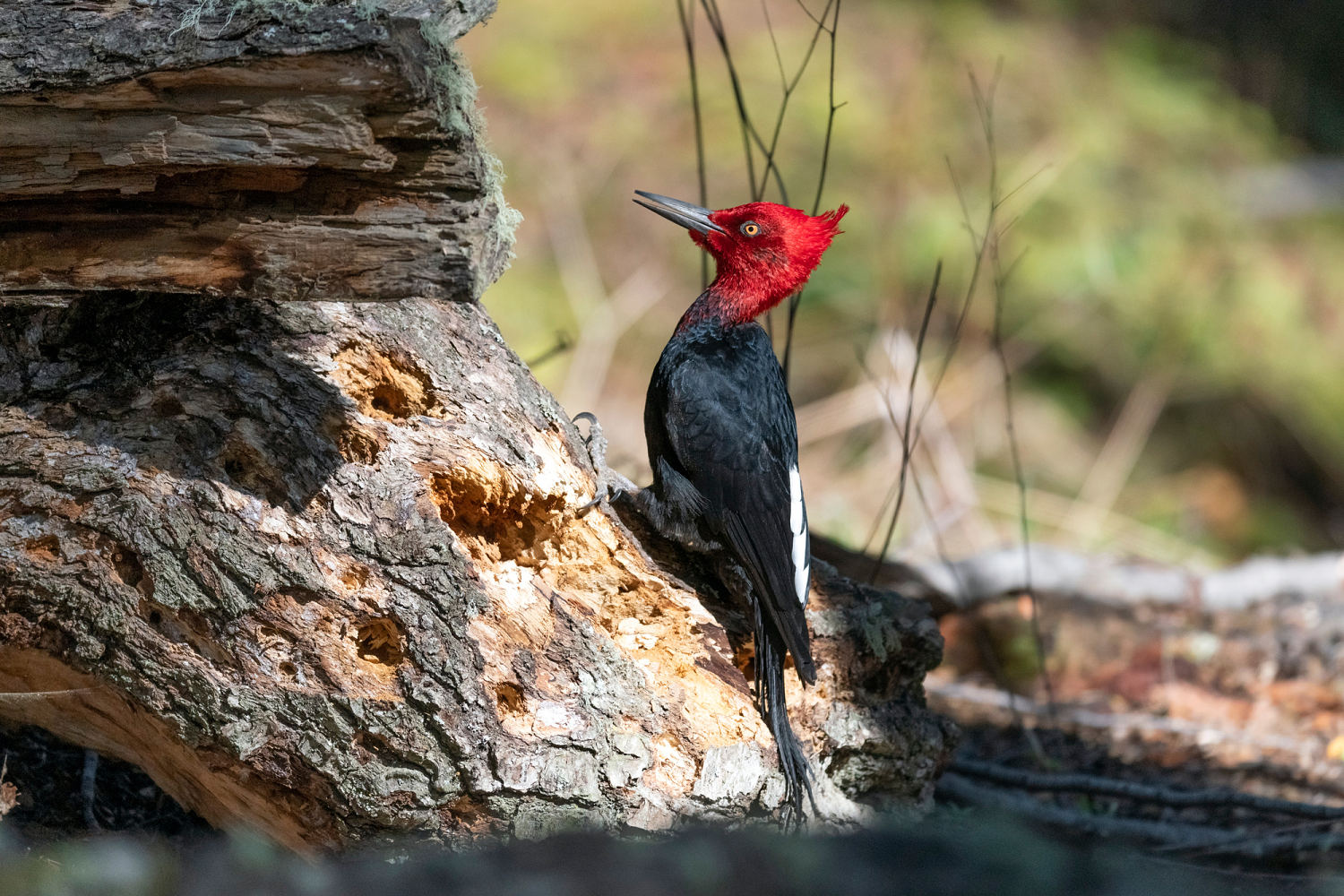
The problem is that fear has a much longer half-life than a virus. Long after the health alerts were lifted, the stigma remained. To the outside world, Epuyén remained a "hot zone." To a birder, however, it remained the home of the Magellanic Woodpecker.
Consider a hypothetical traveler named Elias. Elias has spent twenty years chasing shadows in the canopy. For him, the risk of a rare viral infection is a cold calculation compared to the spiritual tax of a life lived indoors. He knows that the "danger" of Patagonia is a matter of perspective. You don't catch Hantavirus by walking a forest trail or looking through a lens at a Torrent Duck. You catch it through neglect, through breathing in the concentrated, stagnant dust of an enclosed space where rodents have nested for months.
By staying away, we aren't just "staying safe." We are killing the very communities that act as the stewards of these wild places.
Science Versus the Sensationalist Lens
The pushback from the birding community isn't born of recklessness. It’s born of data.
Health officials and local guides are working to replace the "contagion" myth with a "coexistence" reality. The facts are clear: the risk of contracting HPS while engaging in outdoor activities like trekking or birdwatching is statistically lower than the risk of the drive to the airport. Yet, we struggle to internalize this. Our brains are wired to fear the invisible predator over the common accident.
When a town is blacklisted by the collective consciousness, the local economy collapses. When the economy collapses, the conservation efforts suffer. If there are no guides, no lodges, and no eyes on the forest, the land becomes vulnerable to different kinds of threats—poaching, illegal logging, and fires that go unnoticed.
The birders argue that their presence is a form of ecological and economic medicine. By returning to the trails of Chubut, they are demonstrating that the "fog of fear" is just that—a fog. It dissipates when you actually stand in the sunlight.
The Weight of the Binoculars
There is a specific kind of vulnerability in being a tourist in a place that has suffered. You feel like an intruder on a wake. But talk to a lodge owner in Epuyén, and the sentiment is different. They don't want your pity; they want your curiosity. They want you to see the Poyen hill not as a site of an outbreak, but as a lookout point for the Andean Condor.
The narrative of "fear" is easy to write. It uses words like deadly, outbreak, quarantine, and tragedy. It’s a story that sells because it triggers a primal response. The narrative of "restoration" is much harder. It requires nuance. It requires us to admit that we can’t sanitize the world, but we can understand it.
We have seen this pattern before. Whether it’s the return to forests after a fire or the reopening of a city after a plague, the first people back are always the ones with a passion that outweighs their anxiety. In this case, it’s the people who want to see the rufous-tailed plantcutter. They are the scouts.
A Different Kind of Contagion
There is a power in the human-centric approach to travel. When we talk about Epuyén, we shouldn't just talk about a virus. We should talk about the smell of moist earth after a spring rain. We should talk about the way the light hits the blue ice of the glaciers.
The birders are pushing back because they realize that if they don't, we lose more than a travel destination. We lose a piece of our connection to the wild. We cede the landscape to our nightmares.
The invisible stakes here aren't just about bed nights and coffee sales. They are about whether we allow a single event to define a geography forever. If we treat every place where nature "bit back" as a forbidden zone, the map of the world will eventually be nothing but a series of "X" marks.
The real danger isn't the rat in the grass. It’s the closing of the mind.
Next time you see a headline about a "threat" in a far-flung corner of the map, look for the people heading toward it with binoculars. They aren't crazy. They just know that the world is too beautiful to be seen through a window of fear. They know that the Chucao is still calling, and that some songs are worth the journey.
The wind off the lake is cold, clean, and smells of nothing but snow and ancient trees.