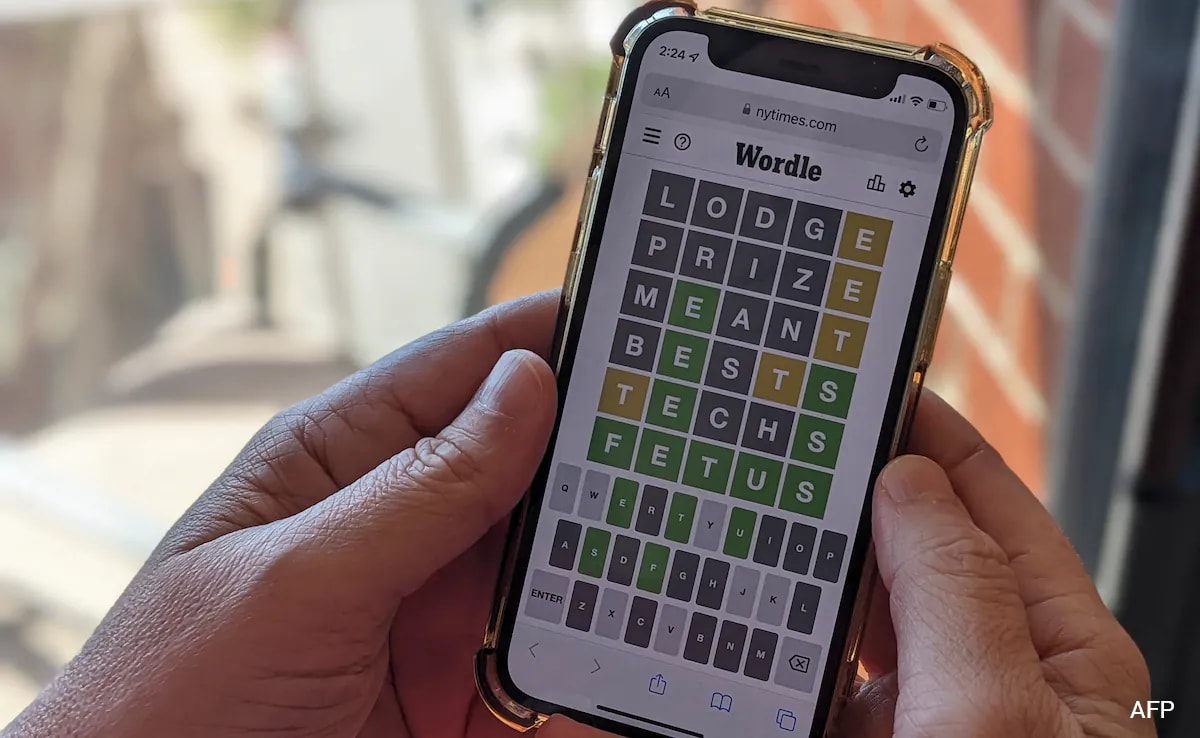
The green and yellow squares that took over your Twitter feed in 2022 are heading to prime time. Hasbro and The New York Times have officially greenlit a televised version of the viral word game. It feels like a move straight out of the 1990s media playbook. Take a digital sensation, strip away the simplicity that made it work, and try to stretch it into a forty-two-minute broadcast window. You’ve seen this before with Candy Crush and Tetris. It rarely ends well for the purists.
Josh Wardle’s original creation was a masterclass in restraint. One puzzle. One day. No ads. No flashy animations. When The New York Times bought it for a low seven-figure sum, the world held its breath. They didn't break it. If anything, they polished the edges. But a TV show is a different beast entirely. You can’t just watch a person stare at a screen for six minutes trying to figure out if "ADIEU" is a better opener than "STARE." You need drama. You need shouting. You need a host who cracks jokes while the clock ticks down. In related updates, take a look at: Your PlayStation Settlement Check is a Corporate Tax Write-Off in Disguise.
Why TV networks are betting on five-letter words
The logic behind this move is pretty simple. Networks are desperate for "co-viewing" hits. That's industry speak for shows that parents and kids actually watch together without scrolling on their phones. Wordle fits that bill. It’s clean. It’s educational-ish. It has massive brand recognition. According to the New York Times, the game still pulls in tens of millions of players every week. That’s a built-in audience most showrunners would kill for.
TV executives look at Wordle and see the next Wheel of Fortune. They see a repeatable format that costs relatively little to produce compared to a scripted drama. But they're forgetting what actually makes the game addictive. The magic isn't the guessing. It's the social ritual. It's the ability to share that grid of colored squares with your friends to show how much smarter (or luckier) you were today. TV is a passive medium. It turns a participatory ritual into a spectator sport. Associated Press has provided coverage on this fascinating topic in extensive detail.
The challenge of making a slow game fast
How do you make a word game exciting? You add stakes. Reports suggest the show will feature teams competing in a "life-sized" version of the board. Think Family Feud meets Scrabble. Players will likely face physical obstacles or time pressures that don't exist in the app. This is where things get shaky. The beauty of Wordle is the silence. It’s the quiet morning coffee moment. Adding a cheering studio audience and strobe lights feels like putting a turbo engine on a bicycle. It's too much.
Game show history is littered with the corpses of digital transitions. Remember the Candy Crush show hosted by Mario Lopez? Probably not. It lasted one season. It failed because it took a game meant for "micro-moments"—waiting for the bus, sitting on the toilet—and tried to make it an "event." You can’t force an event out of a habit. Wordle is a habit.
Success depends on the host and the hardware
If this show wants to survive past the pilot stage, it needs two things. First, a host who doesn't treat the audience like they're five years old. We don't need a hype man; we need a facilitator. Someone with the wit of Ken Jennings or the effortless cool of the late Alex Trebek. Second, the "life-sized" board needs to be tactile. If it’s just a giant iPad on a wall, viewers will tune out. People want to see those tiles flip. They want to hear the mechanical thud of a correct guess.
There’s also the question of the "Daily Word." Part of the Wordle DNA is that everyone plays the same puzzle. If the TV show uses unique puzzles for every episode, it loses that communal connection. If it uses the actual daily word, it risks being spoiled by the internet hours before the West Coast broadcast. It’s a logistical nightmare that the producers haven't fully explained yet.
What this means for the New York Times brand
The Times is trying to turn into a gaming powerhouse. They’ve already seen massive success with Connections and The Crossword. For them, this TV deal isn't just about licensing fees. It’s about "top-of-funnel" marketing. They want the person watching GSN or ABC at 7:00 PM to remember they should download the NYT Games app. It’s a giant commercial disguised as entertainment.
Don't be surprised if the show features heavy integration with the app. Maybe you can play along in real-time for prizes. Maybe the winner of the TV episode gets their name featured in the app the next day. That kind of "cross-platform synergy" (to use a word I hate) is exactly what modern media companies crave. It’s also exactly what makes long-time players roll their eyes.
How to prepare for the Wordle TV era
You don't have to wait for the premiere to sharpen your skills. The competition on screen will be fierce, and the puzzles will likely lean on common letter patterns that are easy to visualize under pressure. If you're planning on being a fan—or even applying to be a contestant—you need to move beyond "ADIEU."
- Master the consonant clusters. The show will likely use words with common endings like -IGHT, -OUND, or -ATCH to create "trap" scenarios for players.
- Practice under a timer. Use a third-party Wordle archive or a practice site. Set a 30-second limit for each guess. The pressure of a studio camera is ten times worse.
- Study the vowel distribution. Most TV word games prioritize words that are "visual." Avoid obscure vocabulary. Stick to the top 2,000 most common English words.
The move to television is a gamble that proves Wordle is no longer just a game. It's a cultural pillar. Whether it stays a pillar or becomes a footnote in game show history depends on if they remember that the letters matter more than the lights. Keep your streak alive on the app, but keep your expectations low for the small screen.
Download the official NYT Games app if you haven't already. Start tracking your stats. If you're serious about the competitive side, start looking into local trivia nights or word-game tournaments. The transition from your couch to a TV studio is shorter than you think, but the vocabulary requirements are much higher.