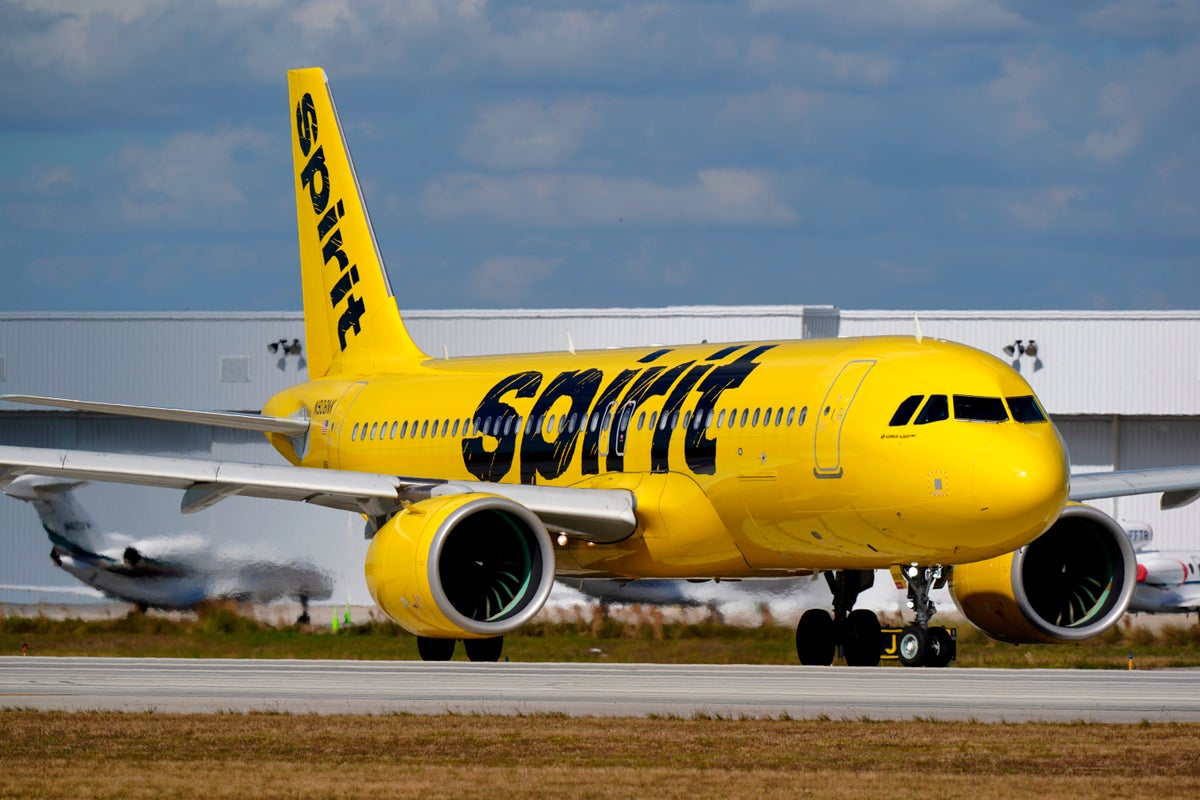
The air inside a Spirit Airlines Airbus A320 always felt a little thinner, a little louder, and infinitely more yellow. If you ever flew it, you remember the seats. They didn’t recline. They were "pre-adjusted," a marketing euphemism for "we bolted this plastic to the floor to save three pounds of weight." You sat there, knees pressed against the seatback of a stranger, clutching a backpack you’d spent twenty minutes obsessively measuring at home to ensure it fit the "personal item" dimensions.
You were there because the fare was $39. For the price of a decent steak, you could cross half the continent. It was a brutal, honest, and wildly successful pact: Spirit provided the metal tube and the jet fuel; you provided everything else, including your own comfort.
For a decade, this yellow-clad underdog didn't just survive; it dictated the terms of the sky. Every major carrier—from Delta to United—eventually bent the knee to the Spirit model. They invented "Basic Economy" because they were terrified of losing the budget traveler to a company that charged for water. But today, the pioneer of the "unbundled" fare is staring into a financial abyss. The model that everyone copied is now the very thing killing the company that built it.
The Gospel of the Ultra-Low-Cost Carrier
To understand how we got here, we have to look at the man who painted the planes yellow: Ben Baldanza. He wasn't trying to make friends. He was trying to democratize the sky by stripping away the theater of flight.
Think of a traditional airline like an all-inclusive resort. Whether you drink the champagne or use the pool, you’re paying for it. Baldanza realized that millions of people didn't want the resort; they just wanted the room. By charging for carry-on bags, printed boarding passes, and even a cup of ice, Spirit could lower the base fare to levels that seemed like a typo.
It worked because it was mathematically elegant. If you can fit more seats on a plane and spend less time cleaning up peanut wrappers between flights, your "Cost per Available Seat Mile" (CASM) drops through the floor. For years, Spirit’s margins were the envy of the industry. They were a cash-printing machine disguised as a budget bus with wings.
They leaned into the hate, too. When passengers complained about the fees, Spirit’s marketing team leaned in with "Hug the Haters" campaigns. They knew that as long as the price was $100 cheaper than the next guy, the middle finger from the public didn't matter. The math was the mission.
When the Giants Learned to Fight Dirty
The first crack in the yellow wall appeared when the "legacy" airlines stopped ignoring the budget upstarts.
For years, the big players assumed Spirit's customers weren't their customers. They thought the business traveler in 1A would never look at a Spirit fare. They were wrong. Price is a gravity that pulls everyone down eventually.
In response, the industry heavyweights launched a counter-offensive: Basic Economy. This was a psychological masterstroke. American, United, and Delta started offering fares that matched Spirit’s prices but came with the perceived reliability of a major brand. You still didn't get a bag. You still couldn't pick your seat. But you were on a plane that felt like a "real" airline.
Spirit’s moat—the massive price gap—began to evaporate. When the difference between a Spirit flight and a Delta flight is only $15, the "pre-adjusted" seat starts to feel a lot more like a punishment than a bargain.
The Engine That Didn't
If competition was a slow leak, the Pratt & Whitney engine crisis was a blowout.
Spirit’s entire strategy relied on high utilization. Their planes needed to be in the air constantly to make the math work. But a significant portion of their fleet was powered by the Neo engines, which were discovered to have a manufacturing flaw involving microscopic contaminants in the metal.
Suddenly, dozens of Spirit’s planes were grounded for inspections that could take months. Imagine running a taxi service where a third of your cars are locked in the garage through no fault of your own, while you’re still paying the leases on them.
The timing was catastrophic. While the planes sat idle, labor costs were skyrocketing. Pilots, seeing the leverage they held in a post-pandemic world, negotiated massive raises. Spirit, which had always won by having the lowest costs, suddenly found its expenses ballooning while its ability to generate revenue was physically parked on the tarmac.
The Merger That Wasn't
In the corporate world, when the walls start closing in, you look for a partner. Spirit looked at Frontier, then JetBlue looked at Spirit.
The JetBlue-Spirit merger was supposed to be the Great Reset. It would have created the fifth-largest airline in the country, giving Spirit’s shareholders a way out and JetBlue the planes it desperately needed to compete with the "Big Four."
But the Department of Justice stepped in with a different narrative. They argued that Spirit was the "disruptor"—the essential force that kept prices low for the poorest travelers. If Spirit disappeared into JetBlue, the DOJ claimed, the "Spirit Effect" (the phenomenon where all airlines drop their prices when Spirit enters a market) would vanish.
The courts agreed. They blocked the merger to "save" the budget traveler.
There is a cruel irony in that victory. By blocking the merger to preserve a low-cost competitor, the regulators may have inadvertently ensured that competitor’s total collapse. You can’t save a disruptor if the disruptor is too broke to fly.
The Shift in the American Soul
Beyond the balance sheets and the DOJ rulings, something deeper changed. The American traveler changed.
After years of being locked down, people didn't just want to "get there." They wanted an experience. The "revenge travel" era favored premium cabins, extra legroom, and lounge access. The person who used to scrape by on a $40 Spirit fare was now willing to put a $400 United ticket on a credit card just to feel a sense of dignity at 30,000 feet.
Spirit’s model was built for a world of austerity. We are currently living in a world of indulgence—or at least the appearance of it.
The Cost of Being Cheap
Spirit is now fighting for its life, negotiating with bondholders to restructure massive debts while rumors of bankruptcy filings swirl like a summer storm over a Florida hub. They’ve tried to pivot. They’ve introduced "Go Big" and "Go Comfy" packages that include snacks and blocked-out middle seats—essentially trying to build a premium product on a budget frame.
But it feels like a tailor trying to turn a burlap sack into a tuxedo.
The tragedy of Spirit is that it succeeded too well. It proved that people would trade every single luxury for a low price. It proved it so effectively that every other airline stole the blueprint. Once the industry absorbed Spirit’s DNA, the host organism became redundant.
If Spirit disappears, the "Spirit Effect" will indeed vanish. The $19 flight to Vegas will become a ghost story we tell our children. We will pay more. We will have fewer choices. And yet, as we sit in our slightly wider seats with our complimentary four-ounce pour of ginger ale, many will feel a sense of relief that the yellow planes are gone.
We wanted the low prices. We just didn't want to be the kind of people who flew on the airline that provided them.
The yellow plane is sitting on the runway, the engines are quiet, and the "pre-adjusted" seats are empty. The lights are flickering. For the first time in twenty years, the airline that taught us how to fly for less is finding that the most expensive thing in the world is a model everyone else has already mastered.