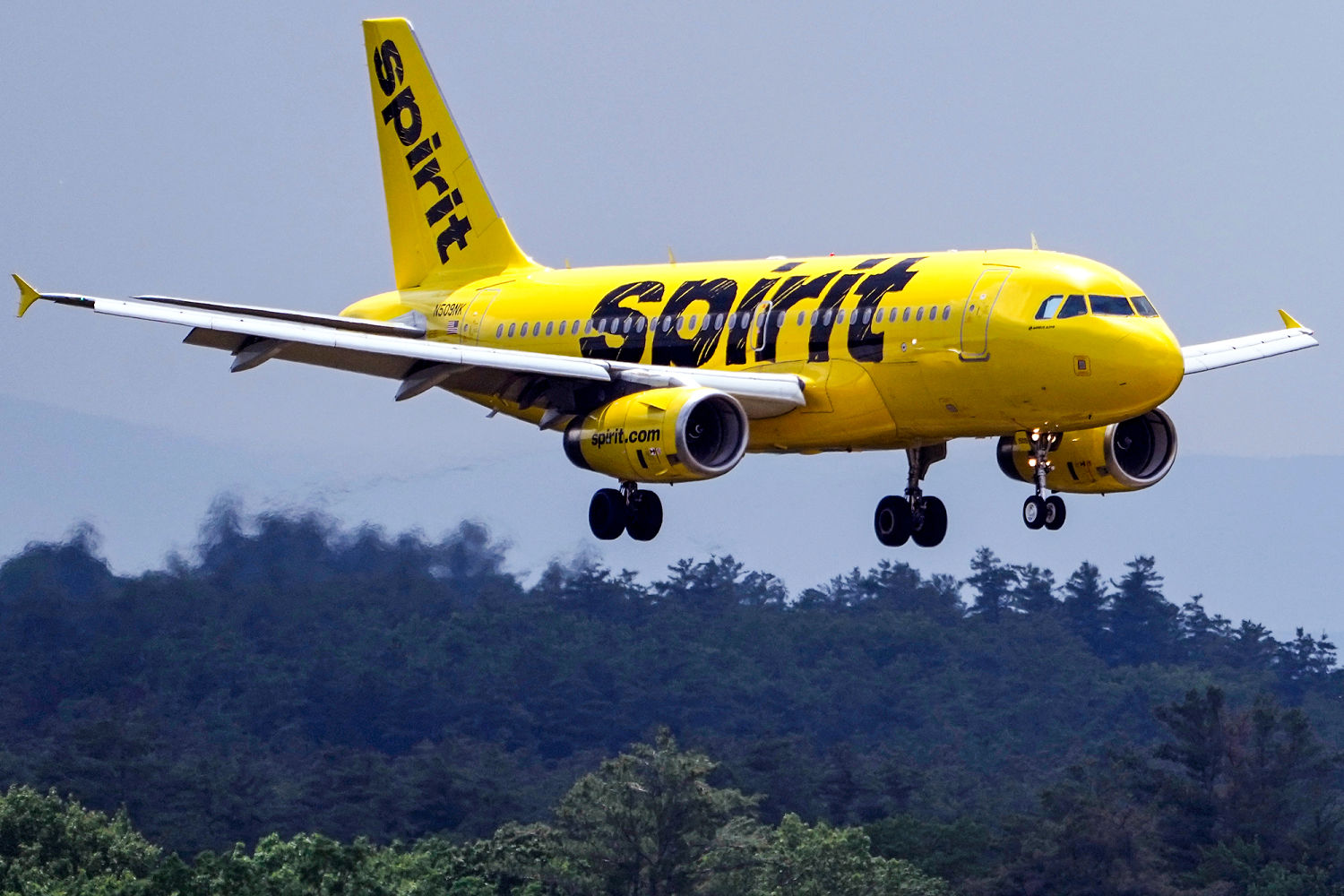
The cabin lights usually flicker once before the engines roar to life on a Spirit Airlines flight. It is a familiar, slightly unsettling ritual for millions of Americans who have traded legroom for a $40 ticket to see a dying relative or attend a college roommate's wedding. But lately, that flicker feels more like a fading pulse.
In the hallways of power and the sterile boardrooms of Florida, the conversation has shifted from seat pitches and bag fees to the cold mathematics of survival. Spirit Airlines, the bright yellow underdog that democratized the skies by stripping away every conceivable luxury, is staring down the barrel of a shutdown. The planes are still flying, for now. Yet, the air inside them is heavy with the scent of a looming ending.
The Midnight Hour in Mar-a-Lago
Donald Trump recently stepped into this fray, not as a passenger, but as a self-appointed mediator of the American industrial spirit. He announced that Spirit has been handed a "final proposal" regarding a federal bailout. It was a statement delivered with the characteristic weight of someone who views the world in terms of winners and losers. For Spirit, the category of "winner" has been elusive for a very long time.
Consider the reality of a bailout. We often talk about these financial lifelines as if they are simple wire transfers, a bit of digital ink moving from the Treasury to a corporate ledger. They aren't. A bailout is a confession. It is the moment a giant admits it can no longer stand on its own two feet. For the thousands of flight attendants, gate agents, and pilots who wear the yellow lanyard, this "final proposal" isn't a headline. It is a mortgage payment. It is a child’s tuition. It is the terrifying uncertainty of a career suddenly suspended in mid-air.
A Geometry of Failure
The path to this precipice was paved with good intentions and bad timing. Spirit’s business model was built on a singular, aggressive premise: unbundling. They sold you the seat, and everything else—the water, the carry-on, the very idea of comfort—was an extra. It worked. It forced the "legacy" carriers like Delta and United to create "Basic Economy" just to compete. Spirit was the disruptor that everyone loved to hate but everyone secretly used when their bank account was low.
Then the world changed.
A failed merger with JetBlue left Spirit stranded. Imagine two drowning swimmers trying to grab onto each other, only for the lifeguard—in this case, the Department of Justice—to knock their hands apart, claiming that their union would hurt the very passengers they were trying to save. The government argued that if Spirit disappeared into JetBlue, the "Spirit Effect" of low prices would vanish. Ironically, by blocking the deal to protect low fares, the regulators may have guaranteed the total extinction of the airline that provided them.
Now, Spirit is grappling with more than just a failed marriage. Their engines, specifically the geared turbofans manufactured by Pratt & Whitney, have been plagued by a rare powder metal defect. It is a microscopic flaw with macroscopic consequences. Dozens of planes are grounded, sitting idle on the tarmac like expensive, yellow lawn ornaments. You cannot make money in the airline business when your assets are chained to the earth.
The Ghost of 1991
There is a historical haunting at play here. Older travelers remember Eastern Air Lines. They remember Pan Am. These were titans that seemed permanent until, suddenly, they weren't. When an airline dies, it doesn't just stop. It leaves a vacuum.
If Spirit shuts down, the impact won't just be felt by the frequent fliers of Fort Lauderdale. It will be felt in the price of every ticket in America. Competition is the only thing that keeps the big carriers from charging whatever they want for a three-hour flight in a middle seat. Spirit was the floor. Without that floor, the ceiling for ticket prices is as high as the jet stream.
Trump’s involvement adds a layer of political theater to a very real economic tragedy. He frames the bailout as a necessity to prevent a "shutdown" that would be catastrophic for the economy. Whether this is a genuine rescue mission or a strategic posture remains to be seen. But for the person sitting in 14B on a flight from Detroit to Orlando, the politics matter less than the physics. They just want to know if there will be a plane to take them home.
The Human Cost of High Finance
Let’s look at a hypothetical employee—call him Marcus. Marcus has been a mechanic for Spirit for twelve years. He knows the intricacies of the Airbus A320 like the back of his hand. He’s seen the airline grow from a niche carrier into a national player. For Marcus, the "final proposal" isn't about stock prices or the nuances of Chapter 11 bankruptcy. It is about whether his specialized skills will be needed tomorrow.
When a company this size teeters on the edge, the stress trickles down. It shows up in the forced smiles of the crew and the frantic tapping of the accountants. It is a slow-motion car crash, where everyone can see the wall coming, but no one is quite sure if the brakes will hold.
The "final proposal" mentioned by Trump suggests that the time for negotiation is over. It is the ultimatum. Take the deal, accept the terms, or prepare for the lights to go out. The terms likely involve massive restructuring, debt forgiveness, and perhaps a total reimagining of what Spirit is. It might mean Spirit survives as a shadow of its former self, or it might mean it becomes a footnote in a textbook about the volatile nature of post-pandemic aviation.
The Invisible Stakes
The real tragedy of Spirit’s potential collapse isn't just the loss of a brand. It’s the loss of an idea. The idea was that flight should be accessible to everyone, not just the elite. Spirit was the bus of the sky. It was loud, it was cramped, and it was unapologetically cheap. But it got you there.
We are witnessing the potential end of an era of hyper-competition. If the bailout fails, we move closer to an oligopoly where four or five major players dictate the terms of human movement. That is the invisible stake. It’s not just about Spirit; it’s about the freedom to move across this vast country without needing a corporate expense account to do so.
The tarmac at sunset is a lonely place. Row after row of yellow tails reflect the orange light, waiting for a decision made in a room hundreds of miles away. The "final proposal" is on the table. The pens are hovering. The world is watching to see if the yellow bird will find a way to stay aloft, or if it will finally be forced to roost for good.
Every time a Spirit flight takes off this week, it feels a little more like a miracle. The passengers check their bags, complain about the seat width, and wait for that familiar flicker of the cabin lights. They don't know if this is the beginning of a long journey or the final descent. They just hope the engines start.
The silence that would follow a shutdown is a sound no one in the industry wants to hear. It is the sound of an empty terminal, the sound of a grounded fleet, and the sound of a promise broken. For now, the yellow planes are still moving, defying the gravity of their own debt, waiting for the word that will either ground them forever or give them one more chance to reach the clouds.


