The United States government is effectively attempting to become the world’s largest maritime insurance broker overnight. Following a direct order from President Donald Trump on March 3, 2026, the U.S. International Development Finance Corporation (DFC) has been thrust into the center of a maritime war zone, tasked with providing "political risk insurance" to tankers that the private market has deemed uninsurable. This financial intervention, paired with the promise of U.S. Navy escorts through the Strait of Hormuz, is a high-stakes attempt to break a four-day blockade that has paralyzed 20 percent of the world’s oil supply.
While the administration frames this as a stabilizing move to protect the "free flow of energy," the reality is a desperate bid to prevent a domestic economic meltdown. Global crude prices have surged over 10 percent since the weekend, following U.S. and Israeli strikes on Iran under Operation Epic Fury. For the American consumer, this translates to an immediate and painful spike at the pump. For the Trump administration, it represents a political emergency that threatens to derail economic momentum ahead of the November midterms.
The Insurance Void and the DFC Solution
The primary obstacle to moving oil through the Gulf isn't just the physical threat of Iranian missiles; it is the sudden evaporation of "War Risk" coverage. By March 1, the world’s major Protection and Indemnity (P&I) clubs and private reinsurers began canceling coverage for vessels entering the Persian Gulf and the Gulf of Oman. Without insurance, a $150 million Very Large Crude Carrier (VLCC) carrying $160 million worth of oil is a liability that no sane board of directors will authorize to sail.
Standard "Additional War Risk Premiums" (AWRP) stood at roughly 0.15 percent of a vessel’s value before the strikes. By mid-week, those rates hit 1 percent—if you could find a provider at all. For a standard tanker, that is a $1.34 million surcharge just for the privilege of entering a combat zone.
The DFC is now being used to bridge this gap. Traditionally, the DFC exists to support development projects in emerging markets—building power plants in Africa or tech hubs in Southeast Asia. Using it to backstop global shipping is a radical shift in mission. By offering government-backed guarantees "at a very reasonable price," the White House is essentially subsidizing the risk that Lloyd's of London won't touch.
If a tanker is hit while under DFC coverage, the American taxpayer becomes the ultimate reinsurer. With over 200 tankers currently stranded inside the Gulf or waiting south of the Strait, the potential liability for the U.S. government could easily reach tens of billions of dollars.
The Limits of Naval Escorts
The second half of the administration’s strategy is the promise of U.S. Navy escorts. On paper, a convoy of tankers protected by Aegis-equipped destroyers sounds like a return to the "Tanker War" of the 1980s. In practice, the 2026 version is significantly more dangerous.
The Strait of Hormuz is only 21 miles wide at its narrowest point. This proximity to the Iranian coastline puts every vessel within the "Super Weapons Engagement Zone." Iran’s Islamic Revolutionary Guard Corps (IRGC) Navy does not rely on traditional capital ships; they utilize swarms of fast-attack craft, sea mines, and shore-based anti-ship cruise missiles like the Noor or Ghadir.
The Tactical Nightmare
- Maneuverability: The shipping lanes are only two miles wide. A carrier strike group or a destroyer has almost no room to maneuver when faced with incoming "suicide" drones or ballistic missiles.
- Volume: Escorting a handful of ships is possible. Escorting the 60+ ships that normally transit the Strait every day is an impossibility for the current U.S. 5th Fleet, which has approximately 12 warships in the region.
- Escalation: Any engagement between a U.S. escort and Iranian forces is an automatic escalation. If a U.S. destroyer sinks an Iranian boat to protect a Greek-owned tanker, the conflict moves from a "shipping disruption" to a direct naval war.
The Pentagon’s initial reluctance to commit to these escorts—officials told industry leaders on Monday there was "no chance" of them happening—highlights the gap between political rhetoric and operational reality. The "U-turn" on Tuesday suggests the White House is prioritizing market psychology over military doctrine.
The Shell Game of Global Supply
There is a glaring irony in the DFC’s new mandate. While the administration's goal is to lower prices for American voters, the oil transiting the Strait of Hormuz does not primarily go to the United States. Much of it is bound for China, Japan, and South Korea.
Critics in Congress have already pointed out that U.S. taxpayers are now potentially subsidizing and protecting energy shipments to China. Representative Joaquin Castro and others have raised questions about whether this policy serves American interests or merely props up the global spot market at the expense of U.S. military readiness.
Furthermore, the "reasonable price" of the DFC insurance remains undefined. If the premium is too high, shipowners will still stay away. If it is too low, the DFC’s $205 billion risk exposure limit could be breached within weeks.
The Credibility Test
The success of this plan hinges entirely on trust. If the DFC issues a policy and a ship is subsequently sunk by an Iranian mine, will the U.S. pay out immediately? Private insurance relies on decades of legal precedent and massive capital reserves. A government-backed startup for war risk insurance lacks that track record.
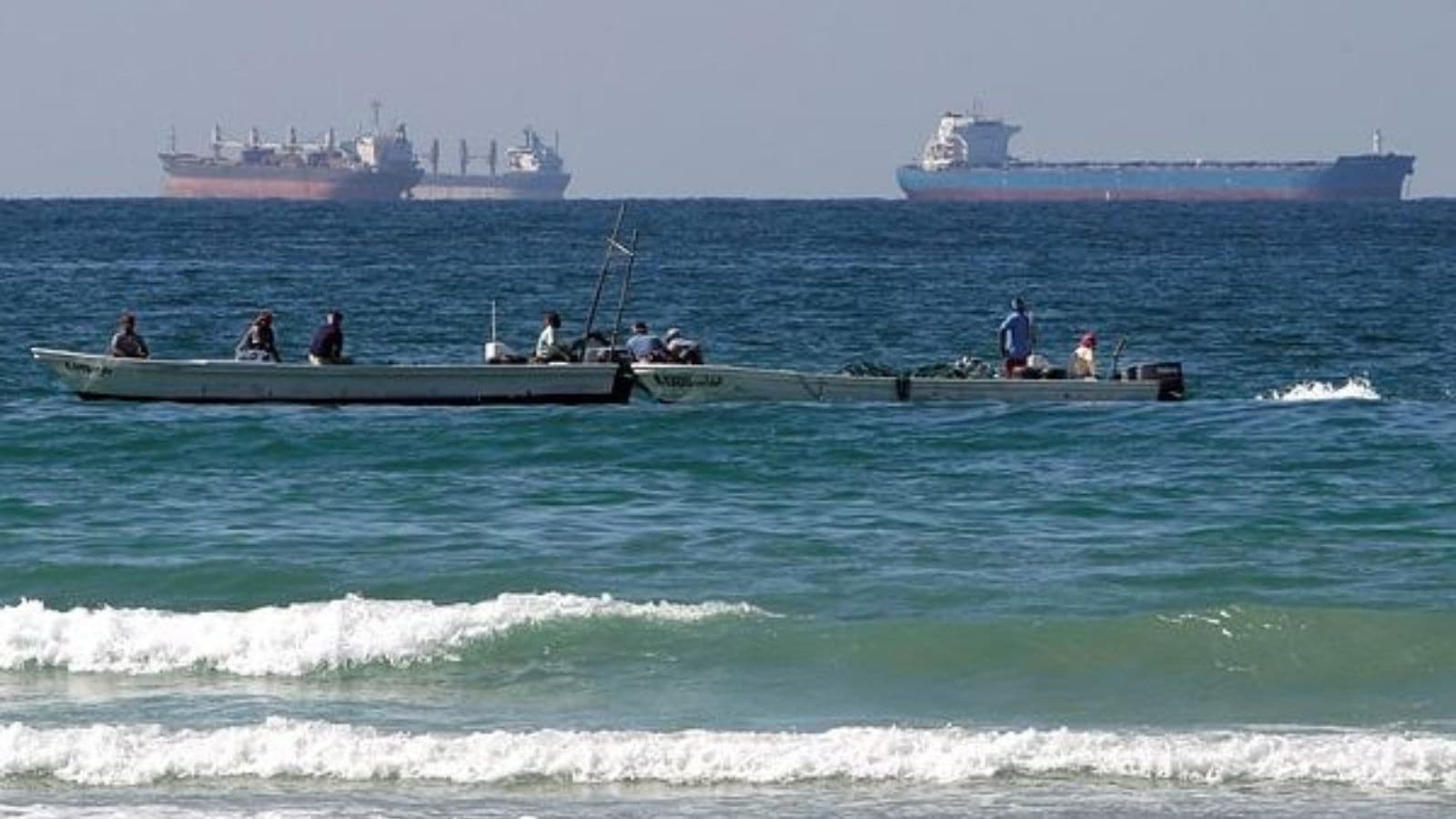
As of Wednesday, satellite imagery shows vessels still backing up near Fujairah in the UAE. Major shipping lines like Hapag-Lloyd and CMA CGM have yet to resume transits, despite the President’s promises. They are waiting to see the first convoy actually make it through.
The administration’s gamble is that the mere threat of U.S. intervention and the promise of a financial backstop will be enough to coax the markets into a state of "artificial normalcy." However, with the IRGC claiming "complete control" over the waterway and the Omani Navy already rescuing crews from burning ships, the reality on the water is far more volatile than a Truth Social post suggests. The energy market is no longer reacting to press releases; it is waiting for the smoke to clear.