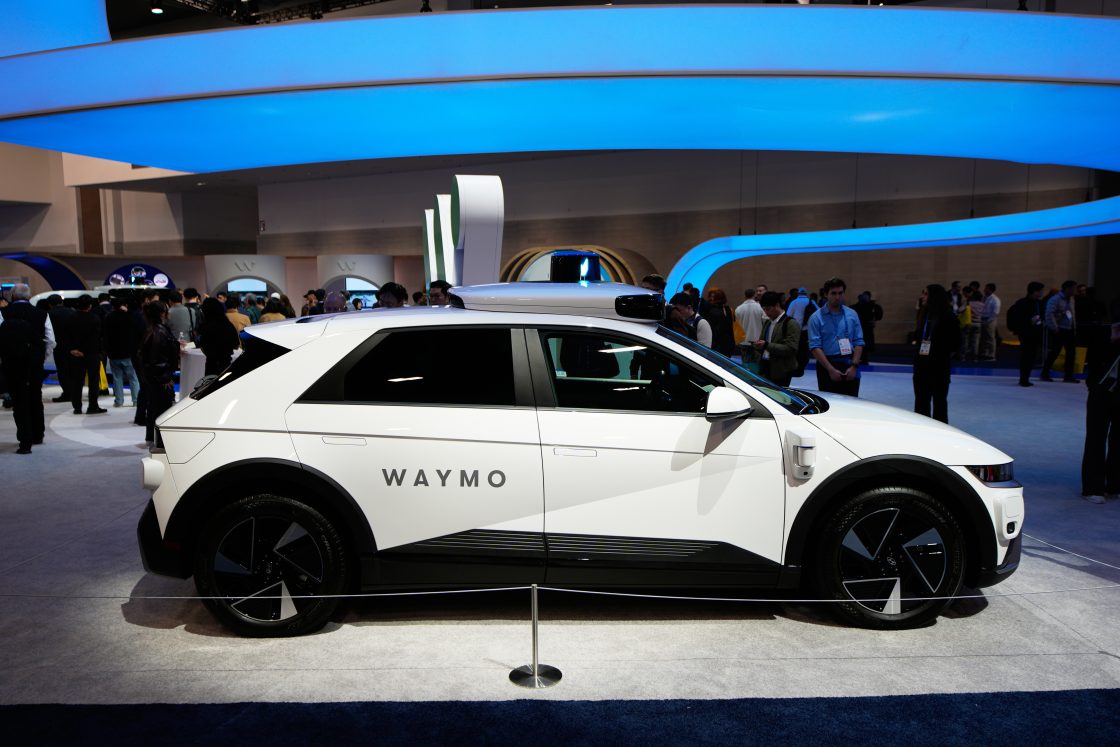
The recent recall of Waymo’s entire autonomous driving fleet following a localized flooding event in Phoenix exposes a fundamental vulnerability in Level 4 autonomous architectures: the inability of current sensor fusion models to differentiate between transient environmental noise and terminal navigational hazards. While superficial reporting frames this as a minor hardware glitch or a "bug," a rigorous deconstruction reveals a catastrophic failure in the software’s probability-density estimation. The system entered a state of terminal indecision when faced with standing water, treating reflections and ripples as physical obstacles, effectively paralyzing the fleet.
This event serves as a stress test for the operational reliability of the Waymo Driver. To understand why a premier autonomous system failed in a predictable weather scenario, we must analyze the interaction between LiDAR reflectivity, computer vision noise, and the safety-critical thresholds of the motion planner.
The Triad of Sensor Degradation
Autonomous vehicles (AVs) rely on a heterogeneous sensor stack to construct a World Model. In the Phoenix incident, the failure originated in the degradation of three specific data streams, which created a feedback loop of false positives.
1. LiDAR Multi-Path Interference
LiDAR functions by emitting laser pulses and measuring the time-of-flight (ToF) to determine distance. On dry asphalt, this creates a high-fidelity point cloud. However, standing water acts as a specular surface. Instead of bouncing back to the sensor, the laser pulse hits the water at an angle and reflects away (specular reflection) or bounces off the water, hits a nearby object, and then returns to the sensor (multi-path interference). This produces "ghost" objects—phantom obstacles that appear beneath the road surface or floating in the air. Waymo’s stack failed to filter these artifacts, leading the motion planner to perceive the road as non-traversable.
2. Semantic Segmentation Failure
Camera-based neural networks are trained to identify "road," "sidewalk," and "vehicle." Heavy rain and standing water introduce visual distortions like "spray" and "glare." When the semantic segmentation layer cannot confidently classify a pixel as "drivable surface," the uncertainty is passed to the behavioral layer. In this recall, the software's confidence intervals for "road" fell below the safety threshold. The system defaulted to a Minimum Risk Maneuver (MRM), which in this case meant stopping in the middle of active thoroughfares.
3. Radar Noise and Over-Filtering
Radar is typically the most resilient sensor in rain, but it has low spatial resolution. To compensate, AV systems use "clutter filters" to ignore stationary objects like guardrails or signs. In the Phoenix flood, the turbulence of the water and the movement of rain created high-velocity "clutter" that the radar processing unit could not distinguish from moving hazards. When the LiDAR and cameras are already compromised, the lack of a "clean" radar signal removes the final layer of validation.
The Cost Function of Safety vs. Availability
The core of Waymo’s strategy is a conservative cost function. In autonomous navigation, every possible path (trajectory) is assigned a "cost." Collisions have an infinite cost, while progress toward a goal reduces the cost.
The Phoenix failure indicates that the cost of "uncertainty" in Waymo’s model is weighted so heavily that it outweighs the cost of "obstruction of traffic." This is a rational choice for a company prioritizing zero-fatality metrics, but it is a terminal flaw for a scalable transportation business. If a fleet of 700+ vehicles can be neutralized by a standard atmospheric event, the Operational Design Domain (ODD) is effectively narrowed to "perfect weather only."
This creates a structural bottleneck in the unit economics of Robotaxis. If vehicle availability ($A$) is a function of weather ($W$), where $A = f(W)$, and the system lacks the "common sense" to navigate 2 inches of standing water, the service cannot achieve the 99.99% uptime required to replace private car ownership.
The Logic of the Software Fix
Waymo’s recall was not a hardware replacement but a "software update" targeting the perception system’s heuristics. The fix likely involved three specific structural adjustments:
- Dynamic Filtering Thresholds: Adjusting the LiDAR perception layer to recognize the specific signature of water-surface reflections. This involves identifying low-intensity returns that follow a specific geometric pattern (below the ground plane) and labeling them as "noise" rather than "obstacle."
- Cross-Modal Validation: Implementing a logic gate where if LiDAR detects an obstacle but Radar (which penetrates water) detects a clear path, the system assigns a lower probability to the LiDAR's "ghost" object.
- Enhanced MRM Logic: Redefining the "Safe Stop" protocol. Instead of halting in the lane of travel—which creates a secondary hazard—the updated software attempts to leverage "low-confidence" data to reach a curb or a shoulder, prioritizing the removal of the vehicle from the flow of traffic.
Probabilistic Failure and the Edge Case Fallacy
The industry often refers to events like the Phoenix flood as "edge cases." This is a misnomer. Weather is a predictable, recurring environmental variable. The failure here was not a lack of data, but a failure of generalization.
Current AI models are excellent at interpolation (acting within the bounds of their training data) but poor at extrapolation (handling novel combinations of variables). When the Waymo Driver encountered a specific depth of water combined with a specific angle of sunlight and traffic density, the "Uncertainty Quantization" exploded.
The fundamental limitation remains: The system does not understand what water is. It only knows the statistical probability of a laser return representing a solid object. Without a causal model of physics—the understanding that water is a penetrable fluid and not a concrete wall—the system remains a slave to its sensor noise.
Strategic Operational Imperative
To move beyond the current plateau of autonomous reliability, the focus must shift from "more data" to "better logic."
First, the industry must develop Physics-Informed Neural Networks (PINNs). These are models that integrate the laws of physics directly into the machine learning architecture. If the model knows the refractive index of water, it can mathematically discount reflections in the LiDAR point cloud in real-time.
Second, the "Recall" mechanism itself must be digitized. Waymo’s ability to update the entire fleet over-the-air (OTA) is a significant competitive advantage over legacy OEMs, but the fact that a full recall was necessary suggests a lack of "Shadow Mode" validation. A more robust strategy involves running the "New" perception code in the background of all vehicles for thousands of miles before it ever takes control of the steering rack.
The Phoenix incident proves that at the current level of maturity, the "Driver" is still a fragile statistical engine. True autonomy will not be achieved by collecting more miles of clear-sky driving; it will be won by codifying the human ability to ignore irrelevant visual noise. The next phase of development must prioritize the "De-Noising" of the world model, ensuring that a puddle is treated as a surface and not a specter.
For operators and investors, the metric to watch is no longer "Miles per Intervention," but "Mean Time Between Environmental Paralysis." Until that number exceeds the average interval of significant weather events in a given geography, the autonomous fleet remains a fair-weather experiment rather than a public utility.
The path forward requires a shift from Probabilistic Perception (what is the chance this is an object?) to Causal Reasoning (given the environment, why am I seeing this return?). Only when the software can explain the noise to itself will it be safe enough to ignore it.
The final strategic play for autonomous developers is the implementation of "Environmental Context Switching." The system must detect atmospheric changes (rain, fog, flood) and automatically swap its perception weights to models specifically trained for those conditions. Attempting to use a "universal" model for all weather leads to the exact dilution of confidence seen in the Phoenix recall. Total fleet reliability depends on the system's ability to admit its sensors are compromised and adapt its logic accordingly, rather than attempting to navigate a distorted reality with standard-issue filters.