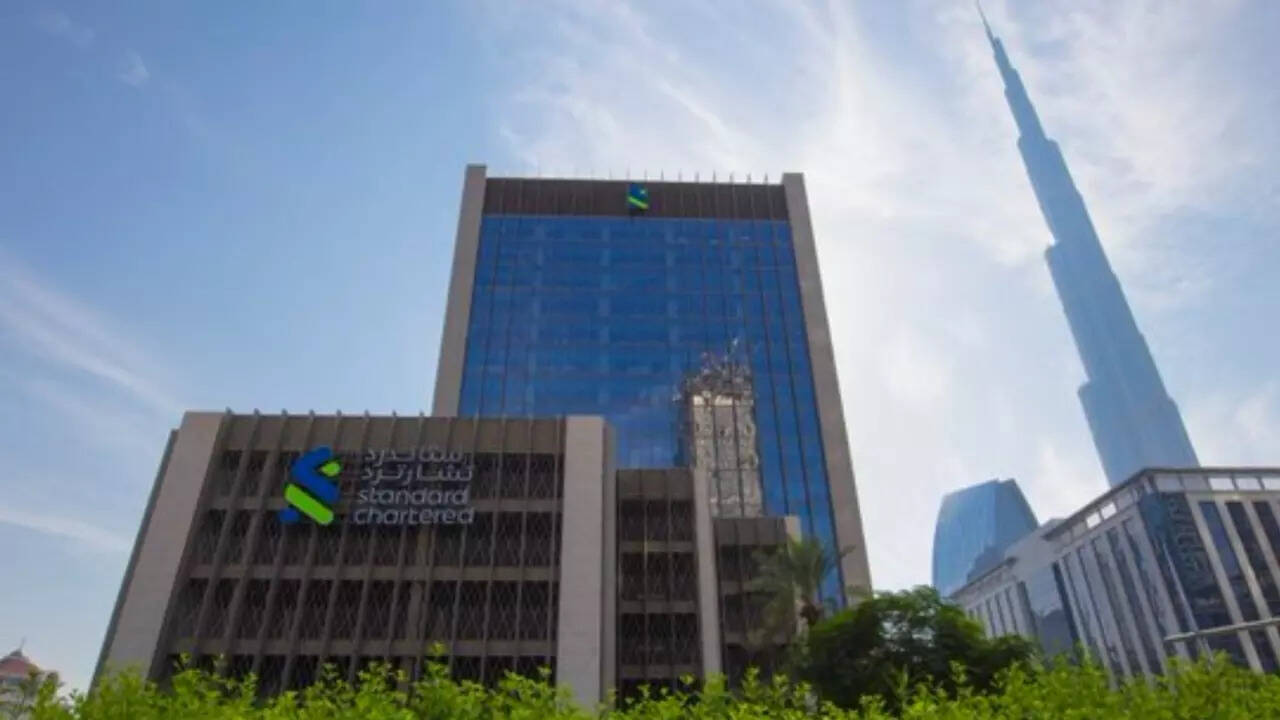
The skyscraper glass of the Dubai International Financial Centre (DIFC) has always been designed to reflect ambition, but lately, it is reflecting something far more volatile: the orange glow of a regional conflict that finally reached the doorsteps of the world’s most insulated bankers. When rumors swept through encrypted messaging apps this week that Standard Chartered was "evacuating" its Dubai headquarters, the panic was not merely about a single bank. It was a visceral reaction to the realization that the Gulf’s Swiss-style neutrality is being tested by a high-stakes exchange between Iran and the US-Israel alliance.
Standard Chartered did not evacuate. The bank issued a sharp clarification stating that its operations remain functional, though it has extended a broad work-from-home mandate for its Middle East staff. While the "exodus" was a digital phantom, the reality is arguably more unsettling for the region's status as a safe haven. Global lenders are not fleeing, but they are retreating into the safety of their laptops, effectively turning the shimmering towers of the DIFC into expensive, empty shells as a precaution against Iranian threats to Western banking interests.
The Bank Sepah Precedent
To understand the sudden shift to remote work, one must look toward Tehran, not Dubai. The spark was not a direct threat to the UAE, but a strike on an administrative building linked to Bank Sepah in Iran. As one of Iran’s largest state-owned lenders with deep ties to its military apparatus, the targeting of Sepah signaled a new phase of economic warfare.
Tehran’s response was immediate and calculated. A spokesperson for the Khatam al-Anbiya military command declared that the "enemy" had opened the door for Iran to target economic centers and banks belonging to the United States and the "Zionist regime" across the region. For institutions like Citigroup and Standard Chartered, which serve as the primary conduits for Western capital in the Middle East, those words were not mere rhetoric. They were a liability assessment.
By Wednesday, Citigroup had already instructed its employees in the DIFC and Oud Metha to vacate their desks. Goldman Sachs followed suit. When Standard Chartered "clarified" its position, it was essentially confirming a "soft evacuation"—a transition to a ghost-office model that keeps the ledger books open while the bodies are elsewhere.
The Illusion of the Safe Haven
For two decades, Dubai has sold a specific brand of stability. It promised global CEOs that they could operate in a bubble of luxury and efficiency, regardless of the chaos in neighboring Iraq, Syria, or Yemen. That pitch worked spectacularly. By the end of 2025, the DIFC hosted over 290 banks and 1,200 family offices.
But the current conflict is different. Unlike previous proxy wars, this one involves direct missile exchanges and specific threats to the financial infrastructure itself. The Dubai Financial Market Index reacted with a 1.7% drop on Friday, led by a 4.9% slide in Emirates NBD. These are not the numbers of a market that feels safe. They are the numbers of a market realizing its "safe haven" status was contingent on a geopolitical status quo that no longer exists.
Logistics of a Digital Retreat
The transition to work-from-home is often framed by corporate PR as a "seamless business continuity plan." In reality, it is a logistical nightmare for high-frequency trading and sensitive wealth management.
- Cybersecurity risks multiply when thousands of employees access core banking systems from home networks in a region currently crawling with state-sponsored hackers.
- Client confidence erodes when the physical presence of a "global bank" disappears overnight, leaving only an automated email response.
- Operational latency becomes a factor when the regional internet backbone is stressed by both wartime usage and a sudden surge in encrypted corporate VPN traffic.
HSBC’s chief executive, Georges Elhedery, has been vocal about his "unchanged conviction" in the region’s fundamentals. It is a necessary stance for a man sitting on billions in regional assets, but it ignores the tactical reality on the ground. You cannot have "business as usual" when the Strait of Hormuz is experiencing "substantial disruption" and oil prices are whipsawing toward $110 a barrel.
Beyond the Boardroom
The impact of this financial shivering extends to the very bottom of the Gulf’s economic pyramid. While bankers work from the safety of their villas, the logistics sector that feeds Dubai is struggling. Food suppliers are working 24-hour shifts to bypass shipping bottlenecks caused by the conflict. The International Humanitarian City in Dubai—the world’s largest disaster aid hub—is seeing its operations grind to a halt because life-saving aid cannot leave the UAE through the Strait.
There is a grim irony in the fact that the same financial hub that coordinates global aid is now paralyzed by the same war that creates the need for that aid. The "Standard Chartered rumor" was a false alarm, but it functioned as a stress test. It revealed that the global financial elite are one Telegram notification away from abandoning the most expensive real estate in the world.
The skyscrapers still stand, but the confidence that filled them is leaking out. If the war continues to escalate, the question won't be whether the banks are "evacuating," but whether there is anything left in the region for them to manage. The UAE is a microcosm of a world where commerce and conflict are no longer separable. In this new reality, a work-from-home order is the most honest indicator of risk we have.