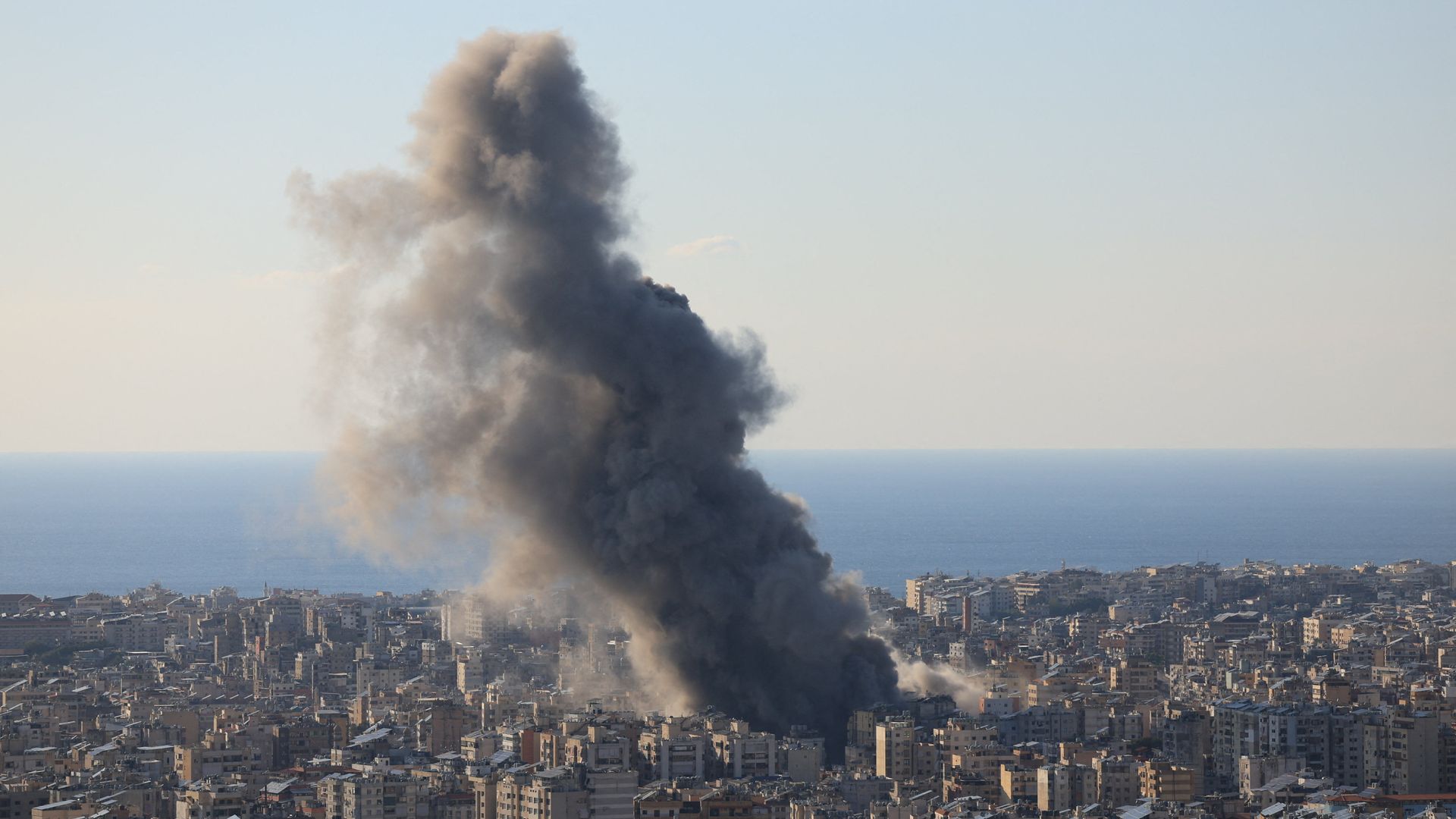
Ask anyone on the streets of Beirut if they want a new war and the answer is a fast, exhausted no. They’re tired. They’ve watched their currency evaporate, their port explode, and their middle class vanish into the diaspora. But here is the uncomfortable reality that diplomats and talking heads usually ignore. Lebanon isn’t waiting for a war to start. It’s trapped in a conflict that simply never reached a conclusion.
The 15-year civil war that supposedly ended in 1990 didn't actually resolve the underlying fractures of the country. It just hit the pause button and turned the warlords into government ministers. What we see today—the cross-border skirmishes, the political paralysis, the presence of armed non-state actors—isn't a "new" crisis. It’s the same old engine running on a different grade of fuel. When you look at the map of the Levant in 2026, you aren't looking at a country at peace. You're looking at a country in a permanent state of managed hostility.
The Myth of Post War Stability
We love to talk about "post-war" Lebanon as if 1990 was a hard reset. It wasn't. The Taif Agreement, which brokered the end of the heavy fighting, essentially baked sectarianism into the legal DNA of the state. It created a system where the government is a collection of fiefdoms rather than a unified body.
Think about it this way. If you have a house with a rotting foundation and you just put a fresh coat of paint on it, you haven't fixed the house. You’ve just made it look better for the neighbors. For decades, the Lebanese elite and the international community pretended the foundation was solid because the "big guns" were silent. But the structural violence remained. The lack of a centralized state authority meant that various factions kept their influence, their weapons, and their foreign allegiances.
This lack of a true conclusion created a vacuum. In that vacuum, groups like Hezbollah grew not just as a military force, but as a parallel state. When one organization has more firepower than the national army, can you really say the war ended? Or did it just transition into a Cold War that occasionally turns hot?
Economic Collapse as a Weapon of War
War isn't just about bullets and rockets. In Lebanon, the economic collapse that began in 2019 has been as destructive as any carpet-bombing campaign. The World Bank called it one of the most severe global crises since the mid-19th century. This wasn't an accident or just "bad luck." It was the result of a Ponzi scheme run by the central bank and the political class to fund a dysfunctional system that kept the "peace" by buying off every side.
- The Lebanese Lira has lost over 95% of its value since 2019.
- More than 80% of the population now lives in poverty.
- Electricity is a luxury, often provided by "generator mafias" rather than the state.
When a mother can't buy milk or a father can't withdraw his life savings from a bank, that's a form of violence. It's a continuation of the struggle for survival that defined the 1970s and 80s. The only difference is the sound. Instead of shells, it’s the silence of a closed pharmacy or the hum of a private generator. This economic misery is a direct byproduct of the unresolved political divisions that have plagued the nation for half a century.
The Border Game and the Strategy of Tension
The southern border remains the most volatile spot in the region. Since October 2023, the intensity has ramped up, but the friction has been constant for decades. We see a cycle of "rules of engagement" where both sides try to see how far they can push without triggering a total regional meltdown.
But these rules are flimsy. They rely on the idea that everyone is a rational actor who wants to avoid a repeat of 2006. The problem is that the longer a "limited" conflict goes on, the higher the chance of a miscalculation. A single rocket hitting the wrong target or a drone strike killing a specific commander can shatter the status quo in an afternoon.
Lebanese civilians are caught in this loop. They've become experts at reading the news, trying to figure out if today is the day they need to pack their bags. Living like this for twenty years isn't "peace." It's a high-stakes waiting game. The truth is that the 2006 war ended with UN Resolution 1701, which was supposed to clear the south of unauthorized weapons. That never happened. The failure to implement that resolution is why we are still talking about the same border issues in 2026.
Why Nobody Can Pull the Plug
The reason this "forever war" continues is that too many players benefit from the instability. For the internal political class, the threat of an external enemy is the perfect distraction from their own corruption. If you can point at a border threat, you don't have to answer questions about why the trash isn't being picked up or why the banks are empty.
Externally, Lebanon is a chessboard. Iran, Saudi Arabia, the US, and France all have their fingers in the pie. They use the country to send messages to each other. When you have that much foreign interference, the national interest gets buried. Lebanon isn't a sovereign actor in its own destiny; it’s a theater for everyone else’s grievances.
We often hear that "Lebanon is resilient." Honestly, that's a polite way of saying the people are being forced to endure the unendurable. Using the word "resilience" lets the people in power off the hook. It suggests that the Lebanese people enjoy the challenge of surviving without water or electricity. They don't. They’re just stuck in a loop created by leaders who haven't had an original thought since the 1980s.
The Reality of 2026
Right now, the tension is at a fever pitch. The regional "Axis of Resistance" is more integrated than ever, and Israel's security doctrine has shifted toward preemptive action. This makes the old "no one wants a war" argument feel a bit dated. While it's true that the average person in Beirut or Tyre wants to go to work and live their life, the people holding the triggers have different priorities.
History shows us that wars in this part of the world don't always start because someone wants them to. They start because someone thinks they can win a small victory and then realizes they've opened a door they can't close. Lebanon is full of those doors.
The previous war never stopped because the reasons for it were never addressed. The sectarian divide, the lack of a monopoly on force by the state, and the use of the country as a regional proxy are all still there. If we keep ignoring those core issues, we’re just waiting for the next "round" rather than building a real peace.
Stop looking for a declaration of war. Look at the daily reality of a country that hasn't known true stability for fifty years. The conflict is the status quo. To change that, you have to do more than just stop the shelling; you have to build a state that actually functions for its people instead of its patrons.
The next step for anyone following this isn't to look for a specific start date of a "new" war. Instead, watch the internal Lebanese political shifts. If the country can't elect a president or reform its banking sector, the military friction on the border will remain the only thing defining its existence. Pay attention to the diplomatic efforts regarding Resolution 1701, as that is the only legal framework that even pretends to offer a way out of the current cycle. If those talks fail, the "unspoken war" will likely just get louder.