The rain in London doesn't just fall; it settles into your bones, a damp reminder of a history that stretched across every time zone. Standing on the pavement outside a modern glass office, you can almost hear the ghosts of merchant ships and telegrams. For decades, the geopolitical map felt fixed, a steady grid of alliances we took for granted. But the grid is flickering.
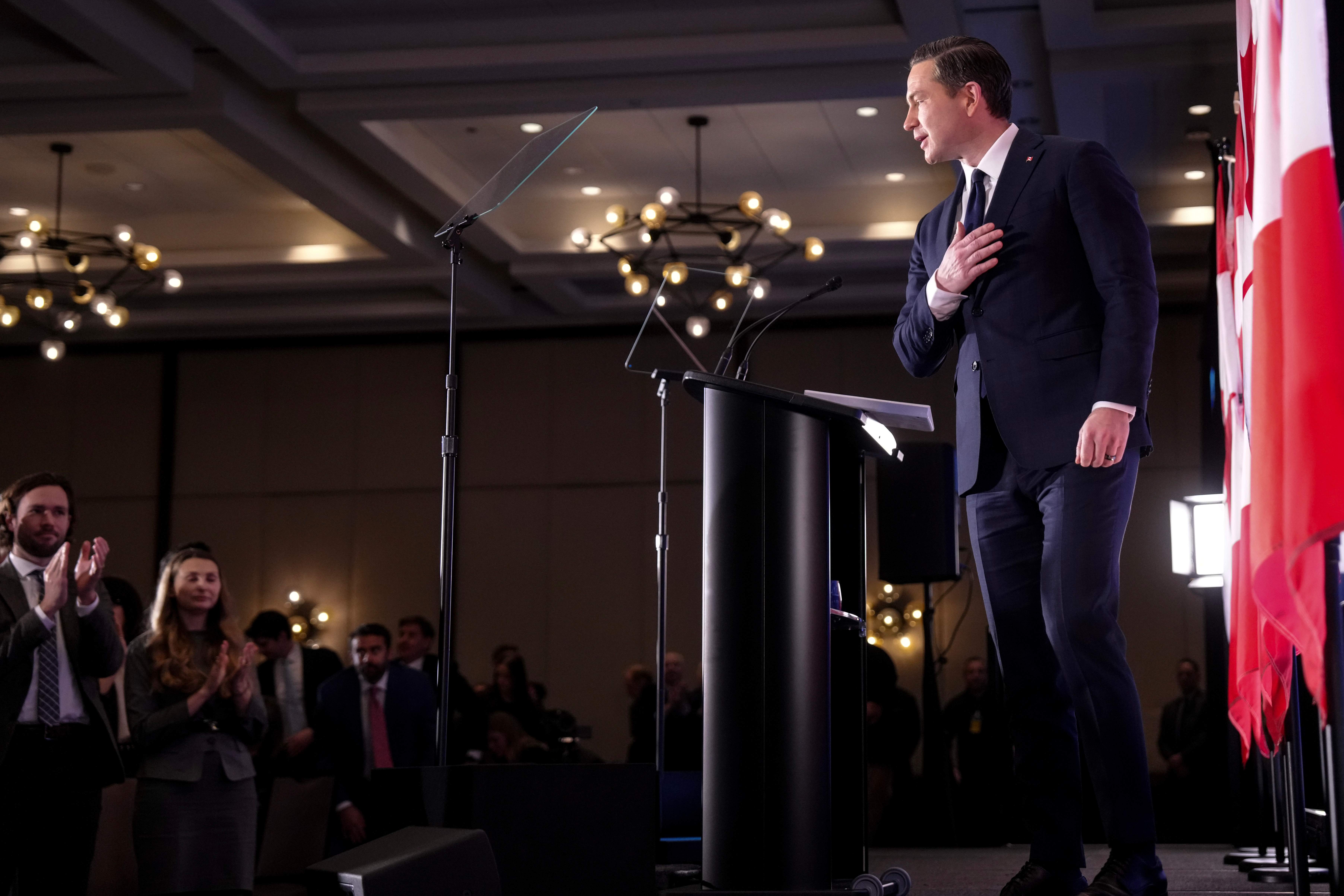
Pierre Poilievre stood in the heart of the old empire recently, not to look backward with nostalgia, but to propose a tether for a drifting world. He wasn't just talking about trade. He was talking about a family reunion with a ledger in hand.
His pitch is deceptively simple: CANZUK. It’s an acronym that sounds like a tech startup, but it represents a massive, interconnected pulse between Canada, Australia, New Zealand, and the United Kingdom. Imagine a young nurse in Auckland who dreams of the Rocky Mountains, or a structural engineer in Manchester looking at the booming skylines of Toronto. Currently, they are separated by mountains of red tape, visa lotteries, and "third-country" status. Poilievre wants to burn the tape.
The Friction of Distance
Consider a hypothetical professional named Sarah. She is a specialized pediatric surgeon from Brisbane. She has the skills to save lives in a Vancouver hospital that is currently buckling under a staffing crisis. Under the current global architecture, Sarah has to navigate a labyrinth of accreditation hurdles and immigration barriers that treat her as if she were coming from a planet with different biology.
The friction is the point.
We have spent years trying to build a globalized world where everyone is a neighbor, yet we often find ourselves lonelier and more vulnerable than before. Supply chains snap. Political winds shift. When the world catches a cold, countries that share a legal DNA, a language, and a democratic heartbeat often find themselves staring at each other across a chasm of bureaucratic indifference.
Poilievre’s argument in London was that these four nations aren’t just partners; they are a contingency plan. Combined, this bloc would represent the fourth-largest economy on earth. That isn't just a statistic to be filed away in a briefcase. It is leverage. It is the difference between being a middle-power spectator and a global protagonist.
A Legacy of Common Ground
The skeptics will point to the map. They will say that you cannot build a coherent union out of countries separated by two oceans and several thousand miles. But distance is a twentieth-century problem. In an era of digital services, instant capital flows, and shared security threats, the "tyranny of distance" has been replaced by the "tyranny of misalignment."
What connects a rancher in Alberta to a sheep farmer in New Zealand? It isn't just the Commonwealth flag. It is the Parliamentary system. It is the Common Law. It is a fundamental, unspoken agreement on what a human being is owed by their government. These are the "invisible stakes." When you trade with someone who shares your values, you aren't just buying a product; you are reinforcing a way of life.
The London pitch focused heavily on a free-trade agreement that goes beyond the standard exchange of goods. It’s about the "Free Movement of People." Not an open-border free-for-all, but a managed, reciprocal arrangement where the best and brightest can flow where they are needed most.
The Weight of the Ledger
Numbers usually put people to sleep, but these numbers should wake us up. The combined GDP of these four nations sits north of $6 trillion. That is a massive hammer to swing in trade negotiations with giants like the European Union or China.
Poilievre isn't just throwing these ideas into the wind for the sake of a headline. He is tapping into a growing anxiety that Canada has become an island in a stormy sea. For too long, our trade eggs have been in a very small number of baskets. When those baskets rattle—whether through protectionism in Washington or aggression in Beijing—we feel the vibration in our grocery bills and our mortgage rates.
By proposing a deepened partnership with London, Canberra, and Wellington, the goal is to create a "security of essentials." This means knowing that if one partner has a surplus of energy and another has a surplus of technology, the path between them is grease-slicked and high-speed.
The Human Toll of Isolation
We often talk about trade deals as if they are bloodless documents signed by men in expensive suits. They aren't. They are the reason a father can afford to send his daughter to university. They are the reason a small business in a rural town can find a market for its specialized software.
When Poilievre speaks to the UK audience, he is speaking to a post-Brexit Britain that is looking for its place in the sun. He is speaking to an Australia that is increasingly wary of its regional neighborhood. He is speaking to a Canada that feels like it is losing its competitive edge.
The real story isn't the policy. It's the potential.
It’s the idea that a person’s citizenship could be a passport to a wider world of opportunity without losing the comforts of home. It’s the realization that while we cannot change our geography, we can certainly choose our friends.
The old world was built on empires and colonies, a vertical hierarchy that eventually collapsed under its own weight. This new vision is horizontal. It’s a circle of equals. It’s a recognition that in a world that feels increasingly chaotic and fragmented, there is a profound, untapped power in standing with those who speak your language—literally and figuratively.
As the London rain continues to wash over the cobblestones, the message from the Canadian visitor lingers. The map hasn't changed, but the way we read it has. We are no longer looking for the nearest neighbor. We are looking for the truest one.
The ink on the proposal is still wet, and the political hurdles are tall, but the conversation has shifted. It is no longer a question of "Why would we do this?" It has become a much more haunting question: "What happens if we don't?"
The wind is picking up, and the old alliances are fraying at the edges. It’s time to see if these four corners of the globe can finally find their way back to the same table, not out of obligation, but out of necessity.
The sea is wide, but the ships are ready.