The sun was hitting the pavement of a quiet Edmonton suburb just right, that kind of gold that makes you feel like the world is fundamentally a safe place. An elderly man—let’s call him Arthur—was walking back from the mailbox. He’s lived on this street for thirty years. He knows the cracks in the sidewalk. He knows which neighbors have dogs that bark and which ones have gardens that bloom early.
He didn't see the car slow down. He only saw the smile.
A woman stepped out, radiating a warmth that felt entirely out of place for a Tuesday afternoon. She was asking for directions, her voice frantic but kind. As Arthur pointed toward the main road, she didn't just thank him. She moved in. She wrapped her arms around him in a gesture of overwhelming gratitude, a burst of human connection that felt, for a split second, like a beautiful anomaly in a cynical world.
Then she was gone. The car doors slammed. The engine revved.
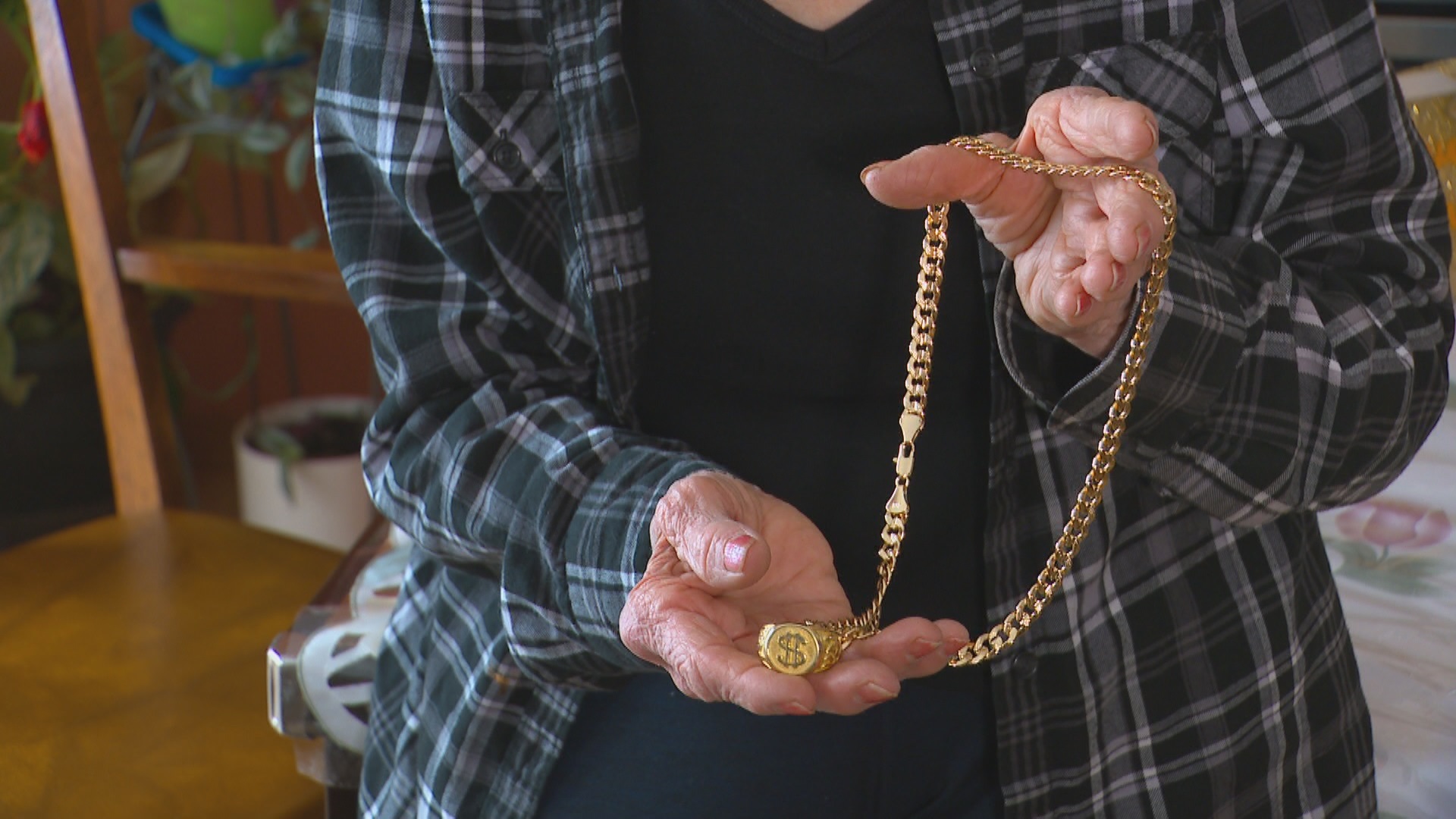
Arthur stood there, slightly flushed, feeling a bit better about humanity. It wasn't until he reached for his front door key that he felt the lightness. Not the lightness of a burdened soul being lifted, but the physical absence of his gold chain. The watch his wife gave him for their silver anniversary? Gone.
He had been caught in the "hugging bandit" trap. It is a crime that relies on our best instincts to facilitate our worst nightmares.
The Architecture of a Social Heist
We are wired for touch. From a neurological standpoint, a hug releases oxytocin, a hormone that lowers our defenses and signals to our brain that we are in the presence of a "friend." This isn't just sentiment; it is biology. When a stranger initiates an unexpected embrace, they aren't just invading your personal space. They are hacking your nervous system.
In Edmonton, the recent uptick in these distraction thefts isn't just a series of random incidents. It’s a sophisticated exploitation of social norms. The "hugging bandit" isn't a masked intruder breaking through a window; they are an invited guest into your emotional "inner circle." By the time your brain processes the breach of etiquette, your valuables are already in their pocket.
The mechanics are deceptively simple. The perpetrator often uses a "prop"—a cheap piece of costume jewelry or a map. They might try to place a "gift" necklace around your neck, using the fumbled clasp as a cover to unhook your genuine gold chain. They use the closeness of the hug to mask the subtle dexterity of their fingers.
It’s a sleight of hand performed against the backdrop of a beating heart.
The Invisible Stakes of Violated Trust
If you lose five hundred dollars in a digital phishing scam, you feel foolish. You change your passwords, you call the bank, and eventually, the sting fades. But when you are robbed through a hug, the loss isn't just financial. It’s an assault on your ability to trust the person standing next to you at the bus stop.
Victims often describe a sense of "dirty" realization. There is a specific kind of trauma involved in having a gesture of affection used as a weapon. For the seniors who are frequently targeted in these Edmonton cases, the stakes are even higher. They may already be battling a sense of isolation. A random act of kindness—or what appears to be one—is a powerful lure. When that lure is revealed to be a hook, the resulting cynicism can be permanent.
They stop going for those afternoon walks. They stop making eye contact with strangers. The community begins to shrink, one stolen watch at a time.
Patterns in the Concrete
Police reports across the city show a remarkably consistent profile. The suspects often work in pairs or small groups. One drives, providing a quick escape, while the other performs the "social engineering." They look for vulnerability, but not necessarily physical weakness. They look for people who look helpful.
They target the gentleman who stops to help with a map. They target the grandmother who looks like she has a soft spot for a "lost" traveler.
Consider the geography of the crime. These thefts aren't happening in dark alleys. They happen in bright grocery store parking lots, on suburban sidewalks, and outside community centers. The daylight is part of the camouflage. It creates a false sense of security that the bandits use to their advantage.
Redefining Personal Boundaries
How do you protect yourself without becoming a hermit? It starts with reclaiming the "No."
Society teaches us to be polite, especially to those who seem distressed or overly friendly. We are taught that pulling away from a hug is "rude." We need to unlearn that immediately. In the context of a stranger on the street, "rude" is a survival mechanism.
If a stranger approaches you and begins to enter your personal space—roughly an arm’s length—your internal alarm should be ringing. If they reach out to touch you, to "gift" you something, or to embrace you, the response must be physical and verbal.
- The Step Back: Create physical distance immediately.
- The Hand Shield: Put your hands up in a "stop" gesture. It’s harder to hug someone whose palms are facing you.
- The Firm Voice: "I don't want to be touched." It doesn't have to be a scream, but it must be a command.
The bandit relies on your hesitation. They rely on that two-second window where you are thinking, Is this person crazy, or just really nice? By the time you decide, they’ve unlatched your bracelet.
The Logistics of Recovery
If it happens to you, the adrenaline will tell you to chase the car. Don't.
The most valuable thing you can do in the seconds following a distraction theft is to become a high-definition camera. What was the license plate? Even a partial plate helps. Did the car have a dent? Was there a car seat in the back? What was the specific shade of the woman’s scarf?
Edmonton police have noted that these groups are often mobile, moving through neighborhoods quickly before jumping to another part of the city. Your detailed description is the only thing that links a theft in the north end to a similar report in the south.
Beyond the Gold and Silver
We have to talk about the jewelry itself. Many of the items taken in these "hugging" incidents are heirlooms. They are the physical manifestations of marriages, graduations, and lives well-lived. To a thief, a locket is a certain weight of 14-karat gold to be melted down or pawned for a fraction of its value. To the victim, it is the only thing they have left of a mother who passed ten years ago.
This is why the crime is so particularly cruel. It steals the past to fund a thief's present.
There is a logical deduction to be made here: if you are heading out for a walk or a quick trip to the store, consider the "risk-to-memory" ratio of what you are wearing. If a piece of jewelry is irreplaceable, perhaps it shouldn't be the thing you wear to buy milk. It’s a heartbreaking adjustment to make—admitting that we have to hide our treasures to keep them—but it is the reality of the current landscape.
A City Under the Lens
The "hugging bandit" phenomenon isn't unique to Edmonton, but the city’s response will define how long the spree lasts. Criminals of this ilk are like water; they follow the path of least resistance. When a community becomes "hardened"—not in the sense of being cold, but in the sense of being aware—the bandits move on.
Awareness spreads through storytelling. It’s the neighbor telling another neighbor over the fence about "that car that looked suspicious." It’s the daughter reminding her father that it’s okay to walk away from someone asking for directions.
We often think of safety as a series of locks and alarms. But in the case of the distraction thief, safety is a mental state. It is the understanding that your kindness is a resource, and you have every right to choose who gets to access it.
Arthur still goes for his walks. He still enjoys the gold light on the pavement. But now, when a car slows down and a stranger opens the door with a dazzling, practiced smile, he doesn't wait to see what they want. He simply crosses the street, keeps his hands in his pockets, and feels the familiar, heavy weight of his watch against his wrist, safe and sound.
The warmth of the sun is enough of a hug for today.