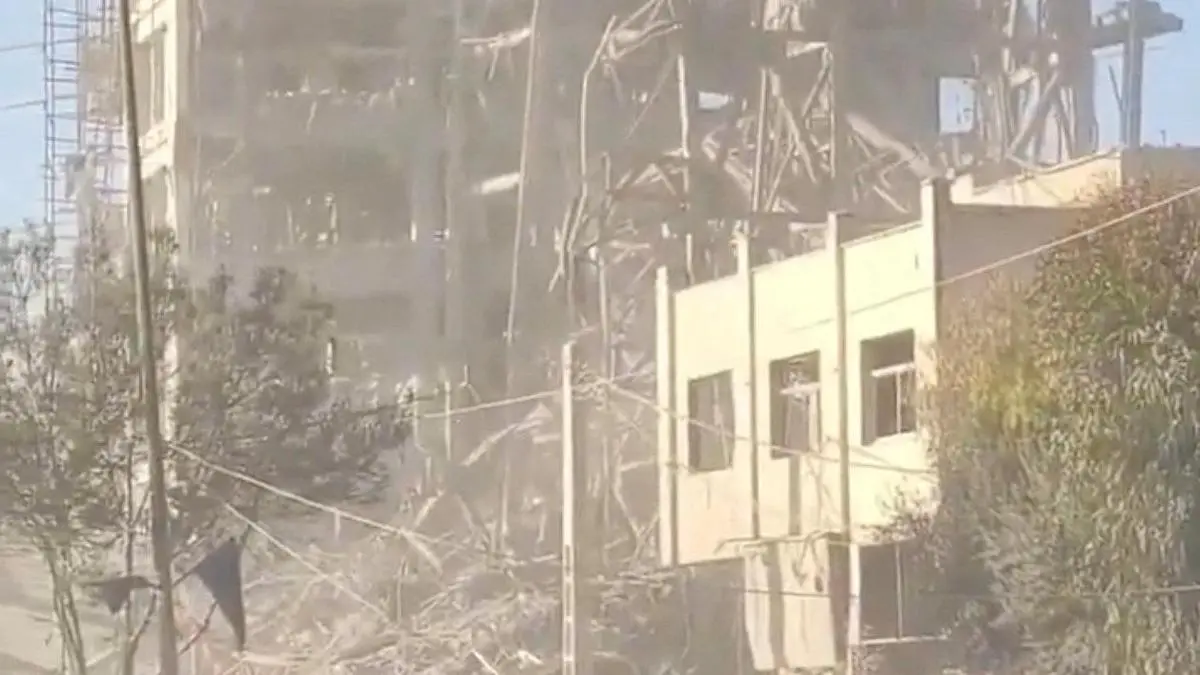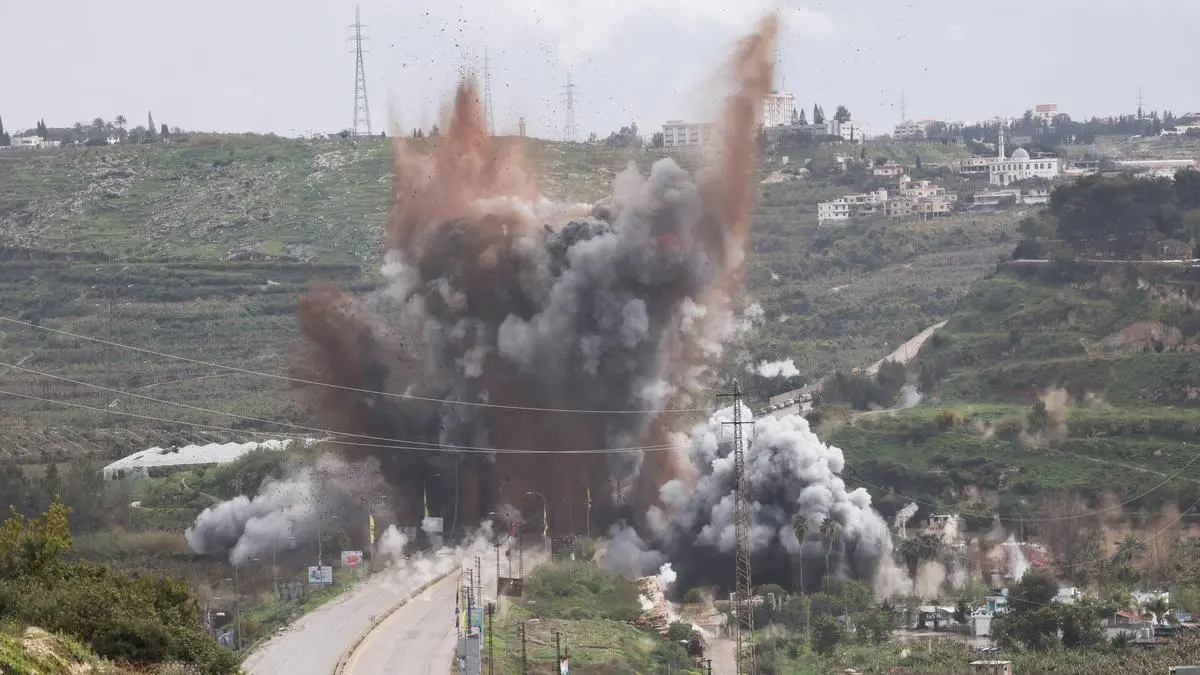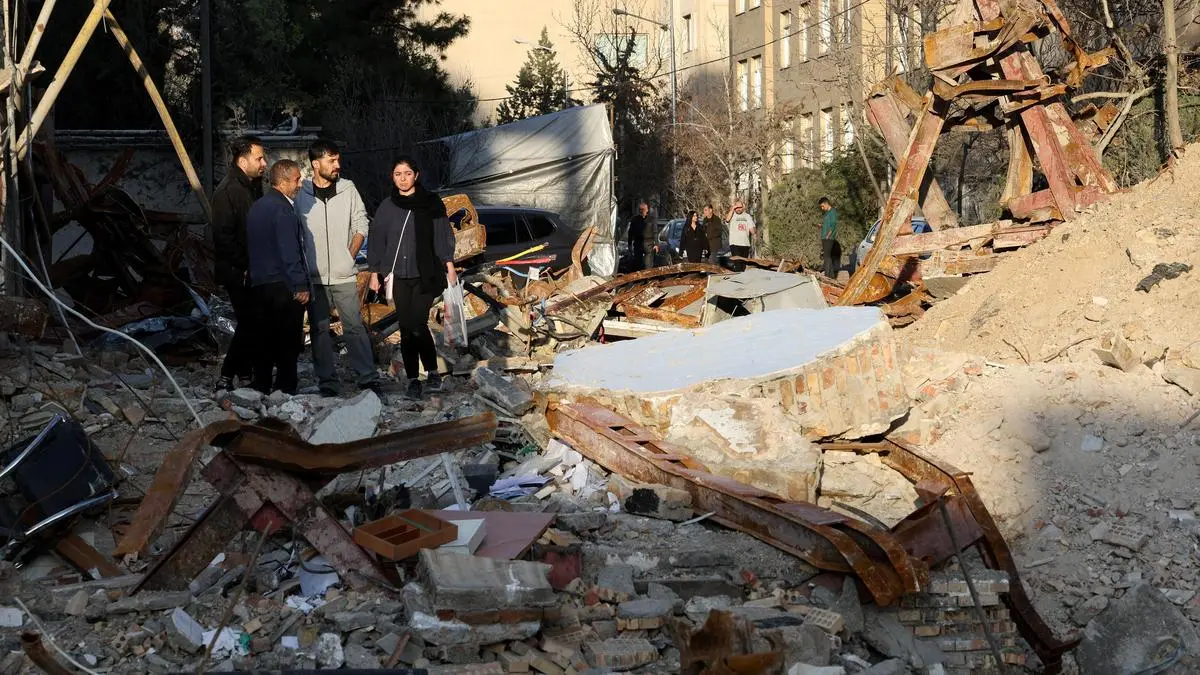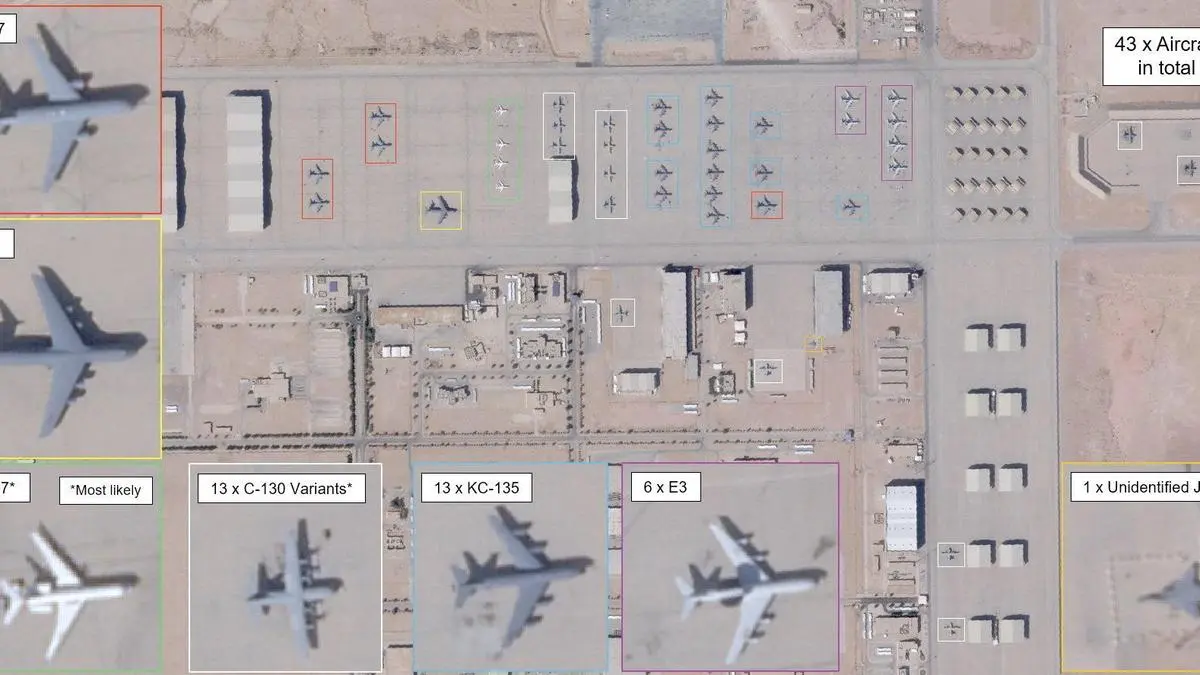
The myth of the impenetrable desert fortress died at approximately 4:00 AM local time today. When the Islamic Revolutionary Guard Corps (IRGC) announced its "75th wave" of strikes under the banner of Operation True Promise 4, the target wasn't just another patch of sand. By claiming a direct hit on the Prince Sultan Air Base (PSAB) in Saudi Arabia, Tehran has effectively signaled that the era of "host-nation immunity" is over.
For decades, the sprawling facility in Al-Kharj was the quiet cornerstone of American power in the Gulf. It was supposed to be a safe harbor—far enough from the coast to avoid coastal batteries, and shielded by a sophisticated layer of Patriot and Terminal High Altitude Area Defense (THAAD) systems. That sense of security has evaporated. While the Pentagon maintains a characteristic silence on the specific damage, the IRGC’s insistence that it used "accurate reconnaissance" to bypass "new military deployments" suggests a level of electronic warfare and drone saturation that current defenses are struggling to contain.
This is no longer a localized border skirmish. It is the bloody realization of a regional nightmare.
The Infrastructure of a Failed Strategy
The current escalation, which surged into a full-scale conflagration on February 28, 2026, was triggered by a series of high-stakes American and Israeli decapitation strikes. The deaths of senior Iranian leadership, including the Supreme Leader, didn't lead to the internal collapse Washington planners had envisioned. Instead, it birthed a decentralized, wounded, and "unhinged" military apparatus that views every U.S. asset in the Middle East as a legitimate target for total destruction.
Prince Sultan Air Base is the nerve center for U.S. air operations and refueling in the region. By targeting this specific hub, Iran is attempting to sever the logistical arteries that allow American F-35s and refueling tankers to stay airborne. If PSAB becomes untenable, the U.S. Air Force loses its most critical "unsinkable aircraft carrier" in the heart of the Arabian Peninsula.
Reports from the ground, though filtered through heavy censorship, indicate that the strikes involved a "swarm and slam" tactic. This isn't your father's SCUD warfare. Tehran is utilizing a cocktail of low-cost Shahed-series drones to distract radar arrays while high-velocity ballistic missiles, likely the Khaibar Shekan-2, exploit the gaps. The math is brutal. An interceptor missile can cost $3 million; the drone it kills costs $20,000. Iran is winning the war of attrition by simply forcing the U.S. and its allies to run out of bullets.
The Saudi Tightrope Snaps
Riyadh is currently trapped in a geopolitical pincer. For years, the Kingdom has attempted a delicate rebalancing act, restoring ties with Tehran while maintaining a massive U.S. security umbrella. That umbrella is now attracting lightning.
The strikes on PSAB, alongside hits on the U.S. Embassy in Riyadh earlier this month, have pushed the House of Saud toward a decision they never wanted to make. Saudi officials have privately communicated a "red line" to Tehran regarding water desalination and electricity plants. Yet, as the IRGC targets U.S. forces embedded within Saudi infrastructure, the distinction between "military" and "civilian" targets is becoming a semantic luxury.
If the Kingdom allows the U.S. to launch retaliatory sorties from its soil, it becomes a formal belligerent. If it restricts U.S. use of the bases, it loses its only defense against a regime that has already proven it can strike the Ras Tanura refinery and the Shaybah oil fields with impunity.
The Realities of Operation Roaring Lion
The U.S. response, dubbed Operation Roaring Lion, has been focused on "strategic damage." According to leaked assessments, coalition forces have destroyed roughly 70% of Iran’s known missile launcher array. On paper, this looks like a victory. In reality, it is a haunting reminder of the "Whac-A-Mole" failures of the Vietnam and Iraq eras.
- Mobility: Iranian launchers are increasingly housed in "missile cities"—deep underground tunnels carved into the Zagros Mountains.
- Decentralization: Commands are no longer flowing from a single desk in Tehran. Field commanders are operating on "standing orders" to strike back whenever a target presents itself.
- The Diego Garcia Factor: On March 21, Iran launched missiles at the US-UK base at Diego Garcia. This demonstrated a strike range exceeding 2,000 kilometers, shattering the long-held assumption that Iran’s reach was limited to its immediate neighbors.
The Economic Aftershock
The global market isn't waiting for a formal declaration of victory. Brent crude is hovering near $113 a barrel, and the ripples are felt from the gas pumps in Ohio to the bond markets in Mumbai. The Indian rupee has hit a record low of 93.94 against the dollar, driven largely by the instability in the Gulf.
The Strait of Hormuz remains a graveyard for predictable shipping. Iran’s threat to "completely close" the waterway isn't just rhetoric; it’s an economic weapon of mass destruction. By targeting the electrical plants that power U.S. bases in the Gulf, Iran is effectively holding the region’s basic life-support systems hostage. If the power goes out in a Saudi or Emirati city to keep a U.S. radar array running, the internal political pressure on Gulf monarchs will reach a breaking point.
Why Conventional Deterrence Failed
The fundamental error in the current U.S. posture was the belief that "decapitation" would lead to "capitulation." Veteran analysts have warned for years that the IRGC is a self-replicating organism. By killing the old guard, the U.S. and Israel have cleared the way for a younger, more radicalized generation of officers who have no memory of the pragmatism that occasionally tempered the previous regime.
These new commanders aren't looking for a seat at the negotiating table. They are looking for a total exit of Western forces from the region, regardless of the cost to their own civilian population. They are operating on a timeline that spans decades, while Washington is operating on an election cycle.
The strike on Prince Sultan Air Base is a message written in fire. It tells the world that there are no safe zones left. The sophisticated missile defense systems we sold as "impenetrable" are being bypassed by lawnmower engines and clever programming.
The U.S. military buildup—the largest since the 2003 invasion of Iraq—is certainly a display of raw power. But power without a clear political exit strategy is just a target. As the smoke clears over Al-Kharj, the question isn't whether the U.S. can hit back. It’s whether the U.S. can afford to keep standing in a room where the walls are slowly closing in.
You should investigate the current readiness levels of the Patriot batteries remaining in the Eastern Province to see if the "70% reduction" in Iranian capability matches the reality of the incoming fire.