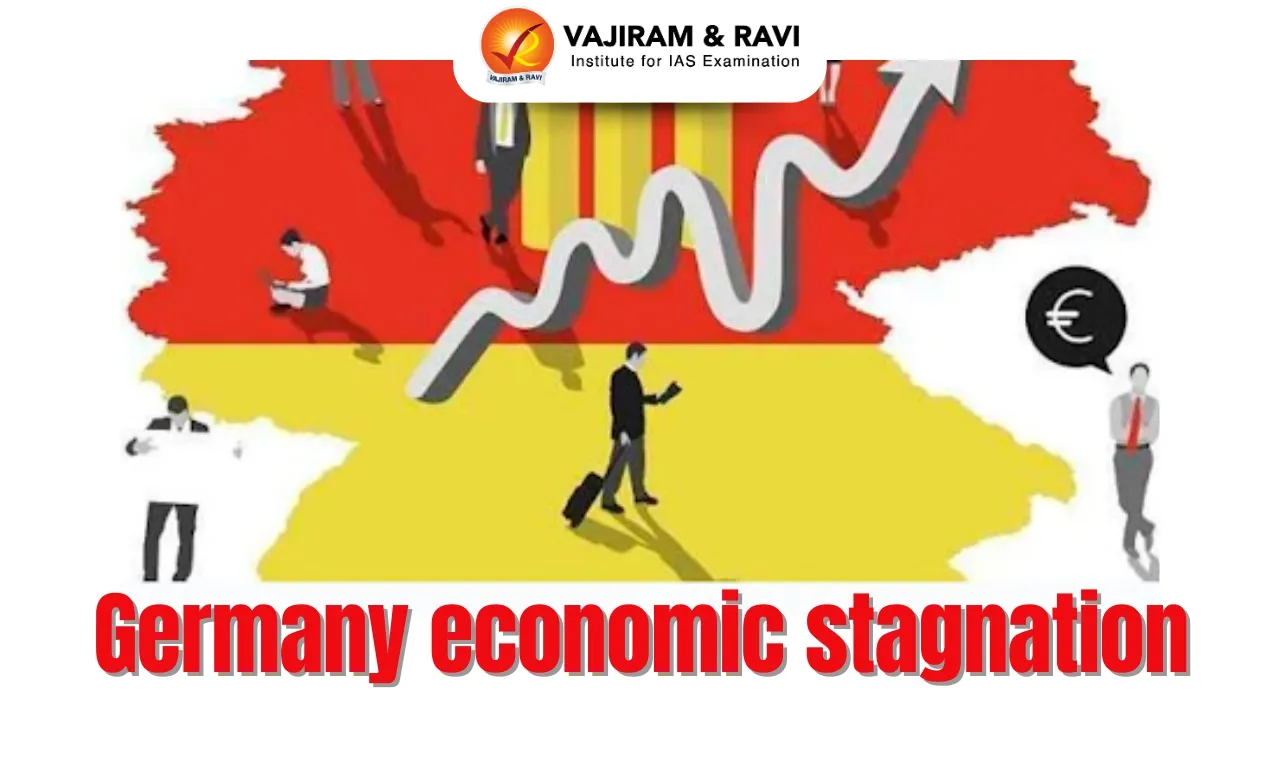
The Eurozone has hit a structural wall where rising prices and flatlining productivity have locked the continent into a dangerous economic squeeze. While headline figures suggest a temporary spike to 3%, the underlying reality is far more grim. We are witnessing the collision of high energy costs, a shrinking labor pool, and a central bank that has run out of easy options. This isn't just a statistical blip; it is the sound of the European engine seizing up.
The Illusion of Transitory Pressures
Central bankers spent most of the last decade praying for inflation. They finally got it, but in the most destructive form possible. The current 3% jump isn't driven by a booming, high-demand economy. It is "cost-push" inflation, fueled by supply chains that never fully recovered and a geopolitical shift that has permanently increased the price of keeping the lights on in Frankfurt, Paris, and Milan. Discover more on a similar issue: this related article.
When inflation rises while Gross Domestic Product (GDP) growth stalls, the traditional tools of monetary policy become liabilities. Raising interest rates to cool inflation risks crushing the meager growth that remains. Keeping rates low to support growth allows inflation to eat away at the purchasing power of every citizen using the Euro. It is a mathematical pincer movement.
The "why" behind this stall is often buried in technical jargon, but the mechanics are straightforward. Europe’s industrial core, particularly in Germany, relied on a specific set of variables that no longer exist. Cheap energy and open global markets allowed for high-margin exports. With those variables gone, the cost of production has surged. This cost is being passed directly to the consumer, but without a corresponding rise in wages or productivity to offset the pain. More journalism by Business Insider explores comparable views on this issue.
The Productivity Deficit
Efficiency is the only long-term escape from inflation. If a company can produce more goods for the same cost, prices stay stable even as wages rise. Europe has failed this test. For twenty years, productivity growth in the Eurozone has lagged behind the United States and emerging Asian economies.
We are seeing the consequences of underinvestment in the private sector. While the U.S. poured capital into software and hardware automation, much of Europe focused on maintaining legacy industries through heavy regulation and state support. Now, those legacy industries are facing high input costs they cannot innovate their way out of.
The Labor Shortage Paradox
Unemployment across the bloc remains at historic lows, yet growth is nonexistent. Usually, high employment signals a vibrant economy. Here, it signals a shortage. The aging population means there are fewer workers to fill roles, which keeps the labor market tight.
- Wage-Price Spirals: Workers are demanding higher pay to cover their 3% (or higher) cost of living increases.
- Margin Compression: Businesses, unable to find cheaper ways to operate, must choose between raising prices further or going out of business.
- Reduced Output: When companies cannot find staff, they turn away orders, further slowing GDP.
This is a structural labor shortage that interest rate hikes cannot fix. You cannot "cool" a labor market that is shrinking for demographic reasons.
The Divergence Problem
The Eurozone is not a monolith, and the 3% headline hides the growing cracks between North and South. While a 3% rate might be manageable for a stable economy like the Netherlands, it acts as a different beast in countries with high debt-to-GDP ratios.
If the European Central Bank (ECB) raises rates to combat the 3% spike, the cost of servicing sovereign debt in nations like Italy or Greece rises instantly. This diverts tax revenue away from public services and investment, funneling it instead into interest payments. It is a feedback loop where fighting inflation directly causes economic stagnation in the periphery.
The "how" of this crisis is rooted in the Euro’s design. A single interest rate for twenty different economies is a blunt instrument. When Germany needs a rate hike to prevent overheating, Spain might need a cut to stimulate a frozen housing market. Currently, nobody is getting what they need.
The Energy Tax on Industry
Energy is the fundamental input for every physical good. The Eurozone's pivot away from stable, low-cost energy sources has created an "energy tax" that sits on top of every transaction. This isn't just about high bills for households; it is about the viability of steel, chemicals, and automotive manufacturing.
When energy costs jump, the 3% inflation rate is just the tip of the iceberg. The real damage is the "deindustrialization" occurring behind the scenes. Factories that cannot compete on energy costs simply close or move their operations to North America or Asia. Once that industrial base leaves, the tax base goes with it, making it even harder for governments to fund the social safety nets that the European model depends on.
The Failure of Fiscal Coordination
Monetary policy is only half the story. The other half is fiscal—how governments spend and tax. For years, the Eurozone has struggled with a lack of coordinated fiscal policy. While the ECB tried to keep the economy afloat with "quantitative easing," national governments often pulled in different directions.
Some implemented austerity, stifling growth further. Others spent on consumption rather than infrastructure or R&D. The result is an economy that lacks the resilience to handle a 3% inflation shock. There is no central "rainy day fund" large enough to cushion the entire bloc, and the political will to create one is evaporating as national interests take center precedence over the collective good.
The Hidden Cost of Regulation
The regulatory burden in Europe is often cited as a badge of honor for consumer protection, but in a high-inflation, low-growth environment, it acts as a friction coefficient. Every new compliance requirement is a cost. For a small or medium-sized enterprise (SME) already struggling with a 3% rise in input costs, the cost of bureaucracy can be the final blow.
We are seeing a "regulatory squeeze" where the cost of doing business is rising faster than the value being created. This kills the very startups that are supposed to provide the next wave of economic growth.
The Broken Transmission Mechanism
Central banks control the "short-term" interest rate, but they don't control how banks lend to real people and businesses. In a stalling economy, banks become risk-averse. Even if the ECB keeps liquidity available, that money isn't reaching the companies that need to invest in new, more efficient equipment.
The money stays trapped in the financial system or goes into "safe" assets like government bonds. This is a failure of the transmission mechanism. The medicine is being bottled, but it isn't reaching the patient.
The Reality of the Eurozone Squeeze
The 3% inflation figure is a warning shot. It tells us that the era of "low-cost everything" is over, but the era of "high-growth anything" hasn't arrived to replace it. The Eurozone is currently caught in a transition that it is ill-equipped to handle.
The path forward requires more than just adjusting interest rates by 25 basis points. It requires a fundamental rethink of energy security, labor market flexibility, and industrial investment. Without these changes, 3% inflation isn't just a hurdle; it’s a symptom of a systemic decline.
Governments must stop treating inflation as a purely monetary phenomenon and start treating it as a productivity crisis. If you cannot produce more, and you cannot produce it cheaper, you will eventually become poorer. That is the brutal math of the current Eurozone position.
Every day that growth remains stalled while prices climb is a day that the capital reserves of the European middle class are liquidated. This isn't a crisis of the future. It is a crisis of the present, and the window for a soft landing is closing.
Stop looking at the 3% number and start looking at the zero-growth reality. That is where the real story lives.