The appeal by Reza Pahlavi for a "dismantling" of the Iranian clerical apparatus—contingent upon the preservation of civilian infrastructure—represents a shift from traditional revolutionary theory toward a surgical kinetic-political hybrid strategy. This approach assumes that the Iranian state is not a monolithic entity but a bifurcated system: a parasitic ideological superstructure (the Islamic Revolutionary Guard Corps and the Clerical Assembly) overlaid upon a functional, though degraded, national technocracy. Success in this context is not defined by the total destruction of the adversary, but by the successful separation of the ideological "head" from the administrative "body" without triggering a systemic organ failure that would lead to a failed state.
The Bifurcation of Iranian Power Structures
To analyze the feasibility of a "dismantled" regime, we must first categorize the Iranian power centers by their function and their vulnerability to external or internal pressure. The Iranian state operates through three primary layers, each with a different cost function regarding regime change.
- The Ideological Core (The Supreme Leader, Guardian Council): This layer provides the theological legitimacy for the state. It is functionally inseparable from the current regime. Its removal is the binary goal of any "dismantling" effort.
- The Security Apparatus (IRGC, Basij): The IRGC is an economic conglomerate as much as a military force, controlling between 20% and 40% of the Iranian economy. It acts as the connective tissue between the ideological core and the physical infrastructure.
- The Bureaucratic-Technical Layer (Ministries, Central Bank, Petroleum Engineers): This layer maintains the civilian infrastructure Pahlavi seeks to spare. It is the essential component for post-regime stability.
The strategic challenge lies in the fact that the IRGC has intentionally blurred the lines between these layers. By embedding military assets within civilian telecommunications networks and placing economic control of oil refineries under IRGC-linked firms, the regime has created a "human and economic shield" protocol. Dismantling the regime without "sparing" the infrastructure becomes a problem of target discrimination—not just for kinetic strikes, but for sanctions and cyber operations.
The Infrastructure Preservation Constraint
The request to spare civilian infrastructure is a pragmatic recognition of the "Post-Collapse Debt" (PCD). PCD refers to the immediate economic and social cost required to restore basic services (water, electricity, internet, healthcare) following a regime change. In historical precedents like Iraq or Libya, the destruction of dual-use infrastructure led to a vacuum that was filled by non-state actors and insurgencies.
Pahlavi’s strategy seeks to minimize PCD to ensure that a successor government is not born into a state of total insolvency. However, this creates a tactical bottleneck. In modern urban warfare and hybrid conflict, "civilian" and "military" infrastructure are often the same.
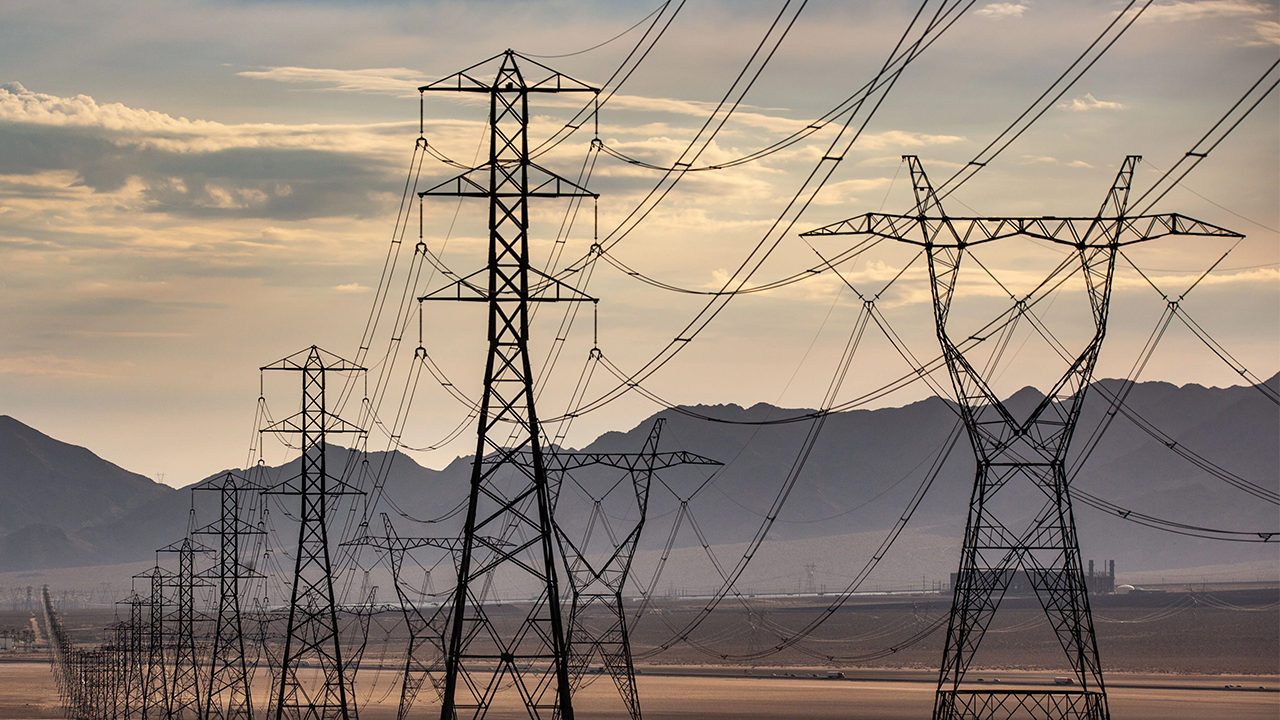
- The Power Grid: IRGC command and control centers draw power from the same grids as hospitals and schools.
- Data Pathways: The National Information Network (NIN) provides the regime with censorship and surveillance tools, but it also facilitates the digital banking and logistics required for civilian survival.
- The Energy Sector: Refining capacity is the regime’s primary revenue source, yet it is also the source of heating and transport for 85 million people.
A strategy that spares these assets must instead focus on Functional Neutralization. This involves disabling the utility of the infrastructure to the regime while leaving the physical asset intact. This can be achieved through cyber-kinetic operations targeting the software layer of SCADA (Supervisory Control and Data Acquisition) systems rather than blowing up the turbines or pipelines.
The Financial Mechanics of Defection
The dismantling of a regime requires more than the removal of the top tier; it requires the mass defection of the middle-management layer of the security forces. The logic of defection is governed by a risk-reward equation:
$$D = (R_{future} \times P_{success}) - (C_{retribution} \times P_{failure})$$
Where:
- $D$ is the Propensity to Defect.
- $R_{future}$ is the perceived reward or safety in a post-regime landscape.
- $P_{success}$ is the probability that the regime change will actually succeed.
- $C_{retribution}$ is the cost of being caught (torture, execution, family reprisal).
- $P_{failure}$ is the probability that the regime survives.
By appealing to the US and Israel to focus on "dismantling" the regime rather than the nation, Pahlavi is attempting to influence the $R_{future}$ variable. He is signaling to the regular military (Artesh) and the technocratic elite that there is a place for them in the "after." If the infrastructure is destroyed, the value of $R_{future}$ drops toward zero, as the defectors would be inheriting a wasteland.
The Role of External Kinetic Pressure
The "dismantling" requested involves a specific type of external intervention: decapitation and paralysis. This is distinct from a war of attrition. The objective of external actors in this framework is to provide the "External Shock" necessary to break the regime's internal equilibrium.
Three specific mechanisms of external pressure are required to meet Pahlavi’s criteria:
- Selective Decapitation of IRGC Economic Nodes: Targeting the financial clearinghouses and logistical hubs that are purely used for IRGC operations, rather than general trade. This creates a resource shortage within the elite units without causing a general famine.
- Electronic Warfare and Signal Suppression: Neutralizing the regime's ability to coordinate the Basij during protests. If the regime cannot communicate, its ability to project force is localized and eventually overwhelmed.
- The "Glass Box" Intelligence Strategy: Making the regime's internal movements transparent to the public. By leaking the locations, wealth, and escape plans of the elite, external actors can accelerate the erosion of $P_{failure}$ in the eyes of the Iranian public.
The Paradox of Foreign Intervention
There is a significant risk that any external intervention, no matter how surgical, will trigger a nationalist rally-around-the-flag effect. This is the primary counter-argument to Pahlavi’s appeal. For the "dismantling" to be perceived as a liberation rather than an invasion, the internal movement must be the visible driver of change, with external actors serving only as the "force multiplier."
This creates a high-stakes coordination problem. If the external strikes are too heavy, they destroy the infrastructure and the movement’s legitimacy. If they are too light, they fail to provide the necessary window for the domestic opposition to seize key administrative buildings.
The second limitation is the "Successor Vacuum." Dismantling the regime is a destructive process; building the successor is a constructive one. Pahlavi’s appeal focuses on the destruction of the current state but assumes that the "body" of the technocracy will naturally align with a new democratic or constitutionalist vision. This assumes a level of organizational readiness in the Iranian diaspora and the underground domestic opposition that has yet to be quantified.
Quantifying the Threshold of Collapse
Regime collapse often follows a non-linear path. It remains stable until it reaches a "criticality point" where the cost of maintaining order exceeds the resources available. This is often triggered by a "Triple Crisis":
- Currency Devaluation: When the Rial loses enough value that the salaries of the security forces can no longer purchase basic goods.
- Infrastructure Failure: Not from bombs, but from the inability to maintain equipment due to sanctions and brain drain (e.g., the recurring water and electricity protests in Khuzestan).
- Command Fracture: When different factions of the IRGC begin to compete for dwindling resources, leading to internal purges.
Pahlavi’s strategy aims to compress the timeline of this Triple Crisis by using external pressure to accelerate the "Command Fracture" while using the "spare infrastructure" promise to prevent the "Infrastructure Failure" from becoming a humanitarian catastrophe that would force the regime into a desperate, scorched-earth defense.
Tactical Framework for Post-Regime Transition
The immediate transition requires a "Hold and Transfer" protocol for the national infrastructure. The priority is the security of the petroleum sector and the Central Bank. If these two nodes are secured by the defecting technocracy, the state remains viable.
The strategy requires the following steps:
- Establishment of a Shadow Technocracy: Identifying and communicating with mid-level managers within the Iranian ministries who are willing to maintain services during a transition.
- The "White List" of Infrastructure: A pre-defined database of non-targetable civilian assets shared with international kinetic actors to ensure the $PCD$ remains low.
- Sanction Pivot: The immediate lifting of sanctions on specific civilian sectors (medicine, aviation safety, water treatment) the moment a designated "administrative zone" is cleared of IRGC control.
The effectiveness of this plan hinges on the speed of the transition. The longer the "dismantling" phase takes, the higher the likelihood of infrastructure degradation through neglect or sabotage by the retreating regime.
The strategic play here is not a call for a traditional war, but a call for an engineered systemic failure of the clerical elite. It requires the US and Israel to act as surgical instruments rather than hammers. The risk is immense: a miscalculation in the kinetic phase could destroy the very infrastructure Pahlavi hopes to save, while a failure to act decisively could leave the Iranian people in a permanent state of "contained" suffering. The decision-making framework must prioritize the preservation of the technical layer of the state, as this is the only asset that can prevent a post-regime Iran from becoming a regional black hole.