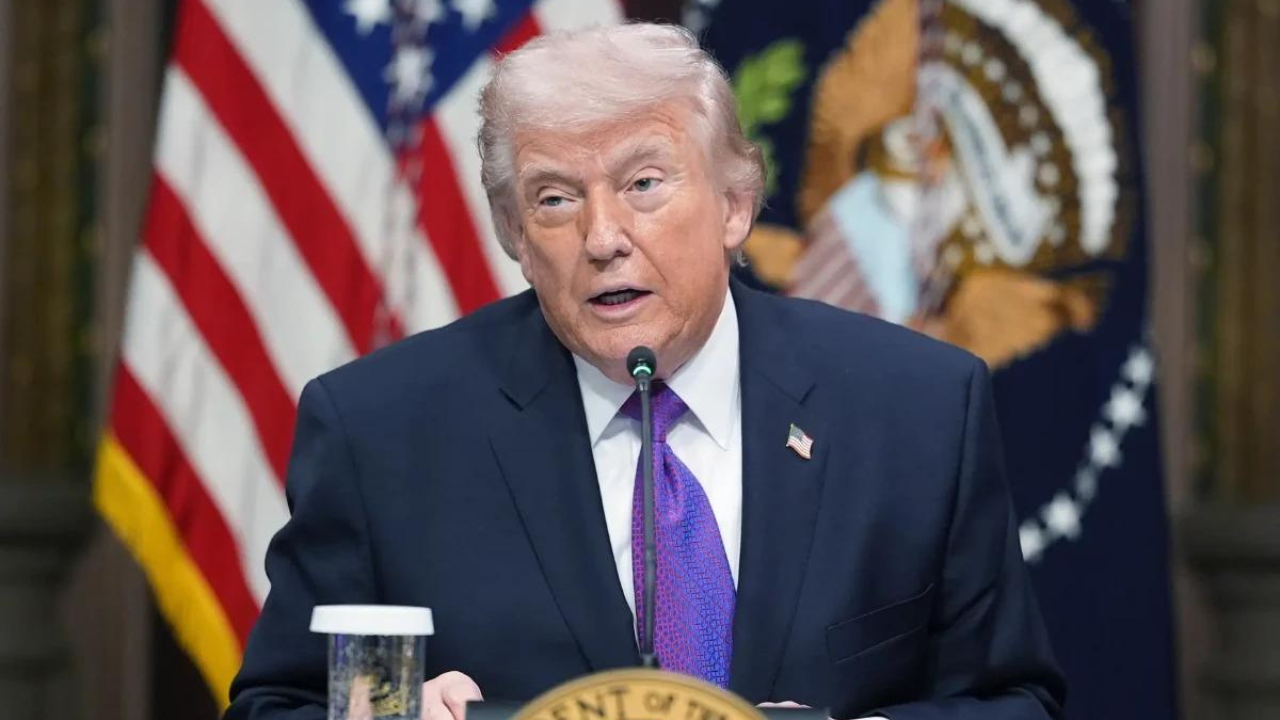
The clock is ticking on a deadline that has the entire Middle East holding its breath. We've seen this movie before, but the sequel feels different. Donald Trump’s latest 48-hour warning to Tehran isn't just another post on social media. It’s a calculated pivot in a high-stakes poker game where the chips are ballistic missiles and regional stability. Everyone wants to know if a massive US strike on Iran is actually happening today. The short answer? It depends on whether you believe in "mild" warnings or the silence before a storm.
History tells us that when a US President sets a hard timeline, the machinery of war is already in motion. We aren't talking about a few localized skirmishes. We're looking at the potential for a coordinated aerial campaign targeting IRGC infrastructure and drone manufacturing sites. This isn't just about retaliation for recent provocations. It's about a fundamental shift in how Washington handles the Iranian threat in 2026.
Why this 48 hour window is different from previous threats
Don't let the "mild" tone of the initial warning fool you. In the world of high-level diplomacy and military posturing, soft language often covers a hard fist. Trump's approach this time around has been uncharacteristically restrained in public, which is exactly why intelligence analysts are sweating. Usually, the bravado comes first. When the rhetoric stays cool while the carrier strike groups are repositioning, you should pay attention.
The deadline expires today. This isn't some vague "soon" or "in the near future." It’s a specific line in the sand. Intelligence reports from the Pentagon suggest that the target lists have been finalized for weeks. We're talking about hardened facilities that the US has been monitoring with high-altitude surveillance for months. If the IRGC doesn't blink, the likelihood of kinetic action jumps from a "maybe" to an "almost certain."
You’ve probably seen the headlines claiming this is just more political theater. That’s a dangerous assumption. Unlike the tit-for-tat exchanges we saw in 2020 or 2024, the current tension is fueled by Iran’s accelerated nuclear enrichment and its role in supplying hardware for European conflicts. The leash is shorter than it’s ever been.
The strategic targets on the table right now
If the order comes down, where do the bombs actually fall? It won’t be a random spray of Tomahawks. Strategic planners focus on "center of gravity" targets. That basically means hitting the things that hurt the most without necessarily starting a full-scale ground invasion.
- Drone Assembly Plants: Iran has turned into a global hub for low-cost, high-impact suicide drones. Taking these out isn't just about Middle East security; it’s about cutting off a global supply chain.
- IRGC Command Centers: You hit the brains of the operation. By targeting the communications and command structure of the Islamic Revolutionary Guard Corps, the US effectively paralyzes their ability to coordinate proxy groups in Lebanon or Iraq.
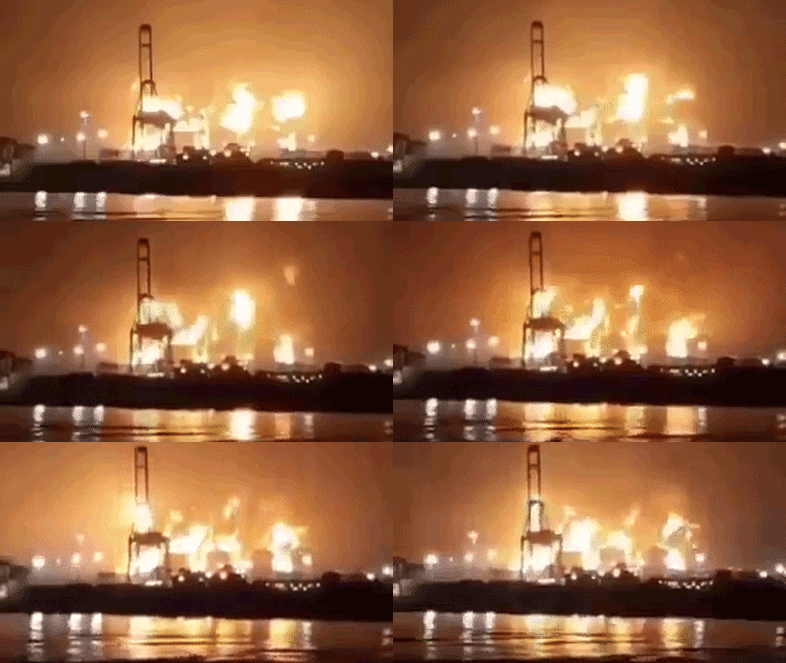
- Port Infrastructure: Specifically around Bandar Abbas. If you want to get Iran’s attention, you threaten their ability to move oil and goods. It’s the ultimate economic chokehold.
The goal isn't to topple the regime in a single afternoon. That’s a fantasy. The goal is "restoration of deterrence." Basically, the US wants to make the cost of Iranian aggression so high that they have no choice but to retreat to the negotiating table.
What most people get wrong about Trump's mild warning
Critics are calling the warning "mild" because it lacked the "fire and fury" branding of years past. That’s a massive misreading of the situation. In 2026, the geopolitical map is far more fragile. A loud, boisterous threat gives the enemy time to hide their assets. A quiet, firm deadline suggests that the US is confident in its strike packages and doesn't feel the need to shout.
Think about the logistical reality. Moving B-52s into theater isn't a quiet process. The fact that these movements are happening with minimal fanfare suggests a level of seriousness that a tweet-storm just can't match. We’re seeing a shift from "maximum pressure" as a slogan to "maximum precision" as a strategy.
Honestly, the "mildness" is the scariest part. It implies that the decision has already been made. When a leader stops trying to persuade the public and starts giving quiet orders to the Joint Chiefs, the window for diplomacy has likely already slammed shut.
The role of regional allies in the next 24 hours
Israel and the Gulf states aren't just bystanders here. They’re active participants in the intelligence-sharing loop. For years, Saudi Arabia and the UAE have been wary of a direct confrontation, but the calculus changed when Iranian-backed groups started targeting global shipping lanes with impunity.
Now, there’s a quiet consensus. Nobody wants a world war, but everyone is tired of the proxy shadow boxing. If the US strikes today, it will likely have the quiet backing—and perhaps even the airspace access—of several regional players. This isn't the US acting as a lone ranger. It’s a coalition of the fed-up.
You have to look at the recent meetings in Riyadh and Jerusalem. They weren't just about trade deals. They were about "de-conflicting." That’s military speak for making sure that when the missiles start flying, friends don't accidentally hit each other.
Predicting the Iranian response
Tehran isn't going to sit on its hands. They have a playbook for this. If a strike occurs, expect an immediate surge in cyberattacks targeting US financial infrastructure or energy grids. It’s their cheapest and most effective way to hit back without firing a physical shot at the mainland.
On the ground, we’ll likely see increased activity from Hezbollah or the Houthis. They are the "force multipliers." Iran uses them to create chaos on multiple fronts, forcing the US and its allies to spread their resources thin. It’s a classic shell game.
But there’s a limit. Iran knows that a full-scale war would end in the total destruction of their conventional military. They want to push the envelope, not jump off the cliff. The question is whether they've misjudged where the cliff actually starts.
How this impacts your wallet and the global economy
War is expensive, and uncertainty is even worse for the markets. If a strike happens today, expect oil prices to spike instantly. Even a limited engagement in the Persian Gulf sends jitters through the global supply chain. We're talking about a significant percentage of the world's daily oil flow passing through the Strait of Hormuz.
If you're invested in energy or defense stocks, today is going to be a rollercoaster. But for the average person, this means higher prices at the pump within a week. It’s the "geopolitical tax." Even if the missiles are high-tech and precise, the economic fallout is broad and messy.
Preparing for the fallout of a military escalation
Whether or not the "bigger strike" happens within the hour, the era of relative stability in the region is over for the time being. We're entering a phase of active containment. If you have interests in the region or simply want to stay ahead of the curve, you need to monitor the official channels, not just the social media noise.
Watch for the following signs over the next six hours. If the State Department issues new travel warnings for the region, or if we see a sudden "maintenance" shutdown of major Iranian internet gateways, those are the real indicators. The 48-hour deadline isn't just a countdown; it's a transition into a new reality.
Stay informed by checking primary sources like the Department of Defense press releases and verified ground reports from independent journalists in the region. Avoid the echo chambers that thrive on panic. The situation is serious enough without the extra hype. If the US goes in, it’ll be fast, it’ll be loud, and it’ll change the map of the Middle East for the next decade. Keep your eyes on the maritime traffic in the Gulf—that’s where the real story is usually written first.
Check your news feeds every hour. The silence usually breaks right before the sun goes down in the target time zone. If the strike doesn't happen by midnight, the diplomatic backchannels might have found a temporary bridge, but don't count on it lasting. The pressure is too high for a total stand-down. Prepare for a long week of headlines.