Donald Trump just touched down in Beijing for the first time in nine years, and the atmosphere isn't just tense—it's calculated. If you're looking for the usual diplomatic fluff about "shared futures" and "mutual respect," you're looking in the wrong place. Beijing doesn't do "fluff" when they're staring down a man who just spent the last year hiking tariffs to nearly 50%.
They're sending a message, but it isn't written in a press release. It's written in the timing of fighter jets, the guest list at the state dinner, and the sudden, suspicious willingness to buy American soybeans again. China's play is simple: give Trump the "win" he can brag about on social media while they quietly entrench their red lines on Taiwan and technology.
The Theater of Power in Beijing
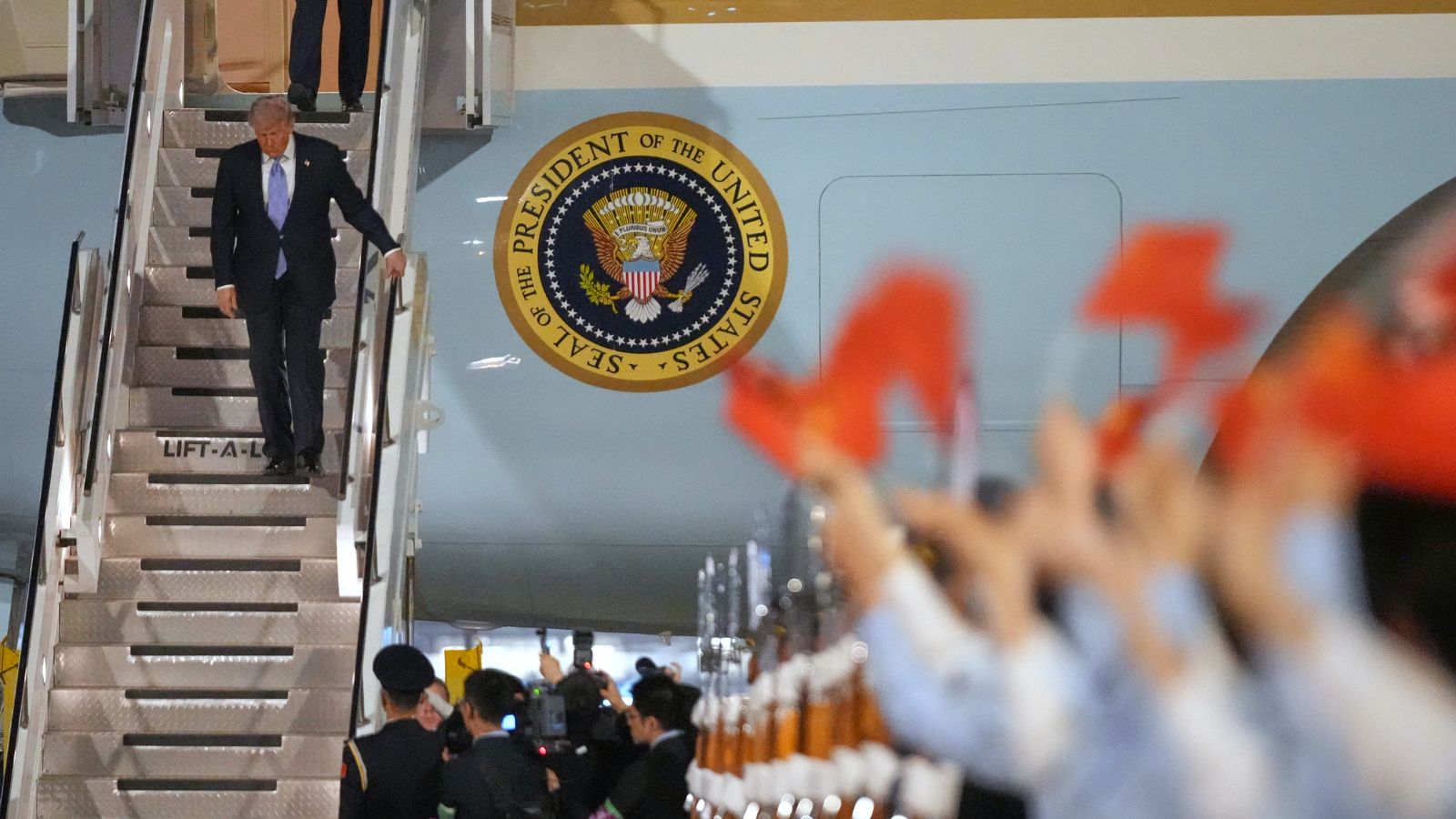
When Trump’s plane hit the tarmac on May 13, 2026, the optics were perfection. China knows Trump loves a spectacle. They remember the 2017 "state visit-plus" with the dinner inside the Forbidden City. This time, they've dialed up the pageantry but added a sharp, cold edge.
Just days before his arrival, the People’s Liberation Army sent fighter jets circling Taiwan. It wasn't a random drill. It was a physical manifestation of a "red line." Beijing is telling the White House that while they'll talk trade and buy Boeing planes to keep the markets happy, the geopolitical map of Southeast Asia isn't up for negotiation.
You've got to look at who showed up with Trump, too. Elon Musk and the CEO of Nvidia were on that plane. Why? Because China holds the cards on the rare earth minerals those guys need for everything from Tesla batteries to AI chips. The message to Trump is clear: your billionaires need us as much as we need your market.
How the 50 Percent Tariff Wall Changed the Game
Let's talk about the elephant in the room: the "Trump 2.0" trade war. In early 2025, the administration didn't just tweak duties; they slammed a 20 percentage point increase on basically everything coming out of China within seven weeks of taking office.
By the end of 2025, real U.S. imports from China dropped by 28%. That's a nosedive. If you’re a farmer in Iowa or a manufacturer in Ohio, you felt that. China effectively shut out American soybeans for most of last year in retaliation.
But now, suddenly, there’s talk of a "Board of Trade" and a massive new purchase of American beef and grain. Is China backing down? Not a chance. They're "buying" a reprieve. By dangling these purchases now, they're trying to coax Trump into extending the October trade truce. They want the tariffs lowered, and they know Trump's favorite metric of success is a big, fat trade deal he can sign in front of cameras.
The Taiwan Red Line is Non-Negotiable
If you ask the average person in Beijing what matters most about this visit, they won't say the price of pork. They'll say Taiwan.
The rhetoric from the Chinese Foreign Ministry has been unusually blunt. They’re calling Taiwan a "clear red line." While Trump is busy focused on the transactional—the dollars, the cents, the trade deficit—Xi Jinping is focused on the existential.
China’s strategy here is to silo the issues. They'll give Trump the economic victories he needs to tell his base that "China is paying," as long as the U.S. stops its "official interactions" with Taipei. It’s a high-stakes trade-off. Trump has always been a transactional leader, and Beijing is betting they can trade a few billion dollars in soy and planes for a softer U.S. stance on the island.
The Musk Factor and the AI Arms Race
Having tech titans like Elon Musk and the Nvidia leadership on the trip isn't just for show. It represents a massive shift in how China is handling this administration.
Beijing knows that the U.S. tech sector is terrified of losing access to Chinese manufacturing and minerals. By inviting these specific "friends of China" to the table, Xi is bypassing the State Department and going straight to the people who hold the keys to the American economy.
It’s a leverage play. China is basically saying, "We can make life very difficult for your most successful companies, or we can be the 'sound ecosystem of innovation' your CEOs keep talking about."
What Actually Happens Next
Don't expect a grand peace treaty. That's not how this works anymore. The 2026 summit is about damage control, not friendship.
Here is what you should actually watch for over the next 48 hours:
- The Boeing Order: Watch the size of the plane order. If it’s massive, Trump will claim he saved the American aerospace industry.
- The "Board of Trade": This sounds boring, but it’s a way for both sides to keep talking without the constant threat of "Twitter-style" tariff hikes every Monday morning.
- Military Communication: If the two sides agree to reopen direct "hotlines" between their militaries, it means they’re both scared of a real accident in the Taiwan Strait.
The reality is that the U.S. and China are more decoupled than they've been in thirty years. Imports are down, manufacturing is moving to Vietnam and India, and the "roaring trade" of the 2010s is dead. This visit isn't a resurrection of the old ways. It’s a negotiation of the terms of a new, colder reality.
Beijing is betting that if they give Trump enough "wins" to fill a news cycle, they can keep their own long-term strategy on track. Don't fall for the handshakes. Watch the minerals and the missiles.
Stop waiting for a "return to normal." It's not coming. If you're a business owner or an investor, the move isn't to hope for lower tariffs; it's to diversify your supply chain while the "truce" lasts. Use this window of "strategic guidance" from the heads of state to move your assets before the next inevitable friction point over high-tech sanctions.
Analysis of Trump's 2026 China visit
This video provides on-the-ground perspectives from Beijing residents regarding their expectations and "red line" concerns during the President's state visit.
http://googleusercontent.com/youtube_content/1